


Celiac.com 05/01/2026 - For people with celiac disease, confidence at mealtime rarely comes easy. It is built through careful label reading, constant questioning, and relentless vigilance. And even after all of that, uncertainty can still remain—especially when eating out or relying on someone else to prepare your food.
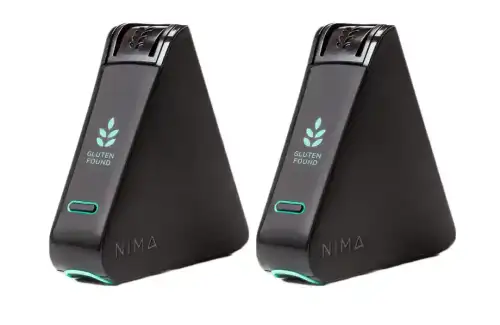
Earlier this year, NIMA introduced its next-generation gluten sensor to address that gap. The pocket-sized device lets you test food on the go in real-world settings, giving people an extra safeguard in those “questionable” moments.
Celiac.com Sponsor (A12):
With new leadership, upgraded technology, and independent validation showing 99% accuracy down to 10 parts per million, the relaunch is more than a product comeback. It is an effort to rebuild trust.
In this Q&A, CEO Mike Glick offers the gluten-free community a closer look at what is new, what users need to know, and how NIMA fits into a smarter, more realistic approach to gluten-free living.
Q: What’s different about the new NIMA sensor?
Mike Glick: The technology itself has evolved significantly. We upgraded the photo-detection system, enabling clearer, more precise readings even at very low gluten levels, measured in parts per million. Beyond that, our algorithm has been fine-tuned to interpret results more consistently, reducing ambiguity and improving reliability from test to test.
We also overhauled our quality management system. Rigorous, multi-stage checks ensure that issues are caught before a product ever reaches a user. And we made design changes to reduce false positives. But even with all this, accuracy is a shared responsibility. Gluten contamination is rarely uniform; it exists in pockets. That’s why sampling properly is just as critical as the test itself.
Q: What does “99% accuracy at 10 ppm” actually mean?
Mike Glick: That number comes from independent validation by BIA Diagnostics and reflects performance under controlled conditions. NIMA reliably detects gluten at or above 10 parts per million about 99% of the time across foods containing wheat, rye, and barley. It’s important to note that this threshold is more sensitive than the FDA’s standard for gluten-free labeling, which is 20 ppm.
What that means in practice is that sometimes NIMA might detect gluten in a product labeled gluten-free, not because it’s unsafe, but because the gluten content is above 10 ppm while still under 20 ppm. In other words, NIMA can alert users to levels that are technically below regulatory concern but above its more sensitive detection threshold.
Real-life kitchens aren’t controlled environments: ingredients change, staff changes, cross-contact happens, and gluten isn’t evenly distributed. That 99% figure measures performance. What NIMA provides is grounded, actionable information about a specific sample, in a specific moment, so that users can make informed decisions about whether the food in front of them is safe to eat.
Q: How should users sample foods to get meaningful results?
Mike Glick: Sampling is crucial. Gluten contamination is concentrated in certain areas, so where you test matters as much as what you test for. Start with the riskiest components: sauces, dressings, or any area that’s been in contact with shared equipment. That can include spots with grill marks, seared surfaces from a shared flat top, toasted lines from a panini press, cut edges from a shared knife or cutting board, or surfaces with visible crumbs or seasoning transfer. For mixed dishes, sampling multiple spots gives a fuller picture.
Certain foods, thick, oily, or dry, may need to be diluted for a reliable read. Highly pigmented or acidic foods can interfere, so extra care is required. And even with the best practices, a negative result isn’t an absolute guarantee. It reflects only that one, specific sample rather than the full plate. That’s why thoughtful sampling and sometimes multiple tests can make a meaningful difference.
Confidence isn’t about eliminating every uncertainty. It’s about reducing it and making it easier to say yes again.
Q: What are the limitations, and where does NIMA fit in the bigger picture?
Mike Glick: NIMA is a powerful tool for assessing risk and gaining some level of assurance before taking a bite, but it is not without its limits. Certain foods, like fermented or hydrolyzed products or alcohol, cannot be reliably tested. High-fat or highly processed foods may require modified preparation. Environmental risks, such as airborne flour or shared fryers, extend beyond what a single sample can capture. But those limits help clarify its role rather than diminish it.
Living gluten-free is a constant navigation of variables: recipes change, staff changes, labels raise questions, and cross-contact can occur anywhere. NIMA lives at the end of that chain. It’s part of what you might call a “gluten-free vigilance framework,” a layered approach to safety where no single step stands alone. Label reading. Research. Conversations. And finally, testing. This meal at this moment. NIMA offers one final piece of actionable information to help people make a personal decision. And when you live in a world where every bite carries a question, and decisions have to be made in real-time, even one more data point can matter more than most people realize.
Q: What does new leadership bring to the mission?
Mike Glick: We’ve prioritized transparency, reliability, and community engagement. Our leadership philosophy isn’t just about the product; it’s about understanding the real-life decisions people with celiac or severe gluten sensitivities make every day. We want to build trust through consistency, clarity, and humility. It's listening first, acting with rigor, and delivering technology that genuinely supports people and helps them make more confident decisions about what they eat.
For those navigating celiac disease, even one more piece of reliable information can transform a meal from a gamble into an educated decision. Think of NIMA as an assist, not a substitute. No tool removes all risk, but layers of protection matter. When you combine label reading, communication, and education, NIMA becomes a supportive part of living your best gluten-free life.
Q: What’s Next for NIMA?
Mike Glick: We view the coming months as an opportunity to deepen our connection with both patients and providers. Since May is Celiac Awareness Month, our focus is squarely on education and advocacy. We’ll be at Digestive Disease Week (DDW) in Chicago, engaging with healthcare providers to discuss how food testing can be integrated into clinical management programs. For families, we’re releasing a Parents’ Guide to Celiac in time for Mother’s Day, specifically designed to help caregivers navigate the complexities of a new diagnosis and support children in living confidently.
We also want to celebrate this community. I’ll be joining the Celiac Disease Foundation for “Strike Out Celiac Disease Night” at Wrigley Field to show our support for the vital work they do.
On the technology front, we are evolving the NIMA Now companion app to be a more comprehensive resource. Beyond managing subscriptions, the app is adding features like geolocation for restaurant tracking and barcode scanning for packaged goods. We’re even building out intelligence dashboards to help identify gluten-safe environments in restaurants and workplaces for the future.
It’s an exciting roadmap, but every update—whether it’s a new app feature or a day at the ballpark—is driven by the same goal: providing this community the tools and data to make sure that, for the first time in a long time, the joy of a shared meal is never out of reach.
Celiac Awareness Month is about more than recognition. It's about equipping people with real tools to live more confidently.
For the month of May, take 20% off the NIMA Sensor or Starter Pack. Use code CELIAC20 at checkout.











Recommended Comments
There are no comments to display.