


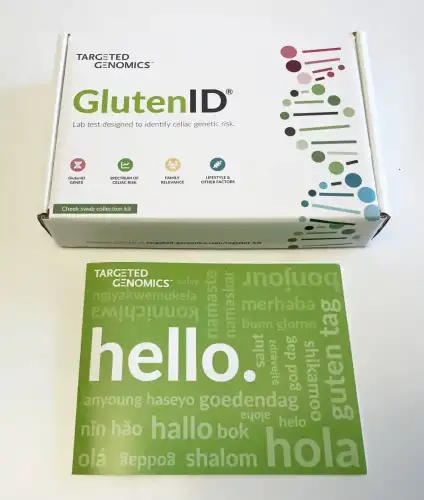
Celiac.com 05/01/2026 - Targeted Genomics strikes me as the kind of company that knows exactly what it wants to do and sticks to it. Rather than trying to be all things to all people, it has built a focused approach around celiac genetics and wellness. That narrow focus is actually what made GlutenID interesting to me in the first place. The company, led by founder and medical director Shelly Gunn, MD, PhD, has developed an FDA-cleared at-home celiac genetic risk test that looks specifically at the two gene groups most closely associated with celiac disease: HLA-DQ2 and HLA-DQ8. The idea is simple, practical, and appealing. Instead of going on a fishing expedition through hundreds of markers, GlutenID zeroes in on the genetic variants that matter most for determining whether celiac disease is even a possibility.
I recently had the chance to try three GlutenID kits, and the overall experience was better than I expected. I went into it thinking the process would be useful, but perhaps a little clinical or complicated. Instead, I found it easy, polished, and surprisingly user-friendly from start to finish. Even better, the results we got added a layer of insight that genuinely surprised me.
First Impressions and What Comes in the Kit
Celiac.com Sponsor (A12):
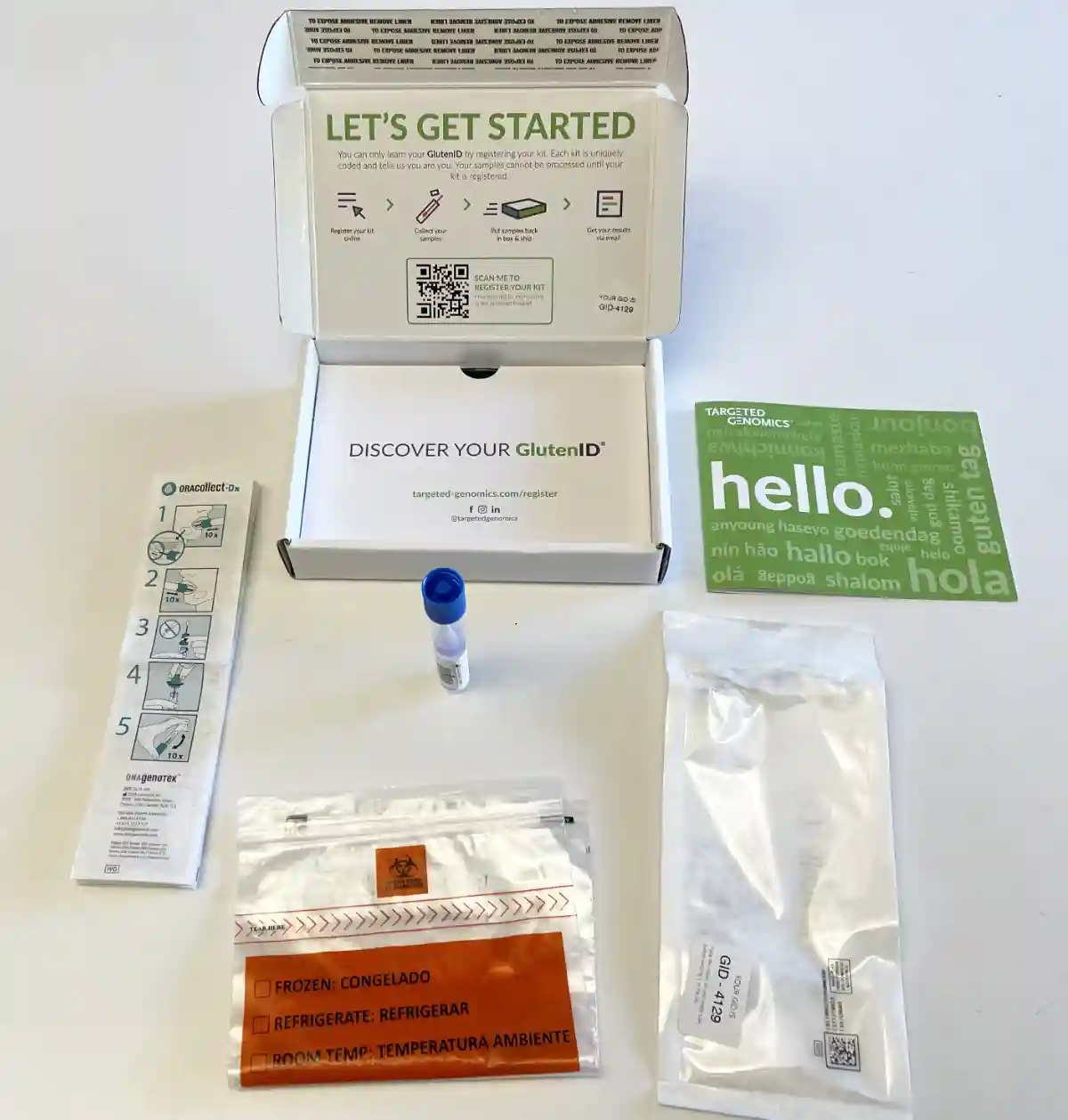
One of the first things I noticed was how well the kits were put together. Good instructions matter a lot with any home health test, and Targeted Genomics clearly understands that. Each kit included clear, step-by-step guidance that made the whole process feel straightforward instead of intimidating. Nothing felt vague, and no one using the tests had trouble understanding what to do next.
The collection itself was refreshingly simple because it is saliva-based. There is no blood sample, no finger prick, and no drama. For people who tend to avoid medical testing because they do not like needles or complicated procedures, that alone is a major advantage. In our case, each person was able to collect a saliva sample quickly and without stress. Once the samples were ready, mailing them back was just as easy because the kits included postage-paid return packaging. That may sound like a small detail, but it makes a difference.
Account Setup and Turnaround Time
Another strong point was the online side of the experience. Setting up an account was easy, and that matters because some at-home testing systems can be clunky or over-complicated. This one was not. Registration was smooth, and it was simple to connect each kit to the right user.
After mailing the samples back, the waiting period was reasonable. Results are typically delivered in about 10 to 14 days, and I liked the fact that the notification process was clear. Getting the results by email added convenience, and once we opened the reports, the explanations were easy to follow. That is especially important with genetic testing, because these reports can quickly become confusing if they are overloaded with technical jargon. GlutenID does a good job of presenting the findings in a way that feels accessible while still being medically meaningful.

The Three Test Results
I received three kits and had three very different people use them.
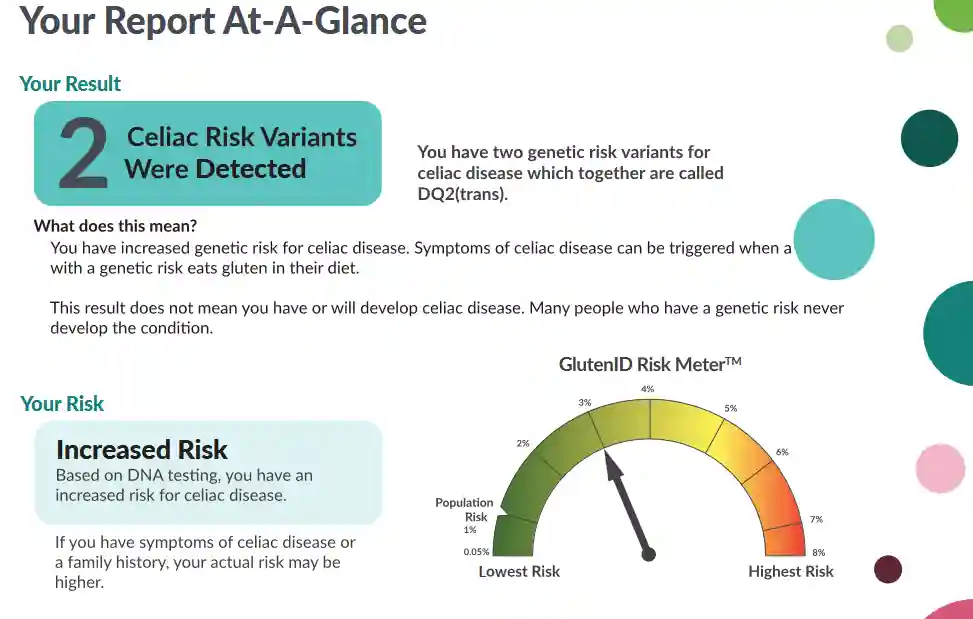
The first was Mei, who is Taiwanese. Going in, she did not expect to carry any celiac-related genes at all. Her result turned out to be one of the most surprising of the group. She had two different celiac disease risk variants, which placed her at a 3% chance of developing celiac disease.
The second was Tim, who is of European descent. In his case, the result was closer to what many people might expect based on the way celiac disease is often discussed. He had one celiac disease risk variant, which put him at a 1% chance.
The third was Sue, who is Japanese. Like Mei, her result caught me off guard. Sue had two different celiac disease risk variants, and her report placed her at a 4% chance of developing celiac disease.
What surprised me most was that out of the three people I randomly selected, the two individuals with Asian ancestry landed in the higher-risk groups. I have not seen a lot of discussion or many studies about celiac disease rates in Asian populations, so I honestly did not expect those results. That made this test feel even more valuable to me. It reminded me that assumptions about risk based on background or appearance can be misleading, and that genetics can reveal something important that would otherwise never come up in conversation.
Why the Test Feels Useful
What I like about GlutenID is that it fills a very specific role. It is not a diagnosis, and the company is appropriately clear about that. A positive result does not mean someone has celiac disease or definitely will develop it. A negative result does not absolutely guarantee anything either, although it can make celiac disease extremely unlikely. That is an important distinction, and I appreciate that the company explains it clearly instead of overselling what the test can do.
Still, this kind of genetic information can be incredibly helpful. If someone does not carry the relevant variants, that can rule out celiac disease for life in most cases and help them look elsewhere for answers. If someone does carry one or both of the risk genes, it gives them a reason to have a more informed conversation with a doctor about follow-up testing or family risk. For people who are already gluten-free and wondering whether it is worth pursuing more formal evaluation, that kind of information can provide direction.
Clear Reporting Without Over-complication
Another thing I appreciated was how clearly the results were explained. Each report laid out the user’s genetic findings in a way that was understandable without dumbing it down. That balance is not easy to achieve. Genetic reports can sometimes feel too technical to be useful for everyday people, but this one stayed readable and practical.
I also liked that the test focuses only on the celiac-related genes rather than turning into a broad genetic profile. There is something refreshing about that. It keeps the purpose clear and avoids overwhelming users with unrelated information they did not ask for.
My Overall Take
After trying all three kits, I came away with a very positive impression of GlutenID. The instructions were excellent, the saliva collection was easy, the included prepaid return packaging removed hassle, the account setup was simple, and the results arrived in a clear, well-explained format. Just as important, the actual findings were interesting enough to challenge my expectations, which is not something I say often about home tests.
If you are looking for a convenient way to learn whether celiac disease is genetically on the table for you or someone in your family, I think GlutenID makes a compelling case for itself. It will not replace your doctor, and it should not be used to make medical decisions on its own. But as a focused, practical first step, it impressed me. I expected a decent at-home test. What I got instead was a smooth experience and a set of results that genuinely made me think twice about who may be at risk.
For me, that combination of convenience, clarity, and a few real surprises made GlutenID well worth trying.











Recommended Comments
There are no comments to display.