


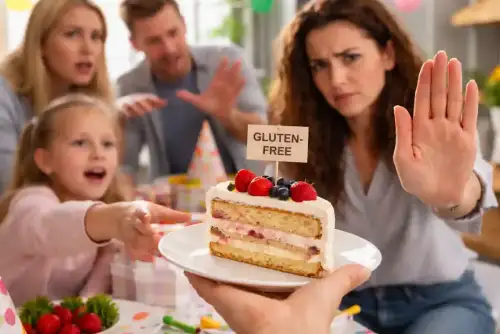
Celiac.com 04/30/2026 - At first glance, it might seem like a small family disagreement over a piece of cake. But a recent viral story tells a much deeper story about what it means to live with food restrictions like gluten intolerance. In the situation, a woman attending a family celebration had a special slice of cake made just for her because she could not safely eat the regular dessert. Despite clearly explaining this, a young child wanted her slice, and the child’s parents pressured her to give it up.
Even after she refused, her family ignored her wishes and gave the cake away anyway. What followed was frustration, hurt feelings, and a larger conversation about respect, boundaries, and understanding dietary needs.
Celiac.com Sponsor (A12):
While this may sound like a one-off family dispute, it highlights a much bigger issue that people with celiac disease or gluten sensitivity face every day.
Why Gluten-Free Food Is Not Just a Preference
For people with celiac disease, eating gluten is not simply uncomfortable—it can cause real damage to the body. Gluten triggers an immune reaction that harms the lining of the small intestine, leading to poor nutrient absorption and long-term health problems. Even small amounts of gluten can lead to symptoms or internal injury.
For others with gluten sensitivity, the consequences may not involve the same immune damage, but symptoms like fatigue, stomach pain, and brain fog can still significantly affect daily life.
That means a gluten-free meal is not interchangeable with regular food. When someone has a safe, gluten-free option, it is often the only thing they can eat at an event. Taking that option away is not the same as asking someone to share—it may mean they go hungry or risk getting sick.
The Hidden Challenges of Social Events
Events like birthday parties, weddings, and family gatherings can be especially stressful for people with celiac disease. Unlike others who can freely enjoy the food provided, those with dietary restrictions often have to plan ahead, bring their own meals, or rely on specially prepared dishes.
In the story, the woman’s family had arranged for a custom slice of cake just for her. This kind of preparation is common for people with gluten restrictions. It often involves extra cost, effort, and coordination.
But even when accommodations are made, challenges remain. Cross-contamination, misunderstandings, and social pressure can all create difficult situations. When others do not fully understand the seriousness of gluten restrictions, they may treat gluten-free food as optional or interchangeable.
Boundaries Matter—Especially With Food Safety
One of the most important lessons from this situation is the importance of boundaries. The woman clearly stated that the cake was hers and that she needed it due to her dietary restrictions. Despite this, her family dismissed her concerns and took the cake anyway.
This kind of behavior may seem minor to some, but for people with celiac disease, it reflects a lack of respect for their health needs. Setting boundaries is not about being selfish—it is about protecting one’s well-being.
Experts often emphasize that individuals with food allergies or intolerances must advocate for themselves. Speaking up can feel uncomfortable, especially in social settings, but it is necessary to prevent harm and ensure safe eating conditions.
Why Misunderstanding Gluten-Free Diets Is So Common
Part of the problem is that gluten-free diets are often misunderstood. In recent years, gluten-free eating has become popular as a lifestyle choice, leading some people to believe it is simply a preference rather than a medical necessity.
This misunderstanding can lead to dismissive attitudes. People may think, “It’s just one bite,” or “You can have something else,” without realizing the consequences. In reality, even a small amount of gluten can trigger symptoms or long-term damage in people with celiac disease.
In the viral story, the child’s parents likely saw the cake as just another dessert, not understanding that it was the only safe option available. This gap in understanding is something many people with gluten-related conditions encounter regularly.
The Emotional Impact of Not Being Taken Seriously
Beyond the physical risks, situations like this can take an emotional toll. Being unable to eat the same food as others can already feel isolating. When others dismiss or ignore dietary needs, it can add feelings of frustration, embarrassment, or exclusion.
In the story, the woman was not just upset about losing her cake. She was upset because her needs were ignored and her boundaries were not respected. This emotional aspect is often overlooked but is a very real part of living with celiac disease.
Repeated experiences like this can lead to anxiety around social events, making people hesitant to attend gatherings or trust others with their food safety.
What Families and Friends Should Understand
For those who do not have celiac disease or gluten sensitivity, it can be difficult to fully grasp the seriousness of the condition. However, there are a few key points that can make a big difference:
- Gluten-free food is often the only safe option available.
- Cross-contamination can make food unsafe even if it looks gluten-free.
- Respecting boundaries is essential for both physical and emotional well-being.
- Accommodations often require extra effort and should not be taken lightly.
Simply listening, asking questions, and showing respect can go a long way in supporting someone with dietary restrictions.
Lessons for People with Celiac Disease
For those living with celiac disease or gluten sensitivity, this story reinforces several important lessons:
- Always communicate your needs clearly, even if it feels uncomfortable.
- Do not hesitate to set firm boundaries around your food.
- Bring your own safe food when possible to avoid relying on others.
- Recognize who in your life supports and respects your health needs.
While it may not always be possible to avoid difficult situations, being prepared and assertive can help reduce risk and stress.
Why This Matters for the Gluten-Free Community
This story may seem like a minor family conflict, but it highlights a widespread issue. Many people with celiac disease face similar situations where their needs are misunderstood or ignored.
Raising awareness is key. The more people understand that gluten-free diets are a medical necessity for some, the more likely they are to respect and accommodate those needs.
Ultimately, this is about more than food—it is about respect, safety, and inclusion. For people with celiac disease, something as simple as a slice of cake can represent the difference between enjoying a celebration and feeling left out or unwell.
By learning from stories like this, both individuals and communities can take steps toward creating safer, more supportive environments for everyone.
Read more at: boredpanda.com





Recommended Comments
There are no comments to display.
Create an account or sign in to comment
You need to be a member in order to leave a comment
Create an account
Sign up for a new account in our community. It's easy!
Register a new accountSign in
Already have an account? Sign in here.
Sign In Now