


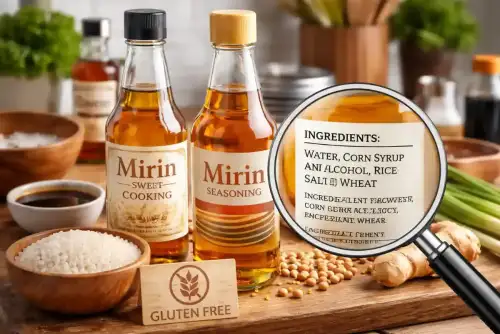
Celiac.com 04/25/2026 - Mirin is a common ingredient in Japanese cooking, but it often creates confusion for people who need to avoid gluten. Many shoppers assume mirin is simply a sweet rice wine and therefore automatically safe. That assumption can lead to mistakes, especially for people with celiac disease or gluten sensitivity who depend on clear ingredient information.
The problem is that the word "mirin" can refer to more than one type of product. Some bottles are closer to traditional mirin, while others are mirin-style seasonings made with added ingredients. Depending on the brand and formulation, those added ingredients can sometimes include wheat, barley, malt-based flavorings, or other gluten-containing components. Even when the main base begins with rice, that does not guarantee the final product is gluten-free.
Celiac.com Sponsor (A12):
For anyone on a strict gluten-free diet, the safest approach is not to rely on the name alone. The label, ingredients, and any allergen statement matter far more than the front of the bottle.
What Mirin Actually Is
Mirin is a sweet cooking seasoning used to add mild sweetness, gloss, and balance to sauces, marinades, and glazes. It is commonly used in dishes such as teriyaki sauce, noodle broths, dipping sauces, and simmered vegetables. In many recipes, mirin helps round out salty flavors and gives food a subtle shine.
Traditional mirin is usually associated with rice and fermentation, which is one reason many people assume it should be gluten-free. However, products sold in stores are not always made in the same way. Some are designed for convenience, lower cost, or longer shelf life, and that can change the ingredient list significantly.
This difference is especially important in the United States and other countries where imported products and domestic versions may sit side by side on the shelf. Two bottles may both say "mirin," yet one may be much safer than the other for someone avoiding gluten.
Where Gluten Can Enter the Picture
Gluten concerns with mirin usually come from added ingredients rather than from the idea of rice itself. A mirin-style seasoning may contain wheat, barley, or flavoring agents that are not clearly understood at a glance. Some products also include malt or ingredients derived from grains that are not gluten-free.
Another issue is labeling language. A bottle may emphasize Japanese style cooking or use wording that sounds simple and traditional, but the back panel can tell a different story. If wheat is listed, then the product is not safe for people with celiac disease. If barley or malt appears, that is also a problem. In some cases, the wording may be unclear enough that cautious consumers should skip the product unless the company specifically confirms it is gluten-free.
Sauces made with mirin can create even more risk. A restaurant glaze or bottled marinade may combine mirin with soy sauce, which often contains wheat unless it is specifically labeled gluten-free. So even if the mirin itself were safe, the finished sauce may not be.
Traditional Mirin Versus Mirin-Style Seasonings
One reason this topic is so confusing is that traditional mirin and mirin-style products are not always the same thing. Traditional versions are generally viewed as more straightforward, while lower-cost cooking versions may include a wider range of added ingredients. That means the risk may vary from one bottle to the next.
For gluten-free shoppers, this is a good reminder that products that sound authentic are not automatically safe, and cheaper cooking versions are not automatically unsafe. The only reliable guide is the actual ingredient list and allergen information on the specific product in your hand.
It is also worth remembering that imported products may use labeling conventions that feel less familiar. Even when a product is legally labeled, the information may not be as easy to interpret quickly during shopping. That can make mirin a product where careful label reading is especially important.
How to Read the Label Safely
If you have celiac disease or gluten sensitivity, start with the ingredient panel. Look for wheat, barley, malt, malt extract, malt syrup, or any similar grain-based wording that would suggest gluten. Then check the allergen statement, since wheat is often called out separately in bold or in a "contains" line.
A gluten-free label can add reassurance, but many safe products are not certified or labeled that way. In those cases, you may need to look more closely at the ingredients or contact the manufacturer. If the label is unclear, it is usually better to choose a different brand rather than gamble.
This is especially true because mirin is not usually an essential ingredient for survival. It is a flavor enhancer, not a staple that must be taken home no matter what. If the bottle leaves doubt, the safest answer is to leave it on the shelf.
Restaurant Risks and Cross-Contact
Mirin can also appear in restaurant foods where the menu never mentions it. It may be used in glazes, dressings, stir-fry sauces, noodle broths, dipping sauces, and marinades. For people with celiac disease, this can make Japanese food and fusion dishes harder to navigate.
Even if a restaurant staff member says a dish contains only "rice wine," that description may not be enough. The sauce could include mirin-style seasoning with wheat, regular soy sauce, or both. Cross-contact in the kitchen is another issue, especially when shared utensils, woks, cutting boards, or sauce containers are involved.
Asking detailed questions helps. Instead of only asking whether a dish is gluten-free, it can be more useful to ask what brand of mirin or cooking wine is used and whether the sauce also contains soy sauce or malt ingredients. The more specific the question, the better the chance of getting a useful answer.
Safer Alternatives for Gluten-Free Cooking
People who cook at home have more control. If you cannot find a mirin product you trust, there are other ways to create similar flavor balance. Some cooks use a combination of gluten-free rice vinegar and a small amount of sugar. Others use gluten-free cooking wine substitutes depending on the recipe. The exact choice depends on whether the dish needs sweetness, acidity, or both.
The advantage of using substitutes is that you can build the flavor yourself from ingredients you already trust. This can be especially helpful for those newly diagnosed with celiac disease, who may feel overwhelmed by the uncertainty around specialty sauces and imported seasonings.
Home cooking also allows you to pair the substitute with gluten-free tamari instead of regular soy sauce, making it easier to recreate Japanese-inspired flavors without taking unnecessary risks.
What This Means for People With Celiac Disease
For people with celiac disease, the takeaway is simple: mirin is not automatically gluten-free just because it is associated with rice. Some products may be safe, but others may contain wheat, barley, malt, or unclear flavoring ingredients. Because even small amounts of gluten can trigger an immune reaction in people with celiac disease, assumptions are not safe enough.
This matters because mirin often appears in foods that already carry hidden gluten risks. A person may focus on avoiding bread or pasta while overlooking sauces, marinades, and flavoring ingredients that can be just as problematic. Mirin belongs to that category of ingredients that can quietly create trouble when labels are vague or restaurant answers are incomplete.
The best approach is to treat mirin as a product that requires verification every time unless you already know and trust the brand. Once a safe option is identified, many people find it easier to stick with that one rather than constantly starting over with unfamiliar bottles.
What This Means for People With Gluten Sensitivity
For people with gluten sensitivity, the lesson is similar, even if their medical needs differ from those with celiac disease. Hidden gluten in sauces and cooking ingredients can still lead to unpleasant symptoms and frustration. Because mirin often seems harmless at first glance, it can be one of those ingredients that slips past a person's usual caution.
Being careful with mirin can reduce those accidental exposures. It can also help people notice patterns in their own reactions. If a meal seems safe but repeatedly causes symptoms, the seasoning ingredients may deserve a second look.
Bottom Line
Mirin is a useful and popular ingredient, but it is not always as simple as many people think. Some versions may be gluten-free, while others may contain wheat, barley, malt, or other questionable ingredients. The name on the bottle is not enough to determine safety.
For people with celiac disease or gluten sensitivity, the safest plan is to read labels carefully, watch for hidden grain ingredients, ask detailed questions at restaurants, and use trusted substitutes when needed. That extra caution can help prevent accidental gluten exposure and make it easier to enjoy Japanese-inspired cooking with more confidence and less risk.









Recommended Comments
There are no comments to display.
Create an account or sign in to comment
You need to be a member in order to leave a comment
Create an account
Sign up for a new account in our community. It's easy!
Register a new accountSign in
Already have an account? Sign in here.
Sign In Now