


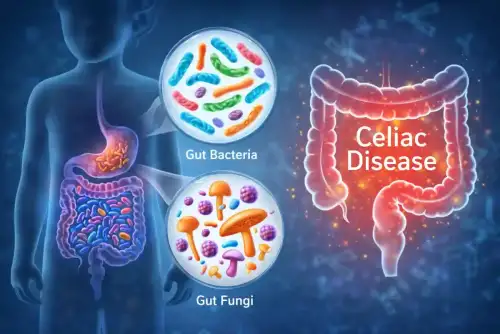
Celiac.com 04/23/2026 - Celiac disease is an autoimmune disorder in which the immune system reacts to gluten, a protein found in wheat, barley, and rye. This reaction damages the lining of the small intestine and can interfere with the absorption of nutrients. While genetics plays an important role in determining who may develop celiac disease, genetics alone does not explain why only some people with the genetic risk actually become ill.
Many people carry certain genetic markers linked to celiac disease, yet most of them never develop the condition. This has led scientists to investigate other possible influences, including the microorganisms that live inside the digestive tract. The human gut contains trillions of microbes, including bacteria and fungi, which together form what is known as the gut microbiome. These organisms interact closely with the immune system and may influence inflammation, digestion, and disease development.
Celiac.com Sponsor (A12):
This study explored whether differences in gut microbes might help explain why some genetically susceptible children develop celiac disease while others do not. Researchers examined both bacterial and fungal communities in the intestines of children with newly diagnosed celiac disease, their healthy siblings, and children with no known risk for the condition.
Purpose of the Study
The goal of the research was to better understand how genetic risk and gut microbes interact in children. Scientists wanted to determine whether children with celiac disease show distinct microbial patterns compared with their siblings and unrelated healthy children. They were particularly interested in identifying specific bacteria or fungi that might signal early risk for developing the disease.
By studying siblings of children with celiac disease, the researchers hoped to gain insights into early biological changes that might occur before symptoms appear. Because siblings share many environmental exposures and often similar diets, they provide a valuable comparison group for investigating genetic and microbial influences.
How the Study Was Conducted
The research involved children and adolescents between the ages of one and eighteen. Participants were divided into three groups. The first group consisted of children who had recently been diagnosed with celiac disease and had not yet begun a gluten-free diet. The second group included siblings of these children who did not have symptoms of the disease. The third group served as a control group and included healthy children without celiac disease.
Researchers collected stool samples from all participants to examine the microorganisms living in the gut. These samples were carefully preserved and analyzed using modern genetic sequencing techniques. This approach allows scientists to identify many different microbial species by reading fragments of their genetic material.
The study focused on two major types of microorganisms: bacteria and fungi. While bacteria have been widely studied in relation to digestive health, fungi are less understood but are increasingly recognized as important members of the gut ecosystem.
Key Findings About Gut Microbes
The researchers discovered that the composition of gut microbes differed among the three groups of children. Children with celiac disease and their siblings showed differences in bacterial diversity compared with healthy children. These differences suggest that the intestinal environment of children at risk for celiac disease may already be altered before the disease becomes fully apparent.
Interestingly, the fungal component of the gut microbiome showed particularly noticeable differences between children with celiac disease and their siblings. This finding highlights the possibility that fungi may play a previously underappreciated role in autoimmune conditions affecting the digestive system.
Several microbial species stood out as potential indicators of disease risk. Some bacteria commonly associated with healthy digestion appeared in altered levels in children with celiac disease. In some cases, microbes that normally support intestinal health were less abundant, while others that may promote inflammation were more prominent.
The study also identified certain fungal species that were more common in either children with celiac disease or their siblings. These fungi could potentially serve as early markers of changes occurring in the intestinal environment before the disease becomes clinically evident.
The Role of Genetics
The researchers also examined how specific genetic markers related to celiac disease might influence gut microbes. Certain genes are known to increase the likelihood of developing the condition. These genes help control how the immune system recognizes foreign substances, including fragments of gluten.
The study confirmed that children with celiac disease carried one or more of these genetic markers. However, the relationship between genetics and microbial composition appeared to be complex. Some genetic variants were associated with changes in specific microbial species, while others showed little direct influence on the overall microbial community.
This suggests that genetic risk may interact with the microbiome in subtle ways rather than completely determining which microbes are present. In other words, genetics may set the stage for disease, while the gut environment helps determine whether that risk becomes reality.
Connections Between Bacteria and Fungi
Another important discovery was that certain bacteria and fungi appeared to interact with one another. The presence of particular fungal species often corresponded with the presence or absence of specific bacterial species. This indicates that the gut microbiome functions as a complex ecosystem in which many organisms influence each other.
For example, some fungi were associated with bacterial species known to support intestinal balance and immune health. Other fungi appeared to correlate with microbial patterns that could contribute to inflammation or disruption of the intestinal barrier.
These relationships highlight the importance of studying both bacterial and fungal communities together rather than examining them separately. The balance between these organisms may play a significant role in maintaining digestive health.
What Makes Siblings Unique
One of the most intriguing findings was that siblings of children with celiac disease displayed their own distinct microbial patterns. Even though they did not have the disease, their gut microbiomes differed from those of unrelated healthy children.
This suggests that siblings may represent an intermediate state between health and disease. Their microbial communities might reflect early biological changes associated with genetic susceptibility. These changes could either increase the likelihood of developing the condition or represent protective adaptations that prevent disease onset.
Understanding these differences could help scientists identify early warning signs and possibly predict which children are most likely to develop celiac disease later in life.
Limitations of the Research
While the findings are promising, the study had some limitations. The number of participants was relatively small, which means that some subtle differences may have been missed. Larger studies will be needed to confirm the patterns observed in this research.
Additionally, the study analyzed stool samples rather than tissue samples from the small intestine. Although stool samples provide valuable information about the gut microbiome, they may not fully reflect microbial activity occurring directly at the intestinal lining where celiac disease causes damage.
Despite these limitations, the research provides important insights into how microbes and genetics may interact in the development of autoimmune digestive disorders.
Why These Findings Matter for People With Celiac Disease
The results of this study may have important implications for understanding how celiac disease begins. If certain microbial patterns appear before the disease develops, scientists may eventually be able to identify individuals at high risk earlier than ever before.
In the future, microbial testing could potentially help guide preventive strategies. Researchers may explore whether diet, probiotics, or other approaches could influence the gut microbiome in ways that reduce the likelihood of disease onset.
The discovery that fungal organisms may play a role alongside bacteria is also significant. Most research has focused on bacteria alone, but this study suggests that fungi could provide valuable clues about the early stages of celiac disease.
For people living with celiac disease and their families, these findings highlight the growing importance of the gut microbiome in autoimmune conditions. Continued research may eventually lead to new methods for identifying risk, preventing disease development, and improving long-term health for those affected.
Read more at: wjgnet.com








Recommended Comments
There are no comments to display.
Create an account or sign in to comment
You need to be a member in order to leave a comment
Create an account
Sign up for a new account in our community. It's easy!
Register a new accountSign in
Already have an account? Sign in here.
Sign In Now