Jump to content
  • Welcome to Celiac.com!

    You have found your celiac tribe! Join us and ask questions in our forum, share your story, and connect with others.


  • Celiac.com Sponsor (A1):
    Celiac.com Sponsor (A1-M):
  • Get Celiac.com Updates:
    Support Our Content
    eNewsletter
    Donate
    1. Scott Adams

      Scott Adams

  • Get Celiac.com Updates:
    Support Celiac.com:
    Join eNewsletter
    Donate
  • About Me

    Scott Adams
    scott_adams_dotcomer.webp

    Scott Adams was diagnosed with celiac disease in 1994. Faced with a critical lack of resources, he dedicated himself to becoming an expert on the condition to achieve his own recovery.

    In 1995, he founded Celiac.com with a clear mission: to ensure no one would have to navigate celiac disease alone. The site has since grown into one of the oldest and most trusted patient-focused resources for celiac disease and the gluten-free lifestyle.

    His work to advance awareness and support includes:

    Today, Celiac.com remains his primary focus. To ensure unbiased information, the site does not sell products and is 100% advertiser supported.


  • Celiac.com Sponsor (A17):
    Celiac.com Sponsor (A17):


    Celiac.com Sponsors (A17-M):


  • Related Articles

    Jefferson Adams
    Celiac.com 09/03/2009 - Every night thousands of people lose sleep because of a gnawing, tingling urge to move their legs, disturbing their sleep and are often causing chronic pain. These people wake feeling unrested, with aching muscles.
    In addition to lost sleep and discomfort, these people often suffer chronic pain. Often, these symptoms baffle both patients and primary care doctors. Little do these people and their doctors know that the pain and restlessness is due to Restless Legs Syndrome (RLS) and is likely caused by a problem with the digestive tract.
    RLS affects 7% to 15% of the population, especially older adults and pregnant women. RLS symptoms can have a major impact on quality of life, and the syndrome often stymies the medical community. In recent years a number...


    Jefferson Adams
    Can Targeting Gut Bacteria Prevent Autoimmune Disease?
    Celiac.com 04/25/2018 - A team of Yale University researchers discovered that bacteria in the small intestine can travel to other organs and trigger an autoimmune response. In this case, they looked at Enterococcus gallinarum, which can travel beyond the gut to the spleen, lymph nodes, and liver. The research could be helpful for treating type 1 diabetes, lupus, and celiac disease.
    In autoimmune diseases, such as type 1 diabetes, lupus, and celiac disease, the body’s immune system mistakenly attacks healthy cells and tissues. Autoimmune disease affects nearly 24 million people in the United States. 
    In their study, a team of Yale University researchers discovered that bacteria in the small intestine can travel to other organs and trigger an autoimmune response. In this ca...


    Jefferson Adams
    Rosacea and Small Intestinal Bacterial Overgrowth (SIBO)
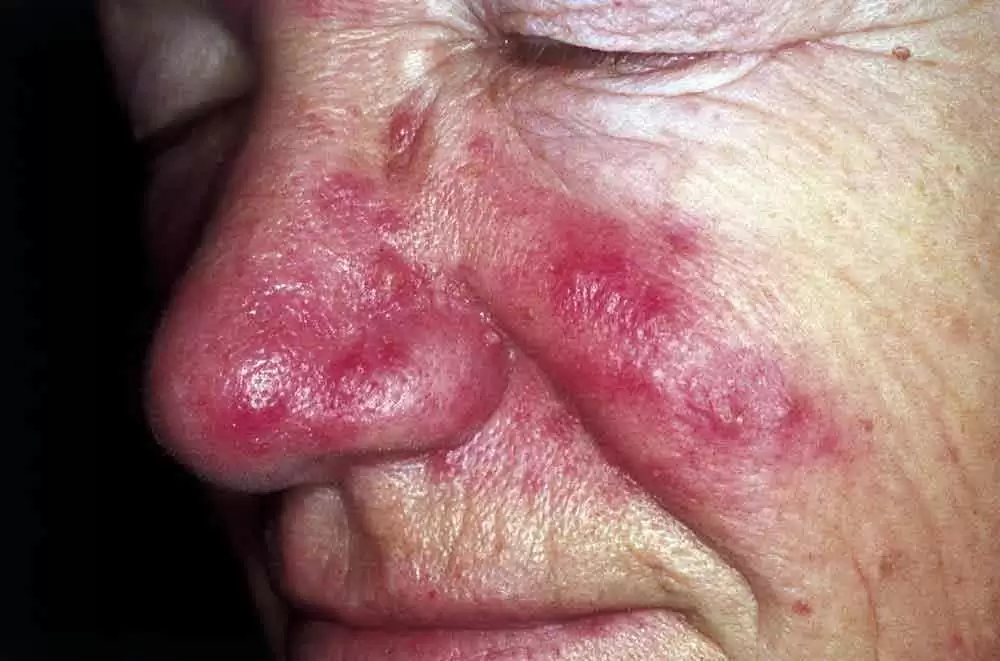
    Celiac.com 04/30/2018 - Rosacea is one of the most common skin diseases, and usually manifests as chronic inflammation of the eyes and the central part of the face. Rosacea is medically harmless, but it can trigger strong self-consciousness and reduce people’s overall enjoyment of life. For most people, symptoms of rosacea include flushing and erythrosis or reddening of the face. A small percentage of patients also get the formation of papules and pustules, with phymata.
    Doctors have posited numerous possible triggers, including hypochlorhydria, dysmotility, anatomic anomalies of the intestine, and immunologic causes. SIBO is an acronym for small intestinal bacterial overgrowth, a medical condition marked by an abnormally high concentration of bacteria in the jejunal aspirate on cu...


    Jefferson Adams
    Breath Tests for the Non-invasive Diagnosis of Small Intestinal Bacterial Overgrowth: A Systematic Review With Meta-analysis
    Celiac.com 01/31/2020 - We've written previously about the connection between SIBO and rosacea, along with efforts to develop a breath test for celiac disease.
    Diagnosis for small intestinal bacterial overgrowth (SIBO) is usually made using non-invasive breath tests (BTs), namely lactulose BT (LBT) and glucose BT (GBT). However, there is no consensus opinion on the best way to standardize the test parameters. In an effort to move toward a consensus opinion, a team of researchers recently set out to perform a meta-analysis to analyze diagnostic performance of LBT/GBT for SIBO diagnosis. 
    The research team included Giuseppe Losurdo, Gioacchino Leandro, Enzo Ierardi, Francesco Perri, Michele Barone, Mariabeatrice Principi, and Alfredo Di Leo. They are variously affiliated wit...


  • Recent Activity

    1. - trents replied to Healthierbody2026's topic in Related Issues & Disorders
      15

      New at gluten sensitivity

    2. - Dr. Gunn replied to anya22's topic in Celiac Disease Pre-Diagnosis, Testing & Symptoms
      5

      Test interpretations

    3. - Lotte18 posted a topic in Publications & Publicity
      0

      Prospective CRISPR research

    4. - knitty kitty replied to Healthierbody2026's topic in Related Issues & Disorders
      15

      New at gluten sensitivity

    5. - Aretaeus Cappadocia replied to Healthierbody2026's topic in Related Issues & Disorders
      15

      New at gluten sensitivity

  • Celiac.com Sponsor (A19):
  • Member Statistics

    • Total Members
      133,702
    • Most Online (within 30 mins)
      7,748

    AMJ59
    Newest Member
    AMJ59
    Joined
  • Celiac.com Sponsor (A20):
  • Celiac.com Sponsor (A22):
  • Forum Statistics

    • Total Topics
      121.6k
    • Total Posts
      1m
  • Celiac.com Sponsor (A21):
  • Popular Now

    • Ping22
      5
    • anya22
      5
    • MicG
      7
    • Jmartes71
      12
    • Healthierbody2026
      15
  • Popular Articles

    • Scott Adams
    • Scott Adams
    • Scott Adams
    • Scott Adams
    • Scott Adams
  • Upcoming Events

×
×
  • Create New...

Important Information

NOTICE: This site places This site places cookies on your device (Cookie settings). on your device. Continued use is acceptance of our Terms of Use, and Privacy Policy.