


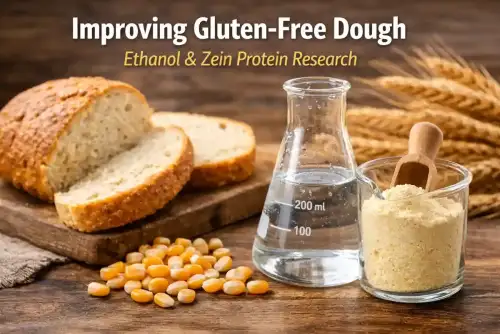
Celiac.com 05/01/2026 - This study explored how ethanol, a type of alcohol commonly found in food processing, changes the structure and behavior of a corn protein called zein. Zein is widely used in gluten-free foods because it can mimic some of the stretchy and elastic qualities of gluten. However, gluten-free doughs often lack the softness and flexibility needed to produce high-quality bread and baked goods. Researchers wanted to better understand why adding ethanol improves these properties and how different types of zein respond to it.
What Is Zein and Why It Matters
Zein is a protein found in corn and is made up of several subtypes that differ in structure and composition. The most common type is called alpha zein, but there are also beta and gamma types that contain different chemical features. These differences affect how the protein behaves when mixed with water and other ingredients.
Celiac.com Sponsor (A12):
Unlike gluten, zein does not naturally form strong and flexible dough. Gluten-free breads made with zein and starch alone are often dense, crumbly, and less appealing. Because of this, improving the performance of zein is an important goal for developing better gluten-free foods.
The Role of Ethanol in Gluten-Free Dough
Ethanol is often used in food processing and is also naturally produced during fermentation. Previous research has shown that adding ethanol to zein-based dough makes it softer, smoother, and more stretchable. It can even increase the volume of bread. However, the exact reasons behind these improvements were not fully understood before this study.
Most earlier research focused on very high levels of ethanol, where zein dissolves easily. In contrast, real food systems use much lower levels. This study focused on ethanol concentrations ranging from zero to fifty percent to better reflect practical conditions in gluten-free dough.
How the Study Was Conducted
The researchers examined three different forms of zein, each with varying amounts of alpha protein. They exposed these samples to different levels of ethanol and observed changes in their structure and physical behavior. By comparing these variations, the study aimed to understand how each type of zein reacts to ethanol.
The scientists looked at how the proteins formed small particles, how they interacted with each other, and how their internal structures changed. This allowed them to build a detailed picture of what happens at the microscopic level when ethanol is added.
Key Findings About Structural Changes
One of the most important discoveries was that all types of zein formed tiny spherical particles when mixed with ethanol. As the ethanol level increased, these particles began to merge together. This merging was especially strong in samples that contained less alpha protein.
Ethanol also caused the protein structure to loosen and partially unfold. This made it easier for the proteins to interact with each other and form networks. In particular, ethanol strengthened two types of interactions: hydrophobic interactions, which occur between water-repelling parts of the protein, and hydrogen bonding, which helps stabilize structures.
However, not all types of zein reacted the same way. Alpha-rich zein was the most sensitive to ethanol, showing a significant decrease in its glass transition temperature, which is the point where the protein becomes more flexible. In contrast, zein with more beta and gamma components was more resistant to change due to strong chemical bonds called disulfide bonds.
Differences Between Zein Types
The study revealed that the composition of zein plays a major role in how it behaves. Alpha-rich zein relies mainly on weaker interactions, which makes it more responsive to ethanol and easier to soften. On the other hand, zein with more beta and gamma components contains stronger internal bonds that make it more stable but less flexible.
This balance between flexibility and stability is important. While strong bonds can improve elasticity, too many can make the dough stiff. The study suggests that combining different types of zein in the right proportions may help create better gluten-free dough with improved texture.
How Ethanol Improves Dough Structure
Based on the findings, the researchers proposed a model explaining how ethanol enhances gluten-free dough. Ethanol causes the zein proteins to partially unfold, exposing areas that can interact more easily. These exposed regions then form stronger networks through hydrophobic interactions and hydrogen bonds.
This improved network helps the protein blend more effectively with starch, leading to a more uniform and stable dough. As a result, the dough becomes more stretchable and less prone to breaking, which improves the final texture of baked products.
Why This Study Is Important for Gluten-Free Foods
This research provides valuable insight into how gluten-free dough can be improved at a fundamental level. By understanding how ethanol affects different types of zein, food scientists can design better formulations that mimic the properties of gluten more closely.
The study also highlights the importance of protein composition. Adjusting the balance of zein subtypes could allow manufacturers to fine-tune the texture of gluten-free foods, making them softer, more elastic, and more enjoyable to eat.
What This Means for People with Celiac Disease
For individuals with celiac disease, finding high-quality gluten-free foods can be challenging. Many gluten-free products lack the texture and structure of traditional baked goods, which can affect both taste and satisfaction.
This study offers hope for improving these products. By revealing how ethanol and protein composition can enhance the structure of gluten-free dough, it opens the door to better bread, pastries, and other staples. These improvements could lead to foods that are not only safe but also more enjoyable and closer in quality to their gluten-containing counterparts.
In the long term, this type of research could significantly improve the daily eating experience for people with celiac disease, making gluten-free diets easier to maintain and more satisfying overall.
Read more at: sciencedirect.com










Recommended Comments
Create an account or sign in to comment
You need to be a member in order to leave a comment
Create an account
Sign up for a new account in our community. It's easy!
Register a new accountSign in
Already have an account? Sign in here.
Sign In Now