


Celiac.com 05/01/2026 - When asked “What are your biggest challenges?” and “What do you wish you knew when you (or a loved one) first got diagnosed or started living and eating gluten-free?” in our 2024 survey, Little Northern Bakehouse email subscribers didn’t hold back. Again and again, subscribers told us they struggle with two things—how to read labels and how to avoid hidden gluten.
Advocacy groups like Celiac.com, Beyond Celiac, the Celiac Disease Foundation, the Gluten Intolerance Group, and Celiac Canada (the Canadian Celiac Association) offer extensive, in-depth resources on these topics (and much more!).
Celiac.com Sponsor (A12):
But whether you’re not up for a deep dive, you don’t want to dig, or it’s just more comfortable coming from gluten-free friends, we’ve got you covered! Let us help soften the struggle—skim through How to Read Labels and Spot Hidden Gluten in Packaged and Processed Foods for a fast, fun take on this serious subject.
Read It and DON’T Weep:
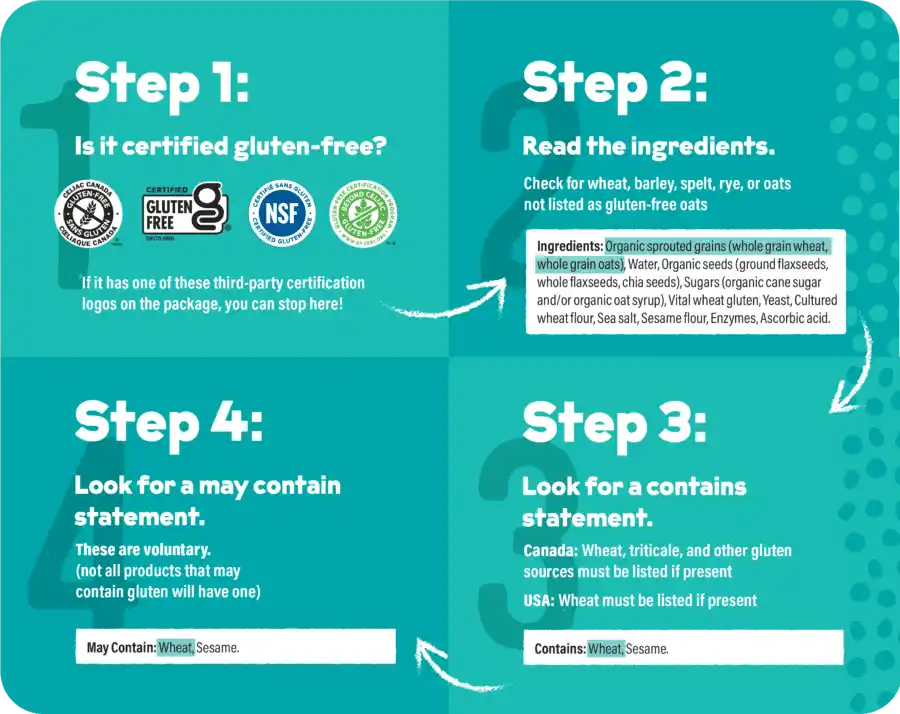
How to Read Labels to Spot Hidden Gluten in 4 Simple Steps
With any new packaged or processed product, follow these four steps to gluten-free safety!
If it passes—and it isn’t a baked good, grain, flour, cereal, seed, or pasta with a high cross-contamination risk—it’s gluten-free.
If it is not certified gluten-free (or does not make a gluten-free claim in the US), and it’s in one of the high-risk categories above, it may not be gluten-free.
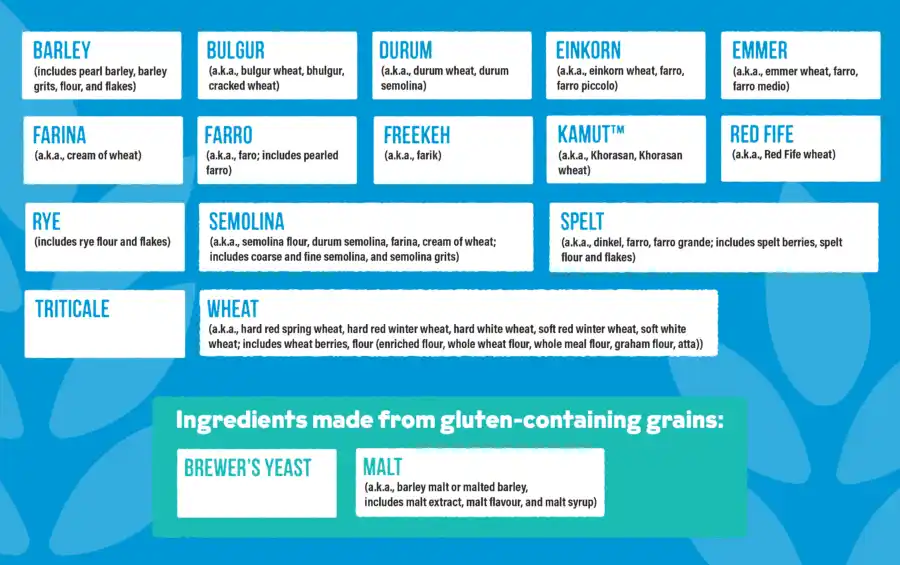
A Protein by Any Other Name: Hidden Gluten Words to Watch For
In Canada, wheat and triticale are priority allergens, and other gluten sources—including barley, rye, regular oats, and modified gluten proteins—must be declared on food labels in plain language.(1) (No sneaky synonyms allowed!).
In the United States, wheat is one of the nine major food allergens, and must be declared on food labels, either in the ingredients list (e.g., “flour (wheat)”) or in a contains statement (e.g., Contains wheat”)(2)
However, other gluten sources do not require such a declaration. Instead, FDA regulations strictly define gluten-free‡, so foods that contain gluten sources cannot be labelled gluten-free.
That means people with celiac disease and other reasons to avoid gluten must read the label for any packaged food in the United States that isn’t certified gluten-free or not labelled gluten-free extra closely.
‡Any product that says it is gluten-free in the United States is required to contain <20 ppm gluten.
Gluten Sources and their Aliases
Wheat has many varietals and cousins in the world of gluten-containing grains. And while wheat triggers an explicit listing or contains statement on both sides of the border, expanding your vocabulary of gluten source synonyms is an essential label reading skill!
This list of gluten-containing grains will help you build it (or brush up!)(3):
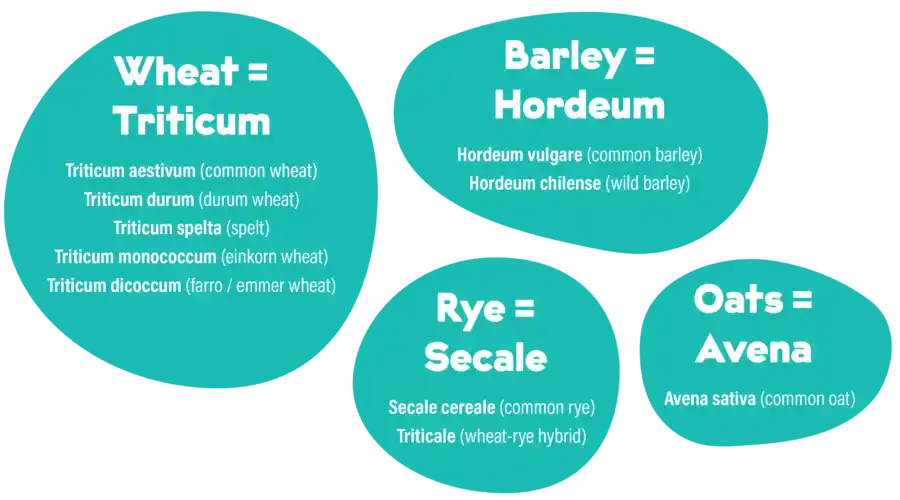
Botanical Names:
Latin for Gluten-Containing Grains
Food regulations in Canada and the United States require the common names of plant-derived ingredients on packaging.(4) But when it comes to dietary supplements (US), natural health products (Canada)(5)—and cosmetics especially—you may find ingredients listed by their proper (Latin binomial, scientific, or INCI (International Nomenclature Cosmetic Ingredient)) name.
When you find yourself reading 4-point font on a teeny tiny peel-back label searching for hidden gluten in a lip gloss or supplement, here’s what to look for if there’s no common name listed:
Sneaky Snacks and Cagey Condiments:
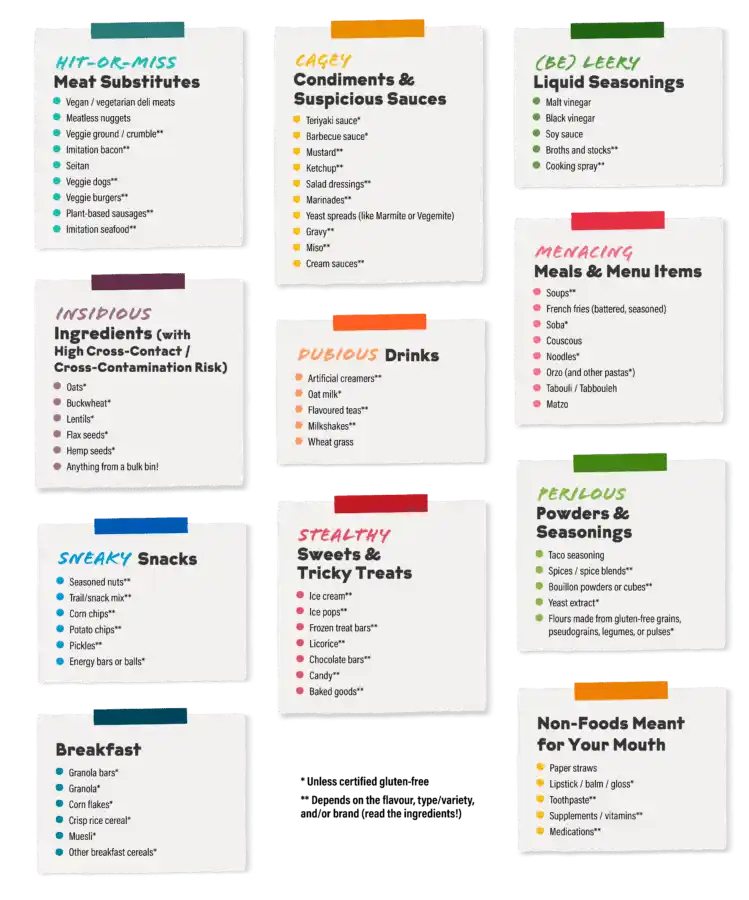
Packaged Foods That Deserve a Double-Take
Are they, or aren’t they? There are plenty of packaged and processed foods that sometimes, often—or always—contain gluten. Although there are more gluten-free options at the grocery store every year, if it’s on our set of risky lists here, be sure to bust out your label reading skills before you buy!
BONUS: Hidden Gluten Word Search
Hidden gluten is no joke—for celiacs and people living with severe non-celiac gluten sensitivities or wheat allergies, there’s no such thing as a little gluten. But that doesn’t mean we can’t add a side of levity to your learning!
Print out our fun Hidden Gluten Word Search to enjoy a delightful distraction beside your gluten-free breakfast!
- Medium Difficulty Word Search & Answer Key - Click to Download.
- Hard Difficulty Word Search & Answer Key - Click to Download.
Find Little Northern Bakehouse near you.
Sign up for Little Northern Bakehouse emails to invite gluten-free inspiration into your inbox or follow them on Instagram, Facebook, and Pinterest to get more of the same in your feed and find a community of gluten-free peers, too.
References:
1 Health Canada, Questions and Answers About the New Regulations to Enhance the Labelling of Food Allergens, Gluten and Added Sulphites. August 16, 2012. Available from: https://www.canada.ca/en/health-canada/services/food-nutrition/food-labelling/allergen-labelling/questions-answers-about-new-regulations-enhance-labelling-food-allergens-gluten-added-sulphites.html, accessed July 15, 2024.
2 United States Food & Drug Administration, Food Allergies. April 12, 2024. Available from: https://www.fda.gov/food/food-labeling-nutrition/food-allergies, accessed July 15, 2024.
3 Partially sourced from: Celiac.org, Gluten-free Diet & Food Label Reading Guide. 2017. Available from: https://celiac.org/wp-content/uploads/2017/07/Combined-Gluten-Free-Diet-and-Food-Label-Reading-Guide.pdf, accessed July 15, 2024.
4 Canadian Food Inspection Agency, List of Ingredients and Allergens on Food Labels. March 18, 2024. Available from: https://inspection.canada.ca/en/food-labels/labelling/industry/list-ingredients-and-allergens#s7c2, accessed July 16, 2024.
5 Health Canada, Natural Health Products Standard Terminology Guide. 2013. Available from: https://www.canada.ca/content/dam/hc-sc/migration/hc-sc/dhp-mps/alt_formats/pdf/pubs/natur/osstg-gtnps-eng.pdf, accessed July 16, 2024.








Recommended Comments