



Celiac.com 04/01/2026 - At first glance, deli meat seems simple. It is just sliced turkey, ham, roast beef, or chicken—right? For people living with celiac disease or gluten sensitivity, however, even something as basic as lunch meat can become complicated. Deli meat remains one of the most searched gluten-related questions online, and for good reason.
Unlike whole, unprocessed cuts of meat prepared at home, deli meats are often manufactured, seasoned, preserved, sliced, and packaged in ways that can introduce hidden gluten. For individuals with celiac disease, even small traces of gluten can trigger intestinal damage and long-lasting symptoms. That makes deli counters and packaged cold cuts a category that deserves careful attention.
Is Meat Naturally Gluten Free?
Celiac.com Sponsor (A12):
Plain, unprocessed meat does not naturally contain gluten. Gluten is a protein found in wheat, barley, and rye. Fresh beef, poultry, pork, and fish are gluten free in their natural state.
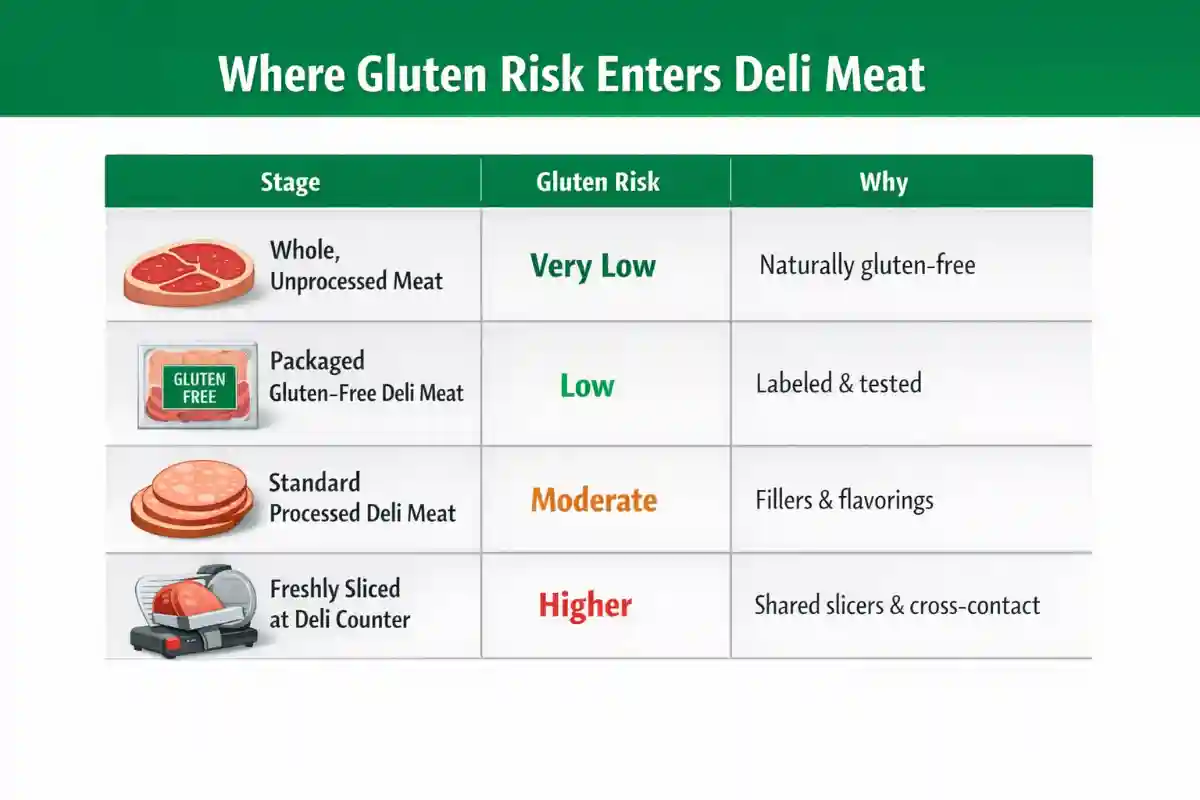
The problem begins when meat is processed. Deli meats are rarely just “meat.” Many contain flavorings, binders, preservatives, marinades, and fillers. Some of these added ingredients can contain gluten or be produced in facilities where gluten contamination is possible.
Why Deli Meat Is Considered High Risk
1. Fillers and Binders
Some deli meats use fillers or binding agents to improve texture and reduce cost. While many companies now avoid wheat-based fillers, not all products are created equally. Starch blends, hydrolyzed proteins, and modified food ingredients can sometimes be derived from gluten-containing grains unless clearly labeled otherwise.
2. Seasonings and Flavorings
Seasoning blends are another area of concern. Spice mixes, smoke flavorings, and marinades may contain malt, wheat-based ingredients, or ambiguous “natural flavors.” Even small amounts can be problematic for those with celiac disease.
3. Shared Slicers at the Deli Counter
One of the biggest risks is not the meat itself, but how it is sliced. At many grocery stores, the same slicer is used for multiple products throughout the day. A loaf of turkey labeled gluten free may be sliced immediately after a wheat-containing product such as breaded chicken or specialty items coated in sauces.
Crumbs and residue can remain on slicer blades and surfaces. For someone with celiac disease, that cross-contact can be enough to cause symptoms.
4. Vague or Incomplete Labeling
Packaged deli meats are required to disclose major allergens such as wheat. However, barley and rye are not always required to be labeled as clearly. Ingredients such as malt extract or malt vinegar can sometimes appear in flavorings without standing out to hurried shoppers.
Labels that state “natural flavors” or “spices” without further detail can leave consumers guessing.
Packaged Deli Meat vs. Freshly Sliced: Which Is Safer?
For people with celiac disease, pre-packaged deli meat that is clearly labeled gluten free is often safer than freshly sliced meat from a deli counter. Products that are certified gluten free have undergone additional testing to ensure gluten levels remain below strict limits.
Fresh slicing at the counter may seem more appealing, but unless the store has strict cleaning protocols and a dedicated gluten-free slicer, the risk of cross-contact can be significant.
What About “Uncured” or “All Natural” Deli Meats?
Marketing terms such as “uncured,” “nitrate free,” or “all natural” do not guarantee gluten safety. These terms refer to how the meat is preserved or processed, not whether gluten-containing ingredients are present.
A product can be organic or minimally processed and still contain gluten-based additives. Always rely on ingredient lists and gluten-free labeling rather than marketing claims.
Hidden Sources of Gluten in Deli Products
Beyond sliced meats, many deli counters sell prepared items that frequently contain gluten:
- Marinated meats with soy sauce or malt flavoring
- Meatloaf or specialty loaves containing breadcrumbs
- Pre-made chicken or tuna salad with hidden additives
- Glazed ham with wheat-based thickening agents
Even if a product appears safe, sauces and coatings can introduce risk.
Transglutaminase "Meat Glue"
While transglutaminase itself does not contain gluten, it is structurally similar to tissue transglutaminase, the enzyme targeted by the immune system in celiac disease. Some researchers have raised concerns that microbial transglutaminase used in food processing could potentially increase intestinal permeability or interact with gluten fragments in ways that amplify immune responses in susceptible individuals. Although the evidence is still evolving and not all experts agree on the level of risk, some people with celiac disease report symptoms after consuming heavily processed or reformed meat products. For that reason, individuals who are highly sensitive may prefer whole, intact cuts of meat rather than pressed, formed, or restructured deli products where binding agents may have been used.
What This Means for People With Celiac Disease
For someone with celiac disease, gluten is not simply a digestive irritant. It triggers an immune reaction that damages the lining of the small intestine. This damage can lead to nutrient deficiencies, fatigue, bone loss, and long-term complications if exposure continues.
Because of this, even small and repeated exposures from something like deli meat can slow healing. A sandwich made with gluten-free bread but contaminated lunch meat can still cause harm.
People with celiac disease should consider:
- Choosing deli meats labeled gluten free or certified gluten free
- Avoiding shared slicers unless strict cleaning is confirmed
- Reading ingredient lists carefully every time, as formulations can change
- Asking detailed questions at the deli counter about preparation practices
What About Non-Celiac Gluten Sensitivity?
Individuals with non-celiac gluten sensitivity may react differently than those with celiac disease. While they do not experience the same autoimmune intestinal damage, they can still have symptoms such as bloating, brain fog, or fatigue after gluten exposure.
For this group, small amounts of cross-contact may or may not trigger noticeable symptoms. However, consistent avoidance can still improve quality of life.
Practical Tips for Safer Choices
Buy Whole Cuts When Possible
Purchasing whole, unseasoned cuts of meat and slicing them at home reduces risk dramatically.
Choose Reputable Brands
Some brands specialize in gluten-free processing and clearly label their products. Sticking with trusted options can reduce guesswork.
Communicate Clearly
If using a deli counter, ask that gloves be changed and surfaces wiped before slicing. While not foolproof, it may reduce contamination.
Watch for Ingredient Changes
Manufacturers can reformulate products at any time. A previously safe product may not remain safe indefinitely.
Why This Topic Continues to Trend
Deli meat sits at the intersection of convenience and risk. It is a staple for school lunches, quick dinners, and travel meals. Because it seems simple, many people assume it is safe. But the combination of processing, additives, and shared equipment makes it a gray area.
For families managing celiac disease, food choices can already feel overwhelming. Understanding that deli meat can carry hidden risks empowers people to make informed decisions rather than relying on assumptions.
The Bottom Line
Deli meat does not naturally contain gluten, but it can easily become contaminated or include gluten-containing ingredients during processing. Fillers, flavorings, shared slicers, and unclear labeling all contribute to its reputation as a high-risk category.
For people with celiac disease, strict attention to labeling and preparation practices is essential. Even small exposures matter. Choosing clearly labeled gluten-free products or preparing meat at home can significantly reduce risk.
For those with gluten sensitivity, awareness and careful selection can help prevent uncomfortable symptoms.
In the end, deli meat can be part of a gluten-free diet—but only with informed choices and vigilance. When managing a condition like celiac disease, what seems like a minor ingredient detail can make a major difference in long-term health.










Recommended Comments
There are no comments to display.
Create an account or sign in to comment
You need to be a member in order to leave a comment
Create an account
Sign up for a new account in our community. It's easy!
Register a new accountSign in
Already have an account? Sign in here.
Sign In Now