



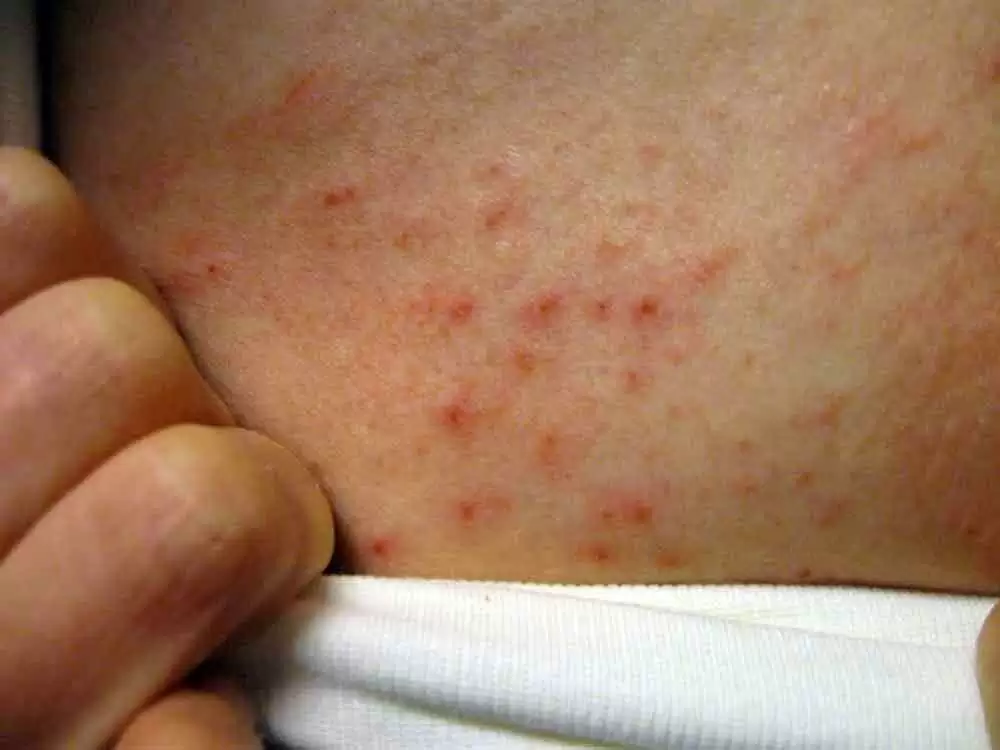
Celiac.com 03/31/2026 - Seborrheic dermatitis is a common inflammatory skin condition that often affects the scalp, face, and other areas rich in oil glands. It typically appears as redness with flaky or greasy scales. Although many people think of it as a mild skin nuisance, researchers are increasingly recognizing that it may be part of a much broader pattern of disease involving the body’s protective barriers.
A large research study titled “Bidirectional Associations Between Seborrheic Dermatitis and Epithelial Barrier Diseases: A Retrospective Cohort Study” examined whether seborrheic dermatitis is linked to other conditions that involve breakdown of protective surfaces in the body. These include diseases affecting the skin, lungs, digestive tract, and eyes. The study’s findings, published in Allergy in 2025, suggest that seborrheic dermatitis may not exist in isolation but instead may share underlying mechanisms with several other inflammatory disorders.
What Is the “Barrier” Theory?
Celiac.com Sponsor (A12):
The body has several important protective layers known as epithelial barriers. These include the outer layer of the skin, the lining of the gut, the airways in the lungs, and the surface of the eyes. These barriers act like shields, preventing harmful substances such as allergens, microbes, and toxins from entering deeper tissues.
When these barriers become weakened or disrupted, unwanted particles can pass through more easily. This can trigger immune responses and inflammation. Over time, this chronic inflammation may contribute to disease.
The “epithelial barrier theory” proposes that breakdown of these protective layers may be a common starting point for a wide range of chronic inflammatory diseases. The researchers in this study wanted to know whether seborrheic dermatitis, which involves skin barrier disruption, is connected to other conditions that also involve barrier damage.
How the Study Was Conducted
The researchers analyzed medical claims data from more than five million adults in the United States between 2016 and 2022. The average follow-up time was just over three years. Because of the enormous size of the dataset, the study was able to examine long-term patterns and track which diagnoses came first.
The investigators looked at two main questions:
- Are people with certain barrier-related diseases more likely to later develop seborrheic dermatitis?
- Are people with seborrheic dermatitis more likely to later develop other barrier-related diseases?
By examining both directions, the researchers were able to see whether the associations worked both ways.
Main Findings: A Two-Way Relationship
The results showed strong connections between seborrheic dermatitis and many other inflammatory conditions.
Skin Conditions
People who had conditions such as atopic dermatitis, psoriasis, rosacea, alopecia areata, contact dermatitis, and hidradenitis suppurativa were significantly more likely to develop seborrheic dermatitis later on. Conversely, individuals who first had seborrheic dermatitis were more likely to develop those same skin conditions afterward.
This two-way relationship suggests shared inflammatory pathways or barrier weaknesses across these skin diseases.
Respiratory Conditions
The study also found links between seborrheic dermatitis and certain respiratory conditions. For example, people with asthma or chronic sinus inflammation had an increased likelihood of developing seborrheic dermatitis. Likewise, individuals with seborrheic dermatitis had higher rates of later asthma and sinus problems.
However, not all lung-related diseases showed strong associations. Conditions such as chronic obstructive pulmonary disease and pulmonary hypertension were not as clearly connected.
Digestive Conditions
Several gastrointestinal disorders were also linked in both directions. These included inflammatory bowel disease, gastroesophageal reflux disease, food allergies, and notably, celiac disease.
Individuals diagnosed with celiac disease were more likely to later develop seborrheic dermatitis. At the same time, those with seborrheic dermatitis had an increased risk of later being diagnosed with celiac disease.
Eye Conditions
Associations were also observed with eye-related disorders, including dry eye and ocular allergies. This supports the idea that barrier disruption may extend beyond the skin to other surfaces in the body.
What Do These Results Suggest?
The study supports the idea that chronic inflammation and barrier dysfunction may connect diseases affecting different organs. For example:
- The “skin-gut axis” suggests that skin inflammation may influence the digestive system and vice versa.
- The “gut-lung axis” proposes interactions between intestinal health and respiratory function.
- The “gut-eye axis” suggests that digestive health may influence eye surface stability.
If the barriers in one area become compromised, immune changes may spread systemically, affecting other organs.
Strengths and Limitations
One major strength of this study was its size. With more than five million individuals followed for years, the results are statistically powerful and broadly representative.
However, there are limitations. The researchers relied on insurance claim codes rather than direct clinical examinations. Some diagnoses could have been delayed or misclassified. Additionally, the study does not prove that one condition causes another. It only shows that they are associated.
What This Means for People With Celiac Disease
For individuals living with celiac disease, this study carries important implications.
Celiac disease is a disorder in which gluten triggers immune damage to the lining of the small intestine. This damage weakens the intestinal barrier, allowing substances to pass through more easily and activate the immune system.
The finding that celiac disease and seborrheic dermatitis are linked in both directions suggests that barrier dysfunction may not be limited to the gut. People with celiac disease may have a greater risk of inflammatory skin conditions such as seborrheic dermatitis.
This does not mean that everyone with celiac disease will develop seborrheic dermatitis. However, it does highlight the importance of:
- Maintaining strict gluten avoidance to protect the intestinal lining.
- Monitoring for skin symptoms that may reflect systemic inflammation.
- Discussing new or persistent skin issues with a healthcare provider.
For patients who experience unexplained scalp flaking, redness, or facial scaling, awareness of this connection may encourage earlier evaluation and management.
More broadly, the study reinforces the concept that celiac disease is not just a digestive disorder. It may be part of a larger network of barrier-related inflammatory conditions.
Conclusion
This large study demonstrates that seborrheic dermatitis is associated with multiple inflammatory diseases affecting the skin, lungs, digestive tract, and eyes. The two-way relationships observed support the theory that breakdown of protective epithelial barriers may contribute to chronic inflammation across different organ systems.
For individuals with celiac disease or gluten sensitivity, these findings highlight the interconnected nature of immune health. Protecting and healing the intestinal barrier may have benefits beyond digestion, and awareness of related inflammatory conditions can support earlier recognition and treatment.
Understanding how these diseases overlap may ultimately lead to more integrated approaches to care — treating not just isolated symptoms, but the underlying barrier dysfunction that connects them.
Read more at: onlinelibrary.wiley.com










Recommended Comments
There are no comments to display.
Create an account or sign in to comment
You need to be a member in order to leave a comment
Create an account
Sign up for a new account in our community. It's easy!
Register a new accountSign in
Already have an account? Sign in here.
Sign In Now