
Jump to content
  • You are not alone. Join Celiac.com for trusted gluten-free answers and forum support.


  • Celiac.com Sponsor (A1):
    Celiac.com Sponsor (A1-M):
  • Scott Adams
    Scott Adams

    Is Soy Sauce Gluten-free?

    Reviewed and edited by a celiac disease expert.

    Is soy sauce gluten-free? Learn why most soy sauces contain wheat, how it affects people with celiac disease, and the best gluten-free alternatives to stay safe.

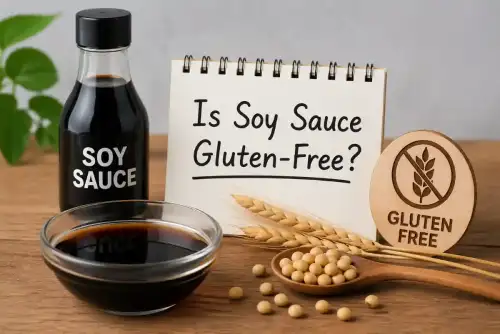
    Is Soy Sauce Gluten-free? - Image: Celiac.com
    Caption: Image: Celiac.com

    Celiac.com 04/23/2026 - Soy sauce is one of the most widely used condiments in the world, found in everything from stir-fries and marinades to dipping sauces and packaged foods. For people with celiac disease or gluten sensitivity, however, a simple question becomes very important: Is soy sauce gluten-free?

    The answer is not as straightforward as many people expect. While soy sauce sounds like it should be made from soybeans alone, traditional recipes often include wheat. That detail can make a big difference for anyone who needs to strictly avoid gluten. Understanding what’s really in soy sauce—and what safe alternatives exist—can help you make better choices and avoid accidental exposure.

    What Is Soy Sauce Made From?

    Celiac.com Sponsor (A12):
    Traditional soy sauce is made through a fermentation process that typically includes four main ingredients: soybeans, wheat, salt, and water. The wheat plays a role in flavor development and texture, which is why it has been part of the recipe for centuries.

    Because wheat is one of the primary sources of gluten, most conventional soy sauces are not gluten-free. Even though the fermentation process may break down some proteins, it does not reliably eliminate gluten to a level considered safe for people with celiac disease.

    This means that for anyone who must avoid gluten completely, standard soy sauce is generally off-limits unless it is specifically labeled otherwise.

    Why Gluten in Soy Sauce Matters

    For individuals with celiac disease, even small amounts of gluten can trigger an immune response that damages the small intestine. This damage can occur even if symptoms are mild or not immediately noticeable. Over time, repeated exposure can lead to nutrient deficiencies, bone loss, and other serious health issues.

    People with non-celiac gluten sensitivity may not experience the same intestinal damage, but they can still have uncomfortable symptoms such as bloating, fatigue, headaches, or brain fog after consuming gluten.

    Because soy sauce is often used in small quantities, it can be easy to overlook. However, even a splash in a marinade or dressing can be enough to cause problems. This is why understanding hidden sources of gluten—like soy sauce—is so important.

    Are There Gluten-Free Soy Sauce Options?

    The good news is that gluten-free alternatives to traditional soy sauce are widely available. These products are specifically made without wheat and are often labeled clearly as “gluten-free.”

    One of the most common alternatives is tamari. Tamari is a Japanese-style soy sauce that is traditionally made with little to no wheat. Many tamari products on the market today are certified gluten-free, making them a popular choice for people avoiding gluten.

    There are also gluten-free soy sauces made using alternative grains, such as rice, or produced through modified fermentation methods that exclude wheat entirely. These options are designed to closely mimic the taste and function of traditional soy sauce.

    Still, it is important to read labels carefully. Not all tamari is gluten-free, and not all soy sauce alternatives are produced in dedicated gluten-free facilities. Cross-contamination can occur if products are made in environments that also process wheat.

    How to Identify Safe Soy Sauce

    When shopping for soy sauce or soy sauce alternatives, look for clear labeling that states the product is gluten-free. Certification from a recognized gluten-free organization can provide additional confidence.

    Reading the ingredient list is also essential. If wheat is listed, the product is not safe for a strict gluten-free diet. Even if wheat is not listed, checking for allergen statements such as “contains wheat” or “processed in a facility with wheat” can help you make a more informed decision.

    When dining out, it is especially important to ask questions. Many restaurants use standard soy sauce in their recipes, including marinades, stir-fries, and dipping sauces. Unless a restaurant specifically offers gluten-free soy sauce or tamari, it is safest to assume that soy sauce contains gluten.

    Hidden Sources of Soy Sauce in Foods

    Soy sauce is not always obvious. It can be found in a wide range of packaged and prepared foods, including salad dressings, soups, snack foods, and even some meat products. It is also commonly used in seasoning blends and sauces.

    For people with celiac disease, this means vigilance is key. Checking labels regularly and being aware of where soy sauce might be used can help prevent accidental gluten exposure.

    In some cases, manufacturers may use terms like “natural flavors” or “seasoning,” which can make it harder to identify the presence of soy sauce. When in doubt, contacting the manufacturer or choosing products with clear gluten-free labeling is the safest approach.

    What About Low-Sodium or Specialty Soy Sauces?

    Low-sodium or specialty soy sauces, such as those marketed as organic or premium, are not automatically gluten-free. While they may differ in salt content or production methods, they often still contain wheat unless otherwise specified.

    This is a common misconception that can lead to accidental gluten exposure. Always verify gluten-free status regardless of how the product is marketed.

    What This Means for People with Celiac Disease

    For individuals with celiac disease, avoiding gluten is not optional—it is essential. Soy sauce represents a hidden but significant risk because it is so widely used and often assumed to be safe.

    The key takeaway is that most traditional soy sauces are not gluten-free, and even small amounts can cause harm. Choosing certified gluten-free alternatives and being mindful of cross-contamination can help protect your health.

    It also means being proactive when eating out or trying new foods. Asking about ingredients and requesting gluten-free options can make a big difference in avoiding exposure.

    What This Means for People with Gluten Sensitivity

    For those with gluten sensitivity, the stakes may feel different, but the need for caution remains. Symptoms may vary from person to person, but many people find that avoiding gluten—including in soy sauce—helps them feel better overall.

    Switching to gluten-free soy sauce or tamari is a simple change that can reduce the risk of symptoms and make it easier to maintain a gluten-free lifestyle.

    Because soy sauce is so common, making this switch at home can also help prevent accidental exposure in everyday cooking.

    The Bottom Line

    So, is soy sauce gluten-free? In most cases, no. Traditional soy sauce usually contains wheat and is not safe for people with celiac disease or gluten sensitivity.

    Fortunately, gluten-free alternatives are widely available and easy to use. By choosing the right products, reading labels carefully, and staying aware of hidden sources, you can continue to enjoy the flavors you love without compromising your health.

    When it comes to managing celiac disease or gluten sensitivity, knowledge is one of your most powerful tools. Understanding something as simple as soy sauce can make a meaningful difference in staying safe and feeling your best.

    This article was originally published on 10/11/2012, and updated on 04/23/2026.



    User Feedback

    Recommended Comments


    Guest admin

    Posted

    Corn DOES contain gluten.

    Yes, just not the kind that harms celiacs.

    Link to comment
    Share on other sites
    Guest KAren

    Posted

    So could we eat at Chinese restaurants again?

    I'm with you. Let's get to the point. Are Kikkoman using Asian restaurants safe as far as soy sauce in foods go? I quit eating at Asian restaurants and am learning from youtube how to cook various Asian dishes using yucky Coconut Aminos (a coconut based soy sauce substitute). It's too mild and sweeter attempt to be a soy sauce substitute, in my opinion.

    Link to comment
    Share on other sites
    Guest Nicole

    Be careful. They state a few times that Shoyu should be ok for sensitivities. If you are gluten sensitive than you probably don't have to worry about it. If you have celiac like me or you are supposed to be following a gluten free diet and not a gluten-freeish diet or a 'as far as we know (<5ppm/<20ppm) gluten-free diet' than you probably want to continue to eat foods without any gluten ingredients. I know for myself and my family, we react to regular shoyu.

    From the article:

    "Conclusion: The tested naturally fermented soy sauces are gluten-free and will probably not cause adverse reaction in gluten sensitive persons, especially when considering the small daily quantities of soy sauce used. Highly sensitive individuals who want to be 100% sure should use soy sauce which are advertised as gluten-free and which do not contain grains as ingredients. Tamari soy sauces are typically produced without wheat, but some brands do not follow this tradition and are not wheat-free."

    Link to comment
    Share on other sites
    Guest heather

    Posted

    I get sick from Kikkoman's. At first, I thought the restaurant was filling the bottles with generic soy sauce, but now after the second time eating it and at a different restaurant, I think I am having an adverse reaction to the small amount in Kikkoman's.

    Link to comment
    Share on other sites
    Guest Susie

    Posted

    I was so excited to read this!!


    Sadly, I tried Kikkoman's soy tonight with the California rolls I eat all the time and 2 hours later (like clock-work, my standard gluten reaction time) I'm nauseous, flushed and running to the bathroom. Maybe it's only safe for people with an intolerance (not celiac like me). I have no problems with San-J gluten-free soy sauce, by the way.

    California rolls usually contain crab stick, which always contains wheat. Are you sure it's the soy sauce?

    Link to comment
    Share on other sites
    Guest Bruce

    Posted

    As with Emaegf, Melinda S, and Heather, I get sick from Kikkoman Soy Sauce. All the studies in the world won't change the fact that it puts me in gut-wrenching pain for four days. Gluten enzyme pills cut it to two days. No, I'm not being psychosomatic. No, it's not a placebo effect.

    Link to comment
    Share on other sites
    Guest ange
    Kikkoman has come out with a gluten-free version -- why would they feel it's necessary to do that if the regular version is virtually gluten-free?

    Because some people are extremely allergic and cannot have any gluten. Also for someone with celiac any gluten no matter how small of an amount over time will shorten their lives. and I don't know about you but I want to live longer.

    Link to comment
    Share on other sites
    Guest Laura

    I'm not a particularly sensitive celiac, but regular soy sauce is one of the few things that sets me off immediately (bloated stomach, horrible trapped gas at night) and hurts for days (ankle joints hurt, shooting pains in my body). However, Tamari, is fine and causes no issues.

    Link to comment
    Share on other sites
    Guest Jarod

    Posted

    As a Ph.D. candidate in biochemistry I would like to refute this article in the name of safety for my fellow celiacs. Kikkoman and other soy sauces that have wheat are NOT GLUTEN FREE. Test results for any naturally fermented gluten-containing product, whether it be soy sauce or beer, are guaranteed to underestimate the gluten content because of how they work. Modern tests work based on detection with antibodies that recognize the whole gluten protein. When gluten is broken into smaller fragments by fermentation, antibodies in these tests will fail to recognize the fragments. However, these gluten protein fragments will still cause a reaction for most celiacs because the fragments still interact with the immune system in an identical way. I repeat, these fermented products are not gluten free and the reasoning in this post is not scientifically sound. 

    Link to comment
    Share on other sites
    Guest RVH

    Thanks for the input, Jarod.

    About a year ago, I was trying to use the Gluten-in-Food tests made by Imutest, and had a long discussion with their (very patient) tech department. They said the same thing as Jarod: that gluten levels in fermented foods and drinks cannot be reliably measured, and are likely higher than the results that testing indicates. 

    Link to comment
    Share on other sites
    Ennis-TX

    Jesus this is outdated article someone delete this misinformation before it kills someone (Exaggeration but seriously it can land some of us in the ER) -_- This is the same kind of s$#& that is leading restaurants to think soy sauce is safe for celiacs and making people sick and the recent issues and articles from gluten free watch dog....do not want to be biased....PUT A BIG RED BANNER ACROSS THIS ARTICLE WITH A WARNING.
    She said we could share  these
    Open Original Shared Link
    Open Original Shared Link

    Link to comment
    Share on other sites
    Guest monty

    Posted

    On 11.10.2012 at 6:07 AM, Guest Roberta said:

    Kikkoman has come out with a gluten-free version -- why would they feel it's necessary to do that if the regular version is virtually gluten-free?

    Maybe because the gluten-free version costs twice as much?

    Link to comment
    Share on other sites


    Create an account or sign in to comment

    You need to be a member in order to leave a comment

    Create an account

    Sign up for a new account in our community. It's easy!

    Register a new account

    Sign in

    Already have an account? Sign in here.

    Sign In Now

  • Get Celiac.com Updates:
    Support Celiac.com:
    Donate
  • About Me

    Scott Adams
    scott_adams_dotcomer.webp

    Scott Adams was diagnosed with celiac disease in 1994. Faced with a critical lack of resources, he dedicated himself to becoming an expert on the condition to achieve his own recovery.

    In 1995, he founded Celiac.com with a clear mission: to ensure no one would have to navigate celiac disease alone. The site has since grown into one of the oldest and most trusted patient-focused resources for celiac disease and the gluten-free lifestyle.

    His work to advance awareness and support includes:

    Today, Celiac.com remains his primary focus. To ensure unbiased information, the site does not sell products and is 100% advertiser supported.


  • Celiac.com Sponsor (A17):
    Celiac.com Sponsor (A17):


    Celiac.com Sponsors (A17-M):


  • Related Articles

    Joanne Bradley
    Celiac.com 06/13/2008 - Students embarking on the college path often ride a roller coaster between sheer unadulterated excitement and deep-in-the-stomach dread of meeting new people and challenges. For the gluten free college student, a whole world of eating choices will await them in all sorts of different social situations. It is a new cornucopia of responsible choice.
    Perhaps the first challenge will be establishing a relationship with the people who manage the food services on campus. Although public understanding of Celiac disease and gluten intolerance are on the fast track, the level of training for gluten free food service is still on the slow track. A thorough understanding on the part of food management usually comes through one or more managers having a relative with the condition...


    Paul Smith
    Celiac.com 10/30/2009 - The major concern in producing gluten and allergen-free foods is always that of cross contamination. In my view, the only safe way to produce gluten-free meals and products is in a rigorously controlled and totally gluten-free environment where all ingredients are strictly gluten-free and all benches, utensils and equipment, etc. are dedicated and remain in a totally gluten-free condition at all times. It must always be remembered that gluten-free should mean “ totally and absolutely gluten-free,” and that there should always be an uncompromising zero tolerance for any form of gluten contamination, no matter how slight.
    In my view the same approach should be adopted for anaphylaxis inducing ingredients like peanuts, eggs, sesame seeds, shellfish and crustaceans: th...


    Jefferson Adams
    Celiac.com 05/03/2013 - Would you fork over five dollars just for browsing in a store?
    More and more brick and mortar stores are fighting against a practice called 'showrooming,' where consumers visit a store to view an item in person before buying it online. Charging a fee to visitors who do not buy anything is one new strategy in that fight.
    Adelaidenow.com.au reports that Brisbane-based Celiac Supplies, a gluten-free specialty food store in Australia, recently announced that it will charge customers $5 for browsing. The money will be refunded when the customers purchase an item.
    Open Original Shared Link, the store-owner, who gave her name only as Georgina, says that she implemented the fee to curb “showrooming.” Her store has seen a "high volume of people who use this sto...


    Jefferson Adams
    5 Things People With Celiac Disease Need You to Understand
    Celiac.com 06/12/2014 - Here are five things people with celiac disease need regular folks to know about celiac disease:
    We are NOT on a Fad Diet—Celiac disease is not some vague, make-believe condition. Celiac disease is a potentially serious immune disorder that, if left untreated, can lead to a very deadly types of stomach, intestinal, and other cancers. Just because a bunch of people seem to think that gluten is the new high fructose corn syrup, doesn’t mean that I’m one of them. Remember, for people with celiac disease, gluten is no joke, and avoiding gluten is the only way to stay healthy. We Won’t Be Getting Over It—Currently, there is no cure for celiac disease, and the only treatment is a gluten-free diet. That’s the only way to avoid the gut damage, lower risk...


  • Recent Activity

    1. - cristiana replied to CC90's topic in Celiac Disease Pre-Diagnosis, Testing & Symptoms
      7

      Coeliac or not coeliac

    2. - trents replied to CC90's topic in Celiac Disease Pre-Diagnosis, Testing & Symptoms
      7

      Coeliac or not coeliac

    3. - knitty kitty replied to CC90's topic in Celiac Disease Pre-Diagnosis, Testing & Symptoms
      7

      Coeliac or not coeliac

    4. - knitty kitty replied to kevert93's topic in Gluten-Free Foods, Products, Shopping & Medications
      4

      Having issues with chips

    5. - CC90 replied to CC90's topic in Celiac Disease Pre-Diagnosis, Testing & Symptoms
      7

      Coeliac or not coeliac

  • Celiac.com Sponsor (A19):
  • Member Statistics

    • Total Members
      134,184
    • Most Online (within 30 mins)
      10,442

    Dennis E. Schertz
    Newest Member
    Dennis E. Schertz
    Joined
  • Celiac.com Sponsor (A20):
  • Celiac.com Sponsor (A22):
  • Forum Statistics

    • Total Topics
      121.7k
    • Total Posts
      1m
  • Celiac.com Sponsor (A21):
  • Popular Now

    • CC90
      7
    • kevert93
      4
    • Ginger38
      5
  • Popular Articles

    • Scott Adams
    • Scott Adams
    • Scott Adams
    • Scott Adams
    • Scott Adams
  • Upcoming Events

×
×
  • Create New...