Jump to content
  • You have found your celiac tribe! Join us and ask questions in our forum, share your story, and connect with others.


  • Celiac.com Sponsor (A1):
    Celiac.com Sponsor (A1-M):
  • Scott Adams
    Scott Adams

    Court Ruling Raises Big Questions About "Gluten-Free" Food Safety in Retirement Communities (+Video)

    Reviewed and edited by a celiac disease expert.

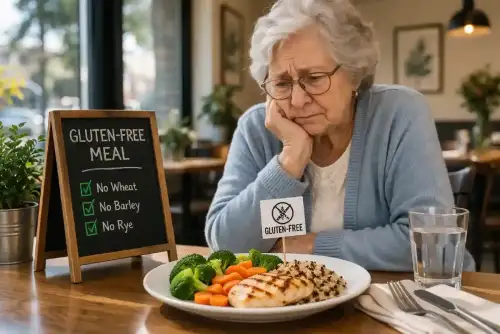
    A recent court ruling highlights the real risks of unsafe gluten-free meals, raising important questions about accountability and food safety for people with celiac disease.

    Court Ruling Raises Big Questions About "Gluten-Free" Food Safety in Retirement Communities (+Video) - Image: Celiac.com ++ Watch the Video ++
    Caption: Image: Celiac.com ++ Watch the Video ++

    Celiac.com 05/04/2026 - A recent legal case in the United States has brought renewed attention to a critical issue for people with celiac disease: the real-world consequences of unsafe “gluten-free” food. The case involves a woman with celiac disease who sued a retirement community after allegedly becoming ill multiple times from meals labeled as gluten-free.

    The United States Court of Appeals for the Fourth Circuit ruled that some of her claims should move forward to trial, particularly those involving breach of contract and negligence. This decision highlights a growing recognition that providing safe gluten-free food is not simply a courtesy—it can be a legal obligation.

    The Background of the Case

    Celiac.com Sponsor (A12):
    The case centers on a woman who moved into a retirement community after being assured that her strict gluten-free dietary needs could be safely accommodated. Because she has celiac disease, even small amounts of gluten can trigger significant health problems.

    According to the case details, she experienced several episodes of illness after eating meals that were presented as gluten-free. These incidents included multiple meals over several years, culminating in a serious episode in 2021 after consuming a dish that was believed to be safe.

    After these incidents, she filed a lawsuit alleging that the facility failed to meet its obligations. Her claims included breach of contract and negligence, along with several disability-related claims under federal law.

    What the Court Decided

    The appellate court made a mixed ruling. It allowed the woman’s claims for breach of contract and negligence related to the 2021 incident to move forward. The court determined that there were unresolved factual questions that should be decided by a jury.

    In simple terms, the court said that there is enough evidence to reasonably question whether the retirement community failed to provide what it promised. This means a trial will be needed to determine whether the facility is legally responsible.

    At the same time, the court dismissed several other claims, including those related to federal disability laws. These were rejected primarily due to procedural issues, such as timing and the inability to demonstrate ongoing risk.

    Why This Case Is So Important

    This case is significant because it reinforces a key truth for people with celiac disease: gluten-free food is not a preference—it is a medical necessity. For individuals with this condition, even small amounts of gluten can lead to serious health consequences.

    The court’s decision suggests that when an organization promises to provide safe gluten-free meals, it may be held accountable if it fails to do so. This is especially important in environments like retirement communities, hospitals, and schools, where individuals rely heavily on others for food preparation.

    The case also highlights the difference between labeling food as gluten-free and actually ensuring that it is safe. Cross-contamination, improper ingredients, or inadequate training can all lead to dangerous outcomes.

    The Challenges of Providing Safe Gluten-Free Food

    Preparing truly safe gluten-free meals requires more than simply removing wheat from a recipe. It involves strict attention to detail at every stage of food preparation.

    This includes:

    • Using dedicated cooking equipment and utensils
    • Preventing cross-contact in shared kitchen spaces
    • Carefully sourcing and verifying ingredients
    • Training staff to understand the seriousness of celiac disease

    In the case at hand, the retirement community reportedly made efforts to improve its processes, including staff training and menu adjustments. However, the existence of continued problems raises questions about whether those measures were sufficient.

    The Legal Concept of Responsibility

    One of the most important aspects of this case is the idea of responsibility. When a facility enters into an agreement with a resident and promises to meet specific dietary needs, that promise can become part of a legal contract.

    If that promise is broken and results in harm, it may give rise to legal claims such as negligence or breach of contract. The court’s decision to allow these claims to proceed signals that such obligations are taken seriously.

    It also emphasizes that organizations cannot simply rely on good intentions. They must demonstrate that they have taken reasonable and effective steps to ensure safety.

    What This Means for People with Celiac Disease

    For individuals with celiac disease or gluten sensitivity, this case carries several important implications.

    First, it reinforces the importance of advocating for your needs. If a facility promises to provide safe food, you have the right to expect that promise to be fulfilled.

    Second, it highlights the importance of vigilance. Even in environments that claim to accommodate gluten-free diets, mistakes can happen. Being aware of risks and asking questions about food preparation remains essential.

    Third, it offers a measure of legal protection. This case suggests that individuals may have recourse if they are harmed due to unsafe food practices, particularly when there is a clear agreement in place.

    Broader Implications for Institutions

    This case may also influence how institutions approach gluten-free accommodations in the future. Facilities that provide food services may need to take additional steps to ensure compliance and reduce risk.

    This could include:

    • More rigorous staff training programs
    • Improved kitchen protocols
    • Clearer communication with residents and guests
    • Regular audits of food safety practices

    Organizations may also become more cautious about making promises they cannot fully guarantee, especially when it comes to medically necessary diets.

    The Human Side of the Issue

    Beyond the legal and procedural details, this case underscores the human impact of celiac disease. Living with this condition requires constant attention to food choices and a high level of trust in those who prepare meals.

    When that trust is broken, the consequences go beyond physical symptoms. It can lead to anxiety, loss of confidence, and a reduced sense of safety in everyday environments.

    For many people with celiac disease, the ability to eat safely is fundamental to maintaining independence and quality of life.

    Conclusion

    This case represents an important moment in the ongoing recognition of celiac disease as a serious medical condition that demands careful handling. The court’s decision to allow key claims to proceed sends a clear message: providing safe gluten-free food is not optional when it has been promised.

    For those living with celiac disease or gluten sensitivity, the case highlights both the challenges and the progress being made. While risks remain, there is growing awareness that safety must be prioritized and that accountability matters.

    Ultimately, this case may help drive improvements in how gluten-free diets are managed in institutional settings, leading to safer environments and better outcomes for those who depend on them.

    Read more at: thedailyrecord.com

    Watch the video version of this article:

    Watch the super short video version of this article:


    User Feedback

    Recommended Comments

    DellyF

    Scott, thank you for this article. Your paragraph here is very important:

    "Organizations may also become more cautious about making promises they cannot fully guarantee, especially when it comes to medically necessary diets."

    The corporations owning the nursing homes will just stop guaranteeing celiac safe food in order to avoid lawsuits.

    The number of elderly people needing care is growing exponentially by the day. With celiac myself, I am so afraid of losing my independence in the future. I doubt any nursing home currently provides safe gluten free food for celiacs. There are too many things to be cautious about, and so many things that can go wrong. I cannot even trust a restaurant. Rich billionaires will be able to build a "celiac only" nursing home, but the rest of us are out of luck.

    Link to comment
    Share on other sites
    trents

    I have seen this shift to a more "cautious" approach about gluten-free claims in the restaurant sector. Menus that used to advertise certain offerings as "gluten-free" now use the term "low gluten" or "gluten sensitive friendly" or something similar, signaling that though the intentional ingredients are gluten-free, some gluten may be introduced in the preparation and handling. It's a step in the right direction at least. 

    Link to comment
    Share on other sites
    Scott Adams

    I hope there will emerge some elder care facilities that will advertise as celiac friendly, as some ship cruise lines have done, and take advantage of what is clearly an unmet need, and solid business niche.

    Link to comment
    Share on other sites
    Flash1970

    Thank you for the article.  This is a major concern for older people who may need to go into a hospital for surgery or as this article points out a care facility. I hope she wins this case

    Link to comment
    Share on other sites


    Create an account or sign in to comment

    You need to be a member in order to leave a comment

    Create an account

    Sign up for a new account in our community. It's easy!

    Register a new account

    Sign in

    Already have an account? Sign in here.

    Sign In Now

  • Get Celiac.com Updates:
    Support Celiac.com:
    Join eNewsletter
    Donate
  • About Me

    Scott Adams
    scott_adams_dotcomer.webp

    Scott Adams was diagnosed with celiac disease in 1994. Faced with a critical lack of resources, he dedicated himself to becoming an expert on the condition to achieve his own recovery.

    In 1995, he founded Celiac.com with a clear mission: to ensure no one would have to navigate celiac disease alone. The site has since grown into one of the oldest and most trusted patient-focused resources for celiac disease and the gluten-free lifestyle.

    His work to advance awareness and support includes:

    Today, Celiac.com remains his primary focus. To ensure unbiased information, the site does not sell products and is 100% advertiser supported.


  • Celiac.com Sponsor (A17):
    Celiac.com Sponsor (A17):


    Celiac.com Sponsors (A17-M):


  • Related Articles

    Jefferson Adams
    How Common is Celiac Disease Diagnosis in the Elderly?
    Celiac.com 11/28/2016 - It's clear from research data that what was once thought to be a childhood disease can affect people well into adulthood and old age.
    A team of researchers recently set out to assess rates of celiac disease diagnosis in an elderly population, recording the main clinical features of this group respect to young patients. The research team included R. Tortora, F. Zingone, A. Rispo, C. Bucci, P. Capone, N. Imperatore, N. Caporaso, D. D'Agosto, and C. Ciacci. They are variously affiliated with the Department of Clinical Medicine and Surgery at the University "Federico II" of Naples in Napes, Italy, and with the Department of Gastroenterology at the University of Salerno in Salerno, Italy.
    They conducted a retrospective analysis of celiac disease rates in elderly...


    Scott Adams
    Should Doctors Recommend a Gluten-Free Diet for All Elderly Celiac Patients?
    Celiac.com 04/05/2021 - Celiac disease is highly under diagnosed in the elderly population, partly because it can vary so widely in its presentations, and partly because doctors lack awareness of the potential for celiac disease in older patients. 
    A team of researchers recently set out to assess the outcomes for an elderly population with celiac disease, and to compare the results with younger adults with celiac disease.
    The research team included Mohamed G Shiha, Lauren J Marks, and David S. Sanders. They are variously affiliated with the Academic Unit of Gastroenterology, Royal Hallamshire Hospital, Sheffield, United Kingdom. 
    For their study, the team prospectively recruited newly diagnosed celiac patients from the Coeliac Specialist Clinic at the Royal Hallamshire H...


    Jefferson Adams
    Colorado Training Facility Transforms Rescues into Gluten-Sniffing Service Dogs
    Celiac.com 05/07/2024 - An eastern Colorado dog training facility, led by Michelle Abel, is giving rescued canines a fresh start by preparing them for a remarkable new career as gluten-sniffing service dogs.
    Abel, with 34 years of experience in dog training, is founder of the Leasure Ranch K9 Academy. Since May 2021, she has collaborated with Scroungy Dogs and Pretty Pups Rescue to rehabilitate and train dogs, often rescuing abandoned pets.
    While initially focused on training service dogs for various needs, Abel's journey took an unexpected turn when she received a unique challenge: teaching a dog to detect gluten. Prompted by a friend's celiac disease diagnosis, Abel recognized the critical role such dogs could play in safeguarding celiac sufferers from inadvertent gluten...


    Scott Adams
    Understanding Gluten-Free Certification in Healthcare Facilities (+Video)
    Celiac.com 12/10/2024 - In recent years, gluten-free dietary accommodations have gained attention beyond personal dietary preferences, emerging as a crucial medical necessity for individuals with celiac disease and gluten sensitivity. As a result, some hospitals, like Northern Nevada Medical Center (NNMC) and Sierra Medical Center (SMC), have gone above and beyond, earning "Gluten-Free Safe Spot" certifications to ensure a safe environment for gluten-free patients. Here, we’ll dive into what gluten-free hospital certification entails, why it’s important, and how this designation can create peace of mind for patients with gluten restrictions.
    The Importance of Gluten-Free Certification for Hospitals
    People with celiac disease or non-celiac gluten sensitivity experience adv...


  • Recent Activity

    1. - trents replied to ThomasA55's topic in Celiac Disease Pre-Diagnosis, Testing & Symptoms
      11

      Iron loss and potential celiac.

    2. - trents replied to MicG's topic in Celiac Disease Pre-Diagnosis, Testing & Symptoms
      13

      Test interpretations

    3. - suek54 replied to BelleDeJour's topic in Dermatitis Herpetiformis
      11

      Dermatitis Herpetiformis - follow up dermatology appointment coming up

    4. - Ginarwebb replied to MicG's topic in Celiac Disease Pre-Diagnosis, Testing & Symptoms
      13

      Test interpretations

    5. - Aretaeus Cappadocia replied to MicG's topic in Celiac Disease Pre-Diagnosis, Testing & Symptoms
      13

      Test interpretations

  • Celiac.com Sponsor (A19):
  • Member Statistics

    • Total Members
      134,115
    • Most Online (within 30 mins)
      10,442

    Ginarwebb
    Newest Member
    Ginarwebb
    Joined
  • Celiac.com Sponsor (A20):
  • Celiac.com Sponsor (A22):
  • Forum Statistics

    • Total Topics
      121.7k
    • Total Posts
      1m
  • Celiac.com Sponsor (A21):
  • Popular Now

    • LC9
      6
    • BelleDeJour
    • ThomasA55
    • MicG
      13
  • Popular Articles

    • Scott Adams
    • Scott Adams
    • Scott Adams
    • Scott Adams
    • Scott Adams
  • Upcoming Events

×
×
  • Create New...