
Jump to content
  • You are not alone. Join Celiac.com for trusted gluten-free answers and forum support.


  • Celiac.com Sponsor (A1):
    Celiac.com Sponsor (A1-M):
  • Scott Adams
    Scott Adams

    Why Life with Celiac Disease Hasn't Improved in 10 Years, According to New Study

    Reviewed and edited by a celiac disease expert.

    A new decade-long study from Spain reveals that quality of life for adults with celiac disease has not significantly improved, highlighting ongoing challenges beyond a gluten-free diet.

    Why Life with Celiac Disease Hasn't Improved in 10 Years, According to New Study - Image: Celiac.com
    Caption: Image: Celiac.com

    Celiac.com 05/07/2026 - Celiac disease is more than just a digestive condition. It affects how people eat, socialize, travel, and manage their daily lives. The only current treatment is a strict gluten-free diet, which must be followed for life. While this diet helps control symptoms and prevent complications, it also introduces challenges that can impact overall well-being.

    This study examined how quality of life has changed for adults with celiac disease in Spain over a ten-year period. Researchers compared two large groups of adults, one from 2014 and another from 2024, to see whether improvements in awareness, diagnosis, and access to gluten-free foods have made a meaningful difference in how people feel and function in everyday life.

    How the Study Was Conducted

    Celiac.com Sponsor (A12):
    The researchers analyzed data from more than two thousand adults with a confirmed diagnosis of celiac disease. One group completed surveys in 2014, and another group did so in 2024. Both groups were similar in terms of age, gender distribution, and time since diagnosis, which allowed for a fair comparison.

    Participants answered a specialized questionnaire designed specifically for people with celiac disease. This tool measures different aspects of quality of life, including emotional well-being, limitations in daily activities, concerns about health, and the challenges of managing a gluten-free diet.

    The study also looked at how factors such as age, gender, time since diagnosis, and length of time following a gluten-free diet influenced quality of life scores.

    Overall Quality of Life Has Not Improved

    One of the most important findings of the study is that overall quality of life has remained largely unchanged over the past decade. Despite advances in medical knowledge and greater availability of gluten-free products, people with celiac disease in Spain reported similar levels of well-being in both 2014 and 2024.

    The average quality of life scores in both groups fell into a moderate range. This suggests that while many people are managing their condition, there is still significant room for improvement.

    The chart presented in the study (page 27) shows that overall scores were very close between the two time periods, reinforcing the conclusion that there has been no meaningful progress in perceived quality of life.

    The Role of Time and Experience

    The study found that people who had been diagnosed for a longer period of time generally reported better quality of life. Similarly, those who had followed a gluten-free diet for more years tended to adapt better and feel more comfortable managing their condition.

    This makes sense from a practical perspective. Over time, individuals learn how to navigate food choices, avoid cross-contamination, and handle social situations. They also become more confident in managing their health and communicating their needs to others.

    In short, experience appears to play a key role in improving daily life with celiac disease.

    Age and Gender Differences

    Age was another important factor. Older adults consistently reported higher quality of life scores than younger individuals. This may reflect greater life experience, more stable routines, and possibly fewer social pressures related to eating outside the home.

    Younger individuals, on the other hand, may face more challenges. Social events, dining out, and travel can all be more stressful when managing a strict gluten-free diet, especially earlier in life.

    The study also observed some differences between men and women. In earlier data, women reported more concerns related to health and emotional well-being. However, by 2024, these differences were less pronounced, suggesting that gender gaps may be narrowing over time.

    Challenges with the Gluten-Free Diet

    One of the most striking findings was that the area related to diet management consistently received the lowest scores. Even after a decade of increased awareness and improved product availability, participants still struggled with the demands of maintaining a strict gluten-free lifestyle.

    This highlights a critical issue: the gluten-free diet is not just about avoiding certain foods. It requires constant vigilance, careful label reading, and awareness of hidden sources of gluten. It can also be expensive and socially limiting.

    For many individuals, these ongoing challenges continue to affect their quality of life, even if their physical symptoms are under control.

    Emotional and Social Impact

    The study also explored emotional well-being, including feelings such as frustration, anxiety, and sadness. While emotional scores were generally higher than those related to diet management, they still reflected the burden of living with a chronic condition.

    Social situations can be particularly difficult. Eating is often a shared experience, and restrictions can lead to feelings of isolation or discomfort. Even with greater public awareness, many people with celiac disease still face challenges when dining out or attending events.

    These emotional and social factors are important because they influence overall well-being, not just physical health.

    Why Awareness Alone Is Not Enough

    Over the past decade, there have been significant improvements in awareness of celiac disease. More people are familiar with gluten-free diets, and there are more products available than ever before. However, this study shows that these changes have not translated into better quality of life.

    This suggests that awareness and product availability, while helpful, are not enough on their own. People with celiac disease may still need more structured support, better education, and ongoing guidance to manage the condition effectively.

    It also points to the importance of addressing emotional and social challenges, not just dietary ones.

    The Importance of Early Diagnosis and Support

    The findings highlight the value of early diagnosis. People who were diagnosed earlier and had more time to adjust generally reported better outcomes. Early diagnosis allows individuals to begin treatment sooner, reducing the risk of complications and giving them more time to adapt.

    The study also emphasizes the need for continued follow-up and support. Regular medical care, access to knowledgeable healthcare providers, and educational resources can all help improve long-term outcomes.

    Support from patient communities and organizations may also play an important role in helping individuals feel less isolated and more empowered.

    What This Means for People with Celiac Disease

    This study provides an important reminder that managing celiac disease involves more than just following a gluten-free diet. While the diet is essential for controlling symptoms and preventing damage, it does not automatically lead to a high quality of life.

    For individuals with celiac disease, the findings highlight the importance of building experience, seeking support, and finding strategies that make daily life easier. It also underscores the need for healthcare systems to provide more comprehensive care that addresses emotional, social, and practical challenges.

    In the future, improvements in treatment options, better education, and stronger support systems may help close the gap between managing the disease and truly thriving with it.

    Ultimately, this research shows that while progress has been made in awareness and food availability, there is still work to be done to improve the lived experience of people with celiac disease.

    Read more at: nature.com



    User Feedback

    Recommended Comments

    Aretaeus Cappadocia

    I read this post and thought about the availability of gluten free food in my life. My first thought was that, no, I'm not having trouble finding gluten free food, maybe things are getting better. Then I thought about it again and realized that with food I've gone "off the grid". About 98% of the food I eat is food I make myself from primary ingredients. I'm retired and can afford to put a lot of time into food. I don't know what I would have done when I was working and traveling for work. Probably would have adapted somehow but I have real sympathy for those who are juggling a gluten-free diet and living in the mainstream world.

    Link to comment
    Share on other sites
    larc

    Before I found out I had celiac and went on a gluten-free diet, I had spent almost thirty years as a health writer doing research and writing on nutrition, exercise and other lifestyle issues that affect our well-being. So when I had to deal with going gluten-free I had a decent orientation about what would be involved. I still faced significant challenges in coping with this disease. So I often wonder how the average person can handle being diagnosed with celiac. Even with the advice of a knowledgeable dietitian it can't be easy. And then when you toss in the obtuse attitudes of many of the folks you encounter -- including family members who refuse to believe how serious your condition is -- it all adds to the difficulties of maintaining the diet you require to stay healthy. I'm not surprised that QOL for people with celiac hasn't budged in a decade. 

    Link to comment
    Share on other sites
    Scott Adams

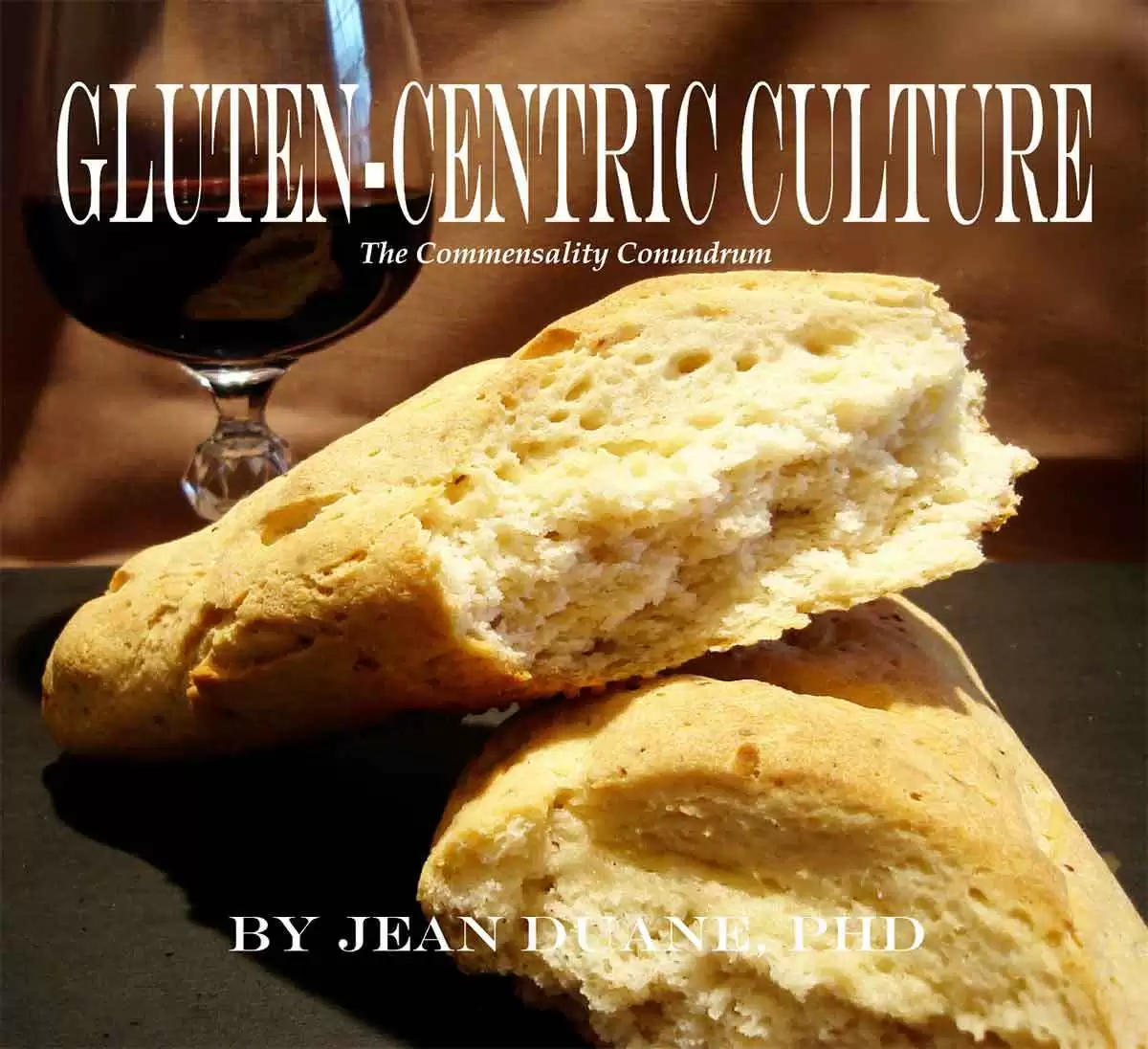
    This may be of interest: Celiac.com has published a book on our site by Jean Duane PhD called Gluten-Centric Culture, which covers many of the social aspects of having celiac disease:

    This chapter in particular covers issues around eating with family and others - Gluten-Centric Culture: Chapter 5 - Grabbing A Bite Together:


    Link to comment
    Share on other sites
    Flash1970

    I think the major social problem with celiac is that other people don't see the results of you ingesting gluten. With diabetes,  peanut allergies etc,  people understand the results of not maintaining the diet.  With celiac, they don't see the sickness,  diarrhea,  etc that you endure if you ingest gluten. They don't understand that you can die if you keep eating gluten.  My family and friends get it,  but I usually bring my own food. I too am older.  I don't know how younger people manage this with work or travel. 

    Link to comment
    Share on other sites
    ElleH

    The breaking of bread with family, friends or coworkers is often a uniting experience. When a close family member tells me that it’s the family of a celiac that suffers the most regarding restaurant choices and food separation at home, it brings guilt. When our work department is rewarded with bagels/cookies/cake/pizza, I am often excluded as I cannot share with my coworkers. Any pot luck becomes an opportunity for me to bring something I know I can eat, and offer to share, but knowing that I am gluten-free, is often refused, and it is not possible/polite to find out ingredients of every/any dish brought by someone else. I was biopsy diagnosed in 2011 after I had just made dozens of Christmas cookies that my family could still enjoy, I but I could not. Trying to explain that, although the pizza that the department purchased just for you was ordered from a place that advertises gluten-free crust, but doesn’t take contamination precautions, you are thankful to be included but you can’t eat the pizza, makes me feel ungrateful. Any holiday gathering at a relative’s/friend’s house results in my fixing and transporting nearly all of what I will eat so the host doesn’t feel the need to accommodate my dietary restrictions as the only celiac. Trying to get ice cream with others at a place that only has hand dipped tubs, shared scoop rinse water, and no tubs in reserve for food allergies is a chance for me to stand outside and enjoy the weather.

         My family and coworkers have unfortunately been witness to the awful results of major unintentional gluten contaminations and I regret the ordeal it caused, but I had no control over the situations. They happened despite my best efforts. The contamination risk that crumbs on the break room table represent to me do not register with anyone else as a reason to wipe down the table before starting to eat. Similar is my need to rewash shared utensils and dishes prior to using, as I’d rather not always use disposables, which also may now contain wheat.

         Celiac disease is one of exclusion in a wheat based society. In saying that, I mean that, although we can accommodate easier with more gluten-free food options readily available, the vast majority of Americans will not be breaking bread that a celiac can eat, and in that is the exclusion. Celiac disease doesn’t break the bond formed by eating together, but strain on the links can only be avoided by will power and grace, in my opinion. Sometimes I have neither, but celiac disease is what it is. I have no choice but to accept it and try to minimize the collateral damage. There is always someone dealing with far worse issues than me and my immediate family. I have to remind myself of that when the bagels, doughnuts, cookies and pizza are offered as an earned reward, or the family wants to stop for fast food. Suck it up, buttercup.
         Improvements in QOL to me means not making others feel they have to compromise to accommodate you, not inconveniencing or limiting others because of your limitations, not feeling left out because of ignorance, findings more “yesses” than “no’s”, not being told, “Nothing”, when you ask what is gluten free for medical necessity out of avoidance of liability, not having to try another restaurant because the one your family wanted to go to doesn’t have anything worth paying that much for that you won’t enjoy eating, not feeling guilty because I’d like to go, again, to the “place where I feel safe eating”, not being told “don’t assume your dietary needs will be provided for” by the director of your department, not having to place a loved one with celiac disease at an institution where they lack basic knowledge of gluten-free food preparation, not having a restaurant server that answers your question about gluten-free menu items with, “My mother is very gluten free.”, not being black balled by a nursing home because you advocate for your loved one who is celiac, not missing work after experiencing hours of gut wrenching vomiting and diarrhea that leave your muscles sore for days after the honest mistake of a look alike bread wrapper, to have no anxiety eating food made by someone who is not celiac, to not worry about when the next autoimmune disease is going to appear or how much damage did I cause by not recognizing my years of  symptoms might be caused by something other than stress, too much caffeine, or IBS, to not see teens with celiac disease eat what they know they shouldn’t so they don’t stand out, to not feel like the only way I’m never going to get contaminated again is by living under a rock.

    Link to comment
    Share on other sites


    Create an account or sign in to comment

    You need to be a member in order to leave a comment

    Create an account

    Sign up for a new account in our community. It's easy!

    Register a new account

    Sign in

    Already have an account? Sign in here.

    Sign In Now

  • Get Celiac.com Updates:
    Support Celiac.com:
    Donate
  • About Me

    Scott Adams
    scott_adams_dotcomer.webp

    Scott Adams was diagnosed with celiac disease in 1994. Faced with a critical lack of resources, he dedicated himself to becoming an expert on the condition to achieve his own recovery.

    In 1995, he founded Celiac.com with a clear mission: to ensure no one would have to navigate celiac disease alone. The site has since grown into one of the oldest and most trusted patient-focused resources for celiac disease and the gluten-free lifestyle.

    His work to advance awareness and support includes:

    Today, Celiac.com remains his primary focus. To ensure unbiased information, the site does not sell products and is 100% advertiser supported.


  • Celiac.com Sponsor (A17):
    Celiac.com Sponsor (A17):


    Celiac.com Sponsors (A17-M):


  • Related Articles

    Jean Duane PhD
    Gluten-Centric Culture: The Commensality Conundrum - Chapter 1 - Are You Kidding?
    Celiac.com 03/05/2021 - In 2003, I was on a business trip in New Hampshire when my skin blossomed into an itchy, burning rash. During the daylong meeting, I felt it spreading under my clothes. I delivered a presentation to 20 people, while wondering what was happening to me. After the presentation, I went to the bathroom and open my blouse. One look at my reflection in the mirror, and I fainted.
    At the emergency room, I was confronted with seven different doctors, one at a time, who ask me if I have taken illicit or pharmaceutical drugs, or been exposed to fertilizer or dioxin. They told me that I was having a systemic chemical reaction. They prescribed steroids and antihistamines. They said the rash exposes my body to bacteria and instructed me to buy a thick sweat suit to wear on...


    Jefferson Adams
    Unraveling Celiac Disease Symptoms, Diet Adherence, and Quality of Life
    Celiac.com 02/08/2024 - Living with celiac disease often means navigating a complex landscape of symptoms, dietary restrictions, and the quest for an optimal quality of life. 
    Understanding Patterns Behind Persistent Celiac Symptoms
    Celiac disease is not a one-size-fits-all condition. A subgroup of adults experiences persistent symptoms, both gastrointestinal and extraintestinal, the origins of which are often elusive. A team of researchers recently conducted an observational study to uncover patterns within this diverse symptom landscape and explore their connections to gluten-free diet adherence, mental health, and quality of life.
    The research team included Cara Dochat, Niloofar Afari, Rose-Marie Satherley, Shayna Coburn & Julia F. McBeth. They are variously a...


    Jefferson Adams
    How Celiac Disease Affects Health-related Quality of Life for Patients
    Celiac.com 05/02/2024 - Celiac disease affects millions worldwide, impacting not only physical health, but also the overall quality of life. This autoimmune disorder, triggered by the consumption of gluten-containing foods like wheat, barley, and rye, presents a broad spectrum of symptoms ranging from gastrointestinal issues to atypical and extra-intestinal forms.
    Research suggests celiac disease affects 1–2% of people in Western populations, making it a significant public health concern. Despite its commonality, celiac disease often goes undiagnosed or misdiagnosed due to its diverse symptomatology.
    In recent years the health-related quality of life has become an important issue in this context, and most studies carried out so far have shown diminished quality of life in u...


    Jefferson Adams
    Mediterranean Diet Improves Quality of Life and Mental Health in Celiac Disease
    Celiac.com 09/12/2025 - Celiac disease is a lifelong autoimmune condition where the body reacts negatively to gluten, a protein found in wheat, barley, and rye. Even when people with celiac disease avoid gluten completely, many still experience poor health, both physically and emotionally. This study set out to determine whether eating a Mediterranean-style gluten-free diet could improve quality of life, especially mental well-being, for people living with this condition.
    How the Study Was Conducted
    The study included 100 adults with celiac disease and 100 healthy individuals matched by age and gender. Researchers assessed how closely participants followed a Mediterranean-style diet using a scoring system called the MedDiet Score. They also evaluated health-related quality...


  • Recent Activity

    1. - transplantwest replied to newtonfree's topic in Gluten-Free Foods, Products, Shopping & Medications
      4

      An observation about psyllium husk

    2. - DanMc replied to BuddhaBar's topic in Post Diagnosis, Recovery & Treatment of Celiac Disease
      29

      Gluten attack severe insomnia and anxiety?

    3. - cristiana replied to HelloFlowersGoodbyeFlour's topic in Related Issues & Disorders
      9

      Anyone else get a lot of upper respiratory infections?

    4. - HelloFlowersGoodbyeFlour replied to HelloFlowersGoodbyeFlour's topic in Related Issues & Disorders
      9

      Anyone else get a lot of upper respiratory infections?

  • Celiac.com Sponsor (A19):
  • Member Statistics

    • Total Members
      134,148
    • Most Online (within 30 mins)
      10,442

    depoe84
    Newest Member
    depoe84
    Joined
  • Celiac.com Sponsor (A20):
  • Celiac.com Sponsor (A22):
  • Forum Statistics

    • Total Topics
      121.7k
    • Total Posts
      1m
  • Celiac.com Sponsor (A21):
  • Who's Online (See full list)

    • There are no registered users currently online
  • Popular Now

    • HelloFlowersGoodbyeFlour
    • coeliacmamma
      5
    • BelleDeJour
  • Popular Articles

    • Scott Adams
    • Scott Adams
    • Scott Adams
    • Scott Adams
    • Scott Adams
  • Upcoming Events

×
×
  • Create New...