


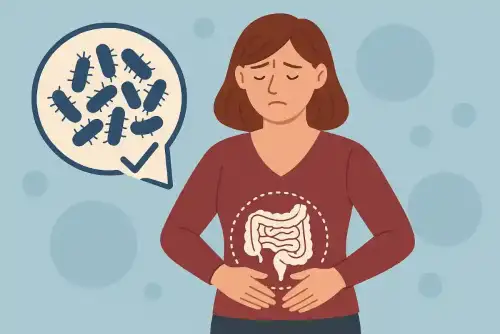
Celiac.com 01/15/2026 - Celiac disease has long been viewed as a condition that appears suddenly—first with vague digestive issues, then with clear serological markers, and finally with intestinal damage diagnosed through biopsy. But a growing body of research is challenging that timeline. Increasingly, scientists believe that the earliest signs of celiac disease may emerge not in blood tests, or even in symptoms, but deep within the gut microbiome years before diagnosis is possible through traditional screening.
This article explores cutting-edge findings on how microbial patterns evolve long before autoimmunity fully develops, and what this could mean for early detection, prevention strategies, and anyone living with celiac disease or gluten sensitivity.
The Microbiome: Celiac Disease’s Early Messengers?
Celiac.com Sponsor (A12):
The human digestive tract is home to trillions of microorganisms. This living ecosystem—comprised of bacteria, viruses, fungi, and archaea—helps digest food, modulate immunity, and protect against pathogens. For years, researchers suspected that disruptions in these microbial communities might play a role in autoimmune conditions, but only recently has the technology been sensitive enough to follow microbial shifts over long periods of time.
Several longitudinal studies now suggest that a child destined to develop celiac disease may show distinctive microbial patterns months or even years before gluten-triggered autoimmunity appears. These shifts do not resemble simple inflammation; they appear to be specific, subtle rearrangements in microbial diversity and function. In some cases, these patterns emerge while a child still seems entirely healthy.
This finding has profound implications. If the microbiome signals risk earlier than serology, it could become one of the most powerful tools for predicting celiac disease long before damage occurs.
What Does This Mean for People With Celiac or Gluten Sensitivity?
- It highlights that celiac disease may develop gradually over many years, not suddenly.
- It underscores the importance of gut health as a contributor—not just a casualty—of autoimmune disease.
- It suggests that microbiome-supportive habits may play a role in reducing risk or delaying onset in genetically predisposed individuals.
Microbial Fingerprints Before Autoimmunity: What the Studies Show
One striking pattern emerging from research is a decrease in microbial diversity in children who later develop celiac disease. These children often show a higher abundance of inflammatory bacterial species and lower levels of protective, fiber-loving bacteria that support gut barrier integrity.
Even more compelling is the rise and fall of certain bacterial metabolites—chemical byproducts of digestion—that may influence how the immune system responds to gluten. Some metabolites appear to prime the immune system for overreaction, while others help maintain tolerance. In children who developed celiac disease, researchers identified increases in metabolites associated with oxidative stress and decreases in metabolites linked to immune regulation.
These shifts were detectable as early as six months of age in some studies, long before gluten exposure becomes significant and long before antibodies appear.
Why This Matters for the Gluten-Free Community
- It challenges the assumption that celiac disease begins only after gluten exposure increases.
- It suggests that environmental factors—including diet, antibiotics, breastfeeding, and infections—may have a bigger cumulative influence than previously thought.
- It may change how early we can intervene to support gut and immune health.
Genetics, Environment, and the Microbiome: A Three-Way Interaction
Most people with the genes for celiac disease (HLA-DQ2 or HLA-DQ8) never develop it. This has puzzled researchers for decades. Now, the microbiome may help explain why.
Scientists are beginning to view celiac disease as a condition that requires three components:
- Genetic susceptibility
- Gluten exposure
- A microbiome vulnerable to immune dysregulation
Even with the right genes, the immune system may never misfire unless the microbiome shifts into an imbalanced, inflammatory state. Antibiotic use in infancy, cesarean birth, early viral infections, and limited dietary fiber have all been associated with microbiome patterns linked to increased autoimmune risk.
What This Means for Families With Celiac Disease
- If one child has celiac disease, monitoring microbiome changes in siblings may eventually become an option.
- Interventions to stabilize or diversify the microbiome may help reduce the likelihood of developing the disease—though research is still early.
- It reinforces that celiac disease is not caused by gluten alone but is part of a larger interaction between environment, genetics, and microbial ecology.
Can Microbiome Testing Predict Celiac Disease Today?
Currently, microbiome analysis can provide interesting insights into gut health, but it is not yet a validated diagnostic tool for predicting celiac disease in clinical practice. The patterns researchers have identified are promising, but they are not consistent enough across populations to serve as a definitive predictor.
However, technology is advancing fast. Machine-learning models are being trained on microbial data from infants around the world, identifying microbial “signatures” that may help forecast autoimmune responses. The hope is that one day a child's stool sample could reveal whether they are trending toward a celiac-type immune profile—even years before antibodies appear.
Why This Is Exciting for People With Gluten Issues
- It opens the possibility of catching celiac disease before intestinal damage occurs.
- It could prevent years of unexplained symptoms in children and adults.
- It may eventually help identify who would benefit most from early nutritional or probiotic interventions.
Future Prevention: Could We Change the Microbiome to Prevent Celiac Disease?
This is one of the biggest unanswered questions. If the microbiome plays a role in triggering autoimmunity, can adjusting the microbiome stop—or even reverse—the process?
Researchers are currently studying several possibilities:
- Targeted Probiotics: Introducing strains known to regulate immune responses.
- Prebiotics: Feeding beneficial bacteria with specific fibers to encourage diversity.
- Postbiotics: Providing microbial metabolites that support immune tolerance.
- Dietary shifts: Encouraging high-fiber, plant-rich diets early in life.
- Microbiome transplants: Still experimental but increasingly studied for autoimmune disorders.
While none of these strategies are proven to prevent celiac disease today, the idea of shaping the microbiome during high-risk windows is attracting enormous scientific interest. Prevention strategies could someday become part of pediatric recommendations for children with genetic risk.
What This Means for Adults With Celiac Disease
- Microbiome repair may become part of long-term management to improve symptoms or nutrient absorption.
- It offers a better understanding of why some people struggle with lingering symptoms even after going gluten-free.
- It may eventually lead to therapies that restore immune tolerance—though this remains speculative and far off.
Living With Celiac Disease in a Microbiome-Driven Future
Even though microbiome prediction tools are not yet part of standard care, the research is already changing how clinicians understand celiac disease. Instead of a condition that emerges abruptly, celiac may be viewed as a long developmental process that begins in early life and progresses silently until gluten triggers the immune system.
This understanding empowers patients in several ways:
- It validates the idea that digestive and immune issues often have deep roots—sometimes beginning years before diagnosis.
- It encourages proactive gut-care strategies for those with genetic predispositions.
- It may help reduce stigma by reframing celiac disease as a complex, multifactorial condition—not simply a reaction to bread.
For families with multiple members affected, this research offers hope that earlier prediction—and even prevention—may someday become a reality.
Conclusion: A New Era in Early Detection
The microbiome is proving to be one of the most powerful windows into autoimmune health. While microbiome-based prediction of celiac disease is still in the research phase, its potential is enormous. One day, subtle microbial changes may allow clinicians to identify individuals at risk years before symptoms begin, creating opportunities for early dietary guidance, microbiome support, and regular monitoring.
For people with celiac disease or gluten sensitivity today, the message is clear: gut health matters, long before diagnosis and long after adopting a gluten-free lifestyle. As science continues to uncover the earliest microbial clues, the path toward prevention—and a healthier future—becomes more hopeful than ever.












Recommended Comments
There are no comments to display.
Create an account or sign in to comment
You need to be a member in order to leave a comment
Create an account
Sign up for a new account in our community. It's easy!
Register a new accountSign in
Already have an account? Sign in here.
Sign In Now