


Celiac.com 01/13/2026 - Gluten-free labeling has long been a cornerstone of safety for people with celiac disease, non-celiac gluten sensitivity, and wheat allergies. But an equally important—yet less understood—system exists alongside it: precautionary allergen labeling (PAL). These are the familiar “may contain wheat” or “processed in a facility that also handles gluten” statements found on countless packaged foods. Unlike regulated gluten-free claims, PAL statements have historically lacked standardized thresholds, leading to widespread inconsistency and confusion among consumers.
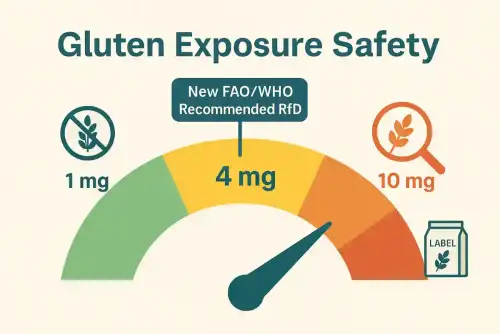
Recently, a joint committee convened by the Food and Agriculture Organization of the United Nations (FAO) and the World Health Organization (WHO) has taken a major step toward addressing this gap. After reviewing scientific data on chronic gluten exposure, cross-contact risks, and global eating patterns, the expert panel recommended adopting a gluten reference dose (RfD) of 4 milligrams (mg) for use in a risk-based PAL framework. This recommendation is designed to protect people with celiac disease and those with IgE-mediated wheat allergies by ensuring that precautionary warnings are meaningful, evidence-based, and consistently applied.
Celiac.com Sponsor (A12):
This article explores the committee’s findings and, more importantly, breaks down what this means for consumers living with celiac disease or gluten sensitivity—individuals for whom even trace amounts of gluten can have significant health consequences.
Understanding Gluten-Free vs. Precautionary Allergen Labeling
To understand the significance of the new RfD recommendation, it’s important to distinguish between two different labeling systems:
- Gluten-Free Labeling: Strict, regulated standards requiring foods to contain less than 20 mg of gluten per kilogram (20 ppm), as defined by Codex Alimentarius in 2008.
- Precautionary Allergen Labeling (PAL): Voluntary statements used by manufacturers to warn consumers when cross-contact may occur during production or handling.
The 20 ppm gluten-free standard has been the global benchmark for safety, based on research showing that most people with celiac disease can tolerate up to 10 mg of gluten per day without long-term intestinal damage. For context, eating 500 grams (approximately 17 ounces) of food containing the full 20 ppm would result in consuming exactly 10 mg of gluten.
However, PAL statements have historically lacked this kind of regulatory clarity. Manufacturers often overuse or underuse them, leading to both unnecessary fear and unintentional risk. The FAO/WHO’s new recommendation aims to bring scientific structure to when—and how—PAL should be applied.
What This Means for People With Celiac Disease
- Gluten-free labels stay exactly the same (still 20 ppm).
- The new RfD applies only to foods without gluten-free claims but where cross-contact may occur.
- A standardized threshold could reduce consumer confusion and improve trust in labeling.
Why a Gluten Reference Dose (RfD) Is Necessary
Historically, reference doses were developed primarily for IgE-mediated food allergies, where reactions occur immediately after consuming even tiny amounts of an allergen. But celiac disease is different: it is an autoimmune disorder with long-term, cumulative consequences. A single exposure may cause symptoms, but the concern is chronic exposure—small, repeated amounts that may lead to ongoing intestinal damage.
Because of this difference, the FAO/WHO experts emphasized that the RfD for celiac disease must be based not on single-exposure reactions but on daily, long-term gluten intake. Their goal was to identify a threshold that keeps cumulative exposure below 10 mg per day, mirroring the safety model already used to define gluten-free foods.
Why This Matters for the Gluten-Free Community
- It acknowledges the unique physiology of celiac disease compared to IgE allergies.
- It provides a framework specifically designed to prevent chronic intestinal damage—not just immediate reactions.
- It creates clearer guidance for products without gluten-free labels.
How Experts Determined the 4 mg Gluten Reference Dose
The committee modeled gluten exposures ranging from 1 to 10 mg per day, using realistic data on:
- How often cross-contact occurs during manufacturing
- Typical gluten levels found when cross-contact is present
- Daily food consumption patterns across multiple eating occasions
- The possibility of encountering foods containing more than 20 mg/kg gluten
The goal was straightforward: identify an RfD that would prevent most people with celiac disease from exceeding the 10 mg/day chronic exposure threshold.
The results were revealing:
- RfDs of 5–10 mg did not lead to median daily exposures above 10 mg.
- Even acute exposures above 5 mg generally remained within safe chronic limits.
- A single unified RfD would simplify global regulatory use and reduce confusion.
Based on these findings, the committee recommended adopting a 4 mg gluten RfD for risk-based PAL decision-making. This value is slightly more conservative than the modeled safe range but ensures a strong margin of protection for almost all celiac patients.
Why 4 mg and Not 5–10 mg?
- It avoids multiple thresholds for different foods.
- It provides extra protection for high-consumption foods.
- It reinforces a consistent, conservative approach that aligns with long-term safety goals.
Replacing the Previous Wheat Protein RfD
Prior guidance recommended a 5 mg total protein RfD for wheat. However, this earlier standard created ambiguity because “protein” is not equivalent to “gluten,” and the conversion is not straightforward. The expert panel concluded that replacing the old 5 mg wheat protein threshold with a clearer 4 mg gluten-specific RfD would be more accurate and useful.
This adjustment benefits both regulators and consumers by aligning PAL decisions directly with the substance of concern: gluten itself.
What This Means for People Reading Labels
- A more transparent relationship between labeling and actual gluten risk.
- Better distinction between products that contain gluten ingredients and those with only potential cross-contact.
- A consistent basis for “may contain gluten” statements worldwide.
Improving Label Clarity and Reducing Consumer Confusion
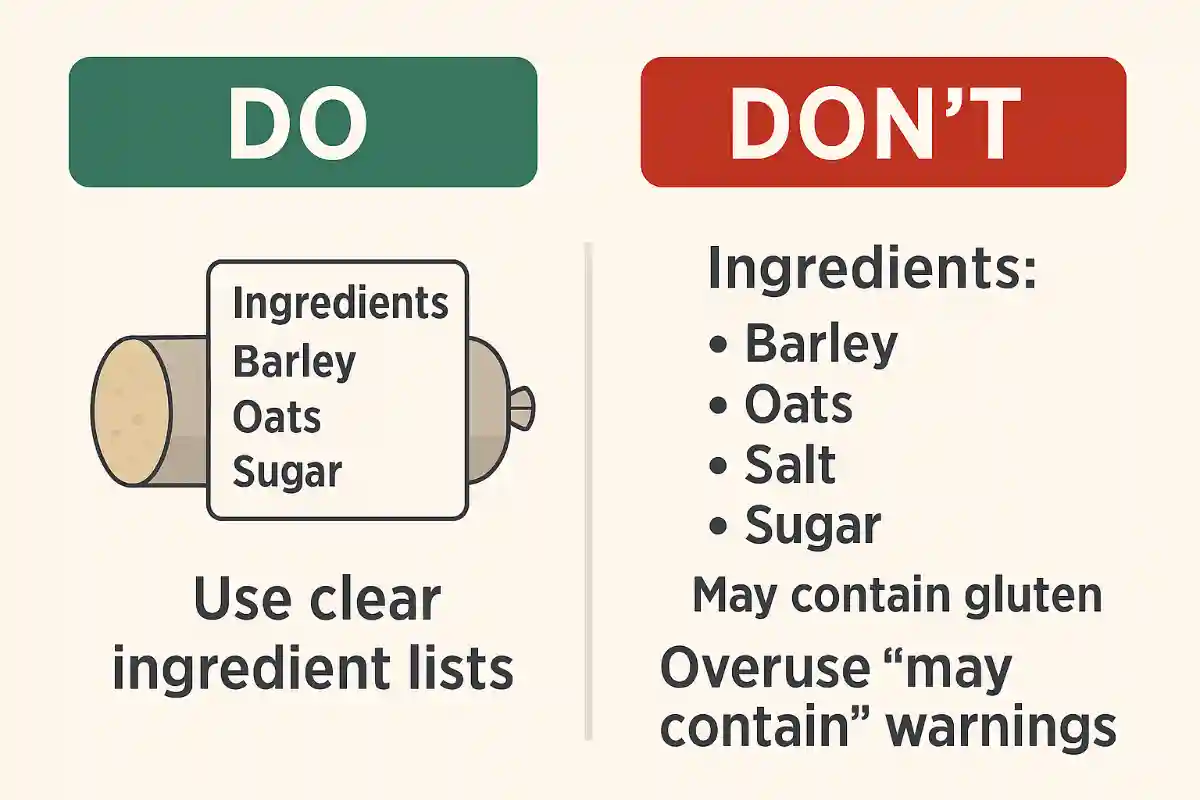
The FAO/WHO experts also addressed another persistent issue: confusing ingredient lists. For example, a product may contain barley as an intentional ingredient but also risk cross-contact from wheat during processing. Without clear labeling, consumers may not know how to interpret these overlapping risks.
To address this, the committee recommended:
- Clearly naming gluten-containing cereals in ingredient lists.
- When necessary, using additional statements that include the word “gluten” for clarity.
- Applying PAL only when cross-contact exceeds the 4 mg RfD.
The goal is to eliminate contradictory message signals and help consumers make informed, confident choices.
Impact on People With Celiac Disease
- Less guesswork when reading complex ingredient lists.
- Better consistency in global labeling practices.
- Improved trust in “may contain” warnings.
Why This Recommendation Is So Important
Celiac disease affects millions worldwide. For these individuals, food labeling is not a convenience—it is a medical necessity. The FAO/WHO recommendation represents one of the most significant steps forward in creating a science-based, globally consistent framework for managing accidental gluten exposure.
Risk-based PAL allows manufacturers to:
- Apply precautionary warnings only when truly necessary.
- Avoid overusing PAL statements, which currently limit food choices unnecessarily.
- Help consumers avoid hidden chronic exposures that could damage intestinal health.
The ultimate beneficiaries are consumers who deserve accurate information and safer food environments.
What This Means Going Forward
The committee’s recommendations will inform ongoing discussions within the Codex Committee on Food Labeling (CCFL) and the Codex Committee on Food Hygiene (CCFH). While the new RfD is not yet legally binding, it is a strong scientific foundation for future policy decisions.
Consumers with celiac disease and gluten sensitivity should keep an eye on how national agencies respond to these recommendations. Over time, standardized PAL thresholds may lead to:
- Greater global consistency in packaged food labeling
- Reduced hidden gluten exposure
- More confidence for consumers navigating complex food environments
Conclusion: A Major Step Toward Clearer, Safer Gluten Labeling
The FAO/WHO’s recommendation of a 4 mg gluten reference dose for precautionary allergen labeling marks a turning point in global food safety standards. By focusing on cumulative exposure and the unique needs of people with celiac disease, experts have laid the groundwork for clearer, more reliable labeling practices.
For individuals with celiac disease or gluten sensitivity, this offers hope for a future where food choices are easier, safer, and more transparent—reducing the burden of constant vigilance and helping people live healthier, more confident gluten-free lives.
Read more at: food-safety.com












Recommended Comments
There are no comments to display.
Create an account or sign in to comment
You need to be a member in order to leave a comment
Create an account
Sign up for a new account in our community. It's easy!
Register a new accountSign in
Already have an account? Sign in here.
Sign In Now