


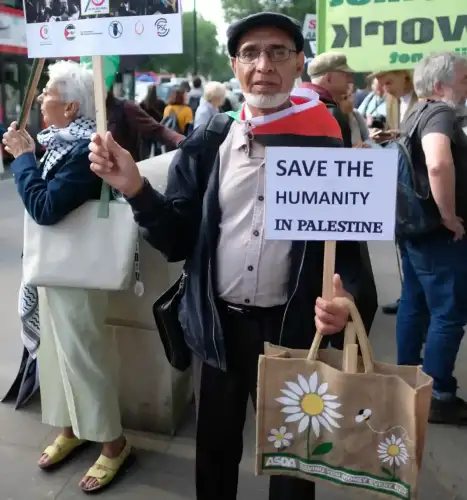
Celiac.com 02/04/2026 - The story of a young girl in Gaza who suffered from celiac disease and extreme malnutrition is heartbreaking on its own. Yet it also reveals a broader and often overlooked reality: for people with celiac disease or gluten sensitivity, access to the right food is not optional or a lifestyle choice. It is essential for survival. When safe food disappears, the consequences can be swift, severe, and deadly.
Celiac disease requires strict and lifelong avoidance of gluten. Without this, the immune system attacks the small intestine, damaging its ability to absorb nutrients. In stable settings, this condition is manageable through diet alone. In crisis settings marked by war, displacement, and food shortages, celiac disease becomes far more dangerous. The experience of this young girl illustrates how fragile health becomes when medical needs collide with humanitarian catastrophe.
Understanding Celiac Disease Beyond the Basics
Celiac.com Sponsor (A12):
Celiac disease is not simply an intolerance or discomfort related to food. It is an autoimmune condition that causes the body to attack itself when gluten is consumed. Over time, repeated exposure leads to intestinal damage, nutrient deficiencies, weight loss, fatigue, and weakened immunity. Children are especially vulnerable because their bodies are still growing.
The primary treatment is complete removal of gluten from the diet. When done properly, the intestine can heal, and children can grow and thrive normally. However, this treatment assumes access to gluten-free grains, proteins, fruits, vegetables, and medical care. When these are unavailable, the disease progresses unchecked.
Food Scarcity Turns a Treatable Condition Into a Medical Emergency
In Gaza, widespread food shortages and restrictions meant that basic dietary needs could not be met. For someone without celiac disease, limited food already poses serious risks. For someone who cannot safely eat common staples such as wheat-based bread, the danger multiplies.
Gluten-free foods are often more difficult to obtain even in peaceful regions. In crisis zones, they are nearly impossible to find. The girl’s inability to access gluten-free flour, vegetables, protein sources, and nutrient-dense foods meant her damaged intestine could not recover. Instead, her body slipped deeper into malnutrition.
Malnutrition in celiac disease is not only about lack of calories. It involves deficiencies in iron, protein, vitamins, and minerals, all of which are essential for growth, immunity, and healing. Without proper nutrition, even medical interventions offer only temporary relief.
The Collapse of Medical Support Systems
In stable health systems, severe malnutrition related to celiac disease would trigger aggressive nutritional therapy, specialized feeding, and close monitoring. In Gaza, hospitals were overwhelmed, under-resourced, and struggling to meet even the most basic needs.
Doctors attempted to help with the limited tools available, including supplements and basic foods. Temporary improvements occurred during hospital stays, but these gains could not be maintained once the child returned to conditions of scarcity. Without sustained access to appropriate food, her condition repeatedly worsened.
This cycle highlights a critical reality: treating celiac disease requires continuity. Short-term care cannot replace long-term dietary stability. When systems fail to provide that stability, outcomes can be devastating.
The Unique Vulnerability of Children With Celiac Disease in Crises
Children with celiac disease face risks that are often invisible during humanitarian emergencies. Aid distributions frequently focus on staple foods that contain gluten. While these staples may prevent starvation for many, they are unsafe for those with celiac disease.
This creates an impossible situation. A child must choose between eating food that causes internal damage or not eating at all. Over time, both choices lead to severe illness. The girl’s experience underscores how humanitarian responses often overlook medical dietary needs.
For families, the emotional toll is enormous. Parents may be forced to eat food they cannot share with their child. Children may watch siblings eat while they remain hungry. The psychological harm compounds the physical suffering.
When Poverty and Conflict Intensify Medical Inequality
Even when limited gluten-free foods were available in local markets, prices were far beyond what most families could afford. Conflict-driven inflation placed safe food entirely out of reach. What might be a manageable condition in wealthier settings became lethal under economic collapse.
This highlights a harsh truth: celiac disease outcomes are deeply influenced by social and political conditions. Access to safe food, healthcare, and financial stability can determine whether a person lives a full life or faces life-threatening complications.
Why This Story Matters for the Global Celiac Community
For people with celiac disease or gluten sensitivity worldwide, this story is a reminder of how dependent health is on access. Many individuals living in stable countries may take gluten-free options for granted. In reality, millions live in environments where such food is rare, unaffordable, or nonexistent.
The story also challenges the misconception that celiac disease is minor or manageable under all circumstances. Without proper treatment, it can lead to severe malnutrition, immune failure, and death. This is not an exaggeration, but a documented medical reality.
The Need for Inclusive Humanitarian Planning
Humanitarian aid systems must account for medical dietary needs. People with celiac disease, food allergies, and metabolic disorders require specific foods to survive. Standard food aid, while lifesaving for many, can inadvertently exclude those with specialized needs.
This case demonstrates the urgency of including gluten-free options in emergency food distributions and ensuring medical evacuation pathways for those with chronic conditions. Without these measures, vulnerable populations remain at extreme risk.
A Broader Lesson About Food as Medicine
Celiac disease illustrates a fundamental truth: for some conditions, food is medicine. When food systems collapse, medical treatment collapses with them. No amount of compassion or clinical skill can compensate for the absence of essential nutrition.
This understanding should inform global health planning, conflict response, and public awareness. Chronic illnesses do not pause during war, and dietary conditions do not become less serious because of crisis. They become more dangerous.
Conclusion: What This Means for People With Celiac Disease
The loss of this young girl is a tragedy that extends beyond one family or one place. It exposes how celiac disease becomes life-threatening when safe food and medical care disappear. For people with celiac disease and gluten sensitivity, the story reinforces the importance of access, advocacy, and recognition of dietary needs as essential health care.
It is a call to policymakers, aid organizations, and health systems to recognize that survival depends not just on calories, but on the right kind of nutrition. For the global celiac community, it is a painful reminder that awareness and preparation can mean the difference between recovery and irreversible harm.
Ultimately, this story urges the world to see gluten-free food not as a preference, but as a necessity. When that necessity is denied, the consequences can be fatal.
Read more at: nytimes.com









Recommended Comments
There are no comments to display.
Create an account or sign in to comment
You need to be a member in order to leave a comment
Create an account
Sign up for a new account in our community. It's easy!
Register a new accountSign in
Already have an account? Sign in here.
Sign In Now