Jump to content
  • Welcome to Celiac.com!

    You have found your celiac tribe! Join us and ask questions in our forum, share your story, and connect with others.


  • Celiac.com Sponsor (A1):


    Celiac.com Sponsor (A1-M):


  • Get Celiac.com Updates:
    Support Our Content
    eNewsletter
    Donate
  • Scott Adams
    Scott Adams

    New Classification of Metabolic-associated Fatty Liver Disease in Celiac Patients

    Reviewed and edited by a celiac disease expert.

    Researchers recently acknowledged the category of metabolic-associated fatty liver disease in celiac patients.

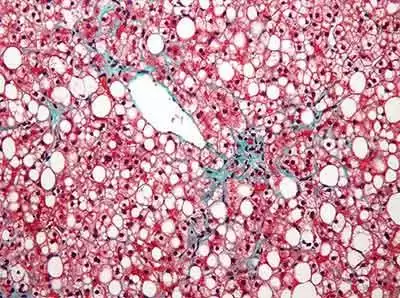
    New Classification of Metabolic-associated Fatty Liver Disease in Celiac Patients - Image: CC BY 2.0--Official U.S. Navy Imagery
    Caption: Image: CC BY 2.0--Official U.S. Navy Imagery

    Celiac.com 06/22/2021 - People with celiac disease have a higher risk for developing non-alcoholic fatty liver disease (NAFLD) and other related metabolic disorders, especially if they are not on a gluten-free diet. 

    A team of researchers recently set out to explore the prevalence of NAFLD and metabolic-associated fatty liver disease in celiac patients at the time of celiac diagnosis and after 2 years of GFD; and to assess the role of PNPLA3 rs738409 in the development of NAFLD and metabolic-associated fatty liver disease in the celiac population.

    Celiac.com Sponsor (A12):
    Recently, a new category of metabolic-associated fatty liver disease (MAFLD) has been proposed to move beyond the constraints of the NAFLD definition. 

    The research team included Antonio Rispo; Nicola Imperatore; Maria Guarino; Raffaella Tortora; Anna Alisi; Valentina Cossiga; Anna Testa; Simona Ricciolino; Andrea Fiorentino; and Filomena Morisco.

    They are variously affiliated with the Gastroenterology, Department of Clinical Medicine and Surgery, School of Medicine Federico II of Naples, Naples, Italy; the Gastroenterology and Endoscopy Unit, AORN Antonio Cardarelli, Naples, Italy; the  Hepatology Unit, AORN A. Cardarelli, Naples, Italy; and the Research Unit of Molecular Genetics and Complex Phenotypes, Bambino Gesù Children's Hospital, IRCCS, Rome, Italy.

    For the study, the team retrospectively enrolled all newly diagnosed celiac patients who underwent clinical, laboratory and ultrasonography investigations, both at diagnosis and at a two year follow-up. They also conducted a PNPLA3 rs738409 genotyping assay.

    They found that 65 of 221 newly diagnosed celiac patients, nearly 30%, presented NAFLD upon celiac diagnosis, while 32 of 221 met the criteria for metabolic-associated fatty liver disease. 

    There were no major differences between NAFLD and metabolic-associated fatty liver disease, though 3 out of 4 metabolic-associated fatty liver disease patients had higher rates of insulin resistance (IR) compared with 2 out of 5 for NAFLD patients. 

    The study shows that the newly established metabolic-associated fatty liver disease definition better describes the metabolic changes common when celiacs adopt a gluten-free diet. 

    The new classification may help to spot patients at risk of worse metabolic outcomes, who will likely benefit from a close multidisciplinary approach for their multi-systemic disease.

    Keep an eye on celiac.com for more stories on celiac disease and metabolic-associated fatty liver.


    Read more in Liver International. 2021;41(4):788-798.



    User Feedback

    Recommended Comments

    Guest Laura

    Posted

    It does appear that there are many associated metabolic variances.

    1. loss of tooth enamel, erosion and broken teeth

    2. NASH

    3. thyroid & thymus disorders

    4. lymphoma

    The list goes on and on.

    Link to comment
    Share on other sites


    Create an account or sign in to comment

    You need to be a member in order to leave a comment

    Create an account

    Sign up for a new account in our community. It's easy!

    Register a new account

    Sign in

    Already have an account? Sign in here.

    Sign In Now

  • Get Celiac.com Updates:
    Support Celiac.com:
    Join eNewsletter
    Donate
  • About Me

    Scott Adams
    scott_adams_dotcomer.webp

    Scott Adams was diagnosed with celiac disease in 1994. Faced with a critical lack of resources, he dedicated himself to becoming an expert on the condition to achieve his own recovery.

    In 1995, he founded Celiac.com with a clear mission: to ensure no one would have to navigate celiac disease alone. The site has since grown into one of the oldest and most trusted patient-focused resources for celiac disease and the gluten-free lifestyle.

    His work to advance awareness and support includes:

    Today, Celiac.com remains his primary focus. To ensure unbiased information, the site does not sell products and is 100% advertiser supported.


  • Celiac.com Sponsor (A17):
    Celiac.com Sponsor (A17):


    Celiac.com Sponsors (A17-M):


  • Related Articles

    Jefferson Adams
    Higher Risk of Non-alcoholic Fatty Liver Disease After Celiac Diagnosis
    Celiac.com 06/29/2015 - Non-alcoholic fatty liver disease is a common cause of chronic liver disease. There's good data showing that celiac disease changes intestinal permeability, and that treatment with a gluten-free diet often causes weight gain, but so far there is scant documentation of non-alcoholic fatty liver disease in patients with celiac disease.
    A team of researchers recently set out to assess increased risk of non-alcoholic fatty liver disease following diagnosis of celiac disease. The research team include Norelle R. Reilly, Benjamin Lebwohl, Rolf Hultcrantz, Peter H.R. Green, and Jonas F. Ludvigsson. They are affiliated with the Department Medical Epidemiology and Biostatistics, Karolinska Institutet, Stockholm, Sweden, and the Department of Pediatrics at Örebro University ...


    Jefferson Adams
    Abnormal Liver Function Tests in Celiac Disease Often Normalize with a Gluten-Free Diet
    Celiac.com 09/01/2015 - Current medical guidelines recommend routine screening of liver function tests (LFTs) in patients diagnosed with celiac disease. However, there isn't much good data on rates of liver disorders in celiac disease outside of Europe. A team of researchers recently set out to accurately estimate rates of LFT abnormalities in celiac disease in the USA, and to assess the effect of a gluten-free diet on LFTs.
    The research team included Natalia E Castillo, Rohini R Vanga, Thimmaiah G Theethira, Alberto Rubio-Tapia, Joseph A Murray, Javier Villafuerte, Alan Bonder, Rupa Mukherjee, Joshua Hansen, Melinda Dennis, Ciaran P Kelly and Daniel A Leffler.
    To identify adult patients with biopsy-proven celiac disease, they used a prospectively maintained database, which...


    Jefferson Adams
    Celiac Patients on a Gluten-free Diet Face Increased Risk of Nonalcoholic Fatty Liver Disease
    Celiac.com 10/24/2018 - Although some research has shown a connection between a gluten-free diet, altered macronutrient intake and metabolic syndrome, not much good data exists on the risk of nonalcoholic fatty liver disease in patients with celiac disease who follow a gluten-free diet. A team of researchers recently set out to assess the prevalence and relative risk of nonalcoholic fatty liver disease in celiac patients treated with a gluten-free diet.
    The research team included F. Tovoli; G. Negrini; R. Farì; E. Guidetti; C. Faggiano; L. Napoli; L. Bolondi; and A. Granito of the Department of Medical and Surgical Sciences, University of Bologna, Bologna, Italy.
    For many patients with metabolic syndrome, nonalcoholic fatty liver disease is common. To try to get some better i...


    Scott Adams
    Serology and Histology Differences Complicate Celiac Disease Screening of Coexisting Liver Disorders
    Celiac.com 08/12/2020 - The interaction between celiac disease and the liver is complex and not well understood. In some cases, isolated hypertransaminasemia is the only clear sign of celiac disease, while in other cases, liver diseases can occur with isolated tissue transglutaminase antibodies IgA (tTG IgA), but without the histologic markers that would indicate celiac disease.
    A team of researchers recently set out to assess the results of tTG IgA testing for chronic liver disease (CLD) or cytolysis, and to seek out biopsy-confirmed celiac disease in patients with existing liver disease.
    The research team included Lena Cvetkovic, Gabriel Bernard, Nathanaelle Galette, Pierre-Olivier Hétu, Catherine Vincent, Mickael Bouin, and Amelie Therrien. They are variously affiliated ...


  • Recent Activity

    1. - cristiana replied to HAUS's topic in Gluten-Free Foods, Products, Shopping & Medications
      12

      Sainsbury's Free From White Sliced Bread - Now Egg Free - Completely Ruined It

    2. - Russ H replied to Ginger38's topic in Related Issues & Disorders
      8

      Shingles - Could It Be Related to Gluten/ Celiac

    3. - Russ H replied to HAUS's topic in Gluten-Free Foods, Products, Shopping & Medications
      12

      Sainsbury's Free From White Sliced Bread - Now Egg Free - Completely Ruined It

    4. - Flash1970 replied to Ginger38's topic in Related Issues & Disorders
      8

      Shingles - Could It Be Related to Gluten/ Celiac

    5. - trents replied to Roses8721's topic in Celiac Disease Pre-Diagnosis, Testing & Symptoms
      10

      GI DX celiac despite neg serology and no biopsy


  • Celiac.com Sponsor (A19):


  • Member Statistics

    • Total Members
      132,519
    • Most Online (within 30 mins)
      7,748

    jaimelok24
    Newest Member
    jaimelok24
    Joined

  • Celiac.com Sponsor (A20):


  • Celiac.com Sponsor (A22):


  • Forum Statistics

    • Total Topics
      121.5k
    • Total Posts
      1m

  • Celiac.com Sponsor (A21):


  • Popular Now

    • Ginger38
  • Popular Articles

    • Scott Adams
    • Scott Adams
    • Scott Adams
    • Scott Adams
    • Scott Adams
  • Upcoming Events

×
×
  • Create New...

Important Information

NOTICE: This site places This site places cookies on your device (Cookie settings). on your device. Continued use is acceptance of our Terms of Use, and Privacy Policy.