Jump to content
  • Welcome to Celiac.com!

    You have found your celiac tribe! Join us and ask questions in our forum, share your story, and connect with others.


  • Celiac.com Sponsor (A1):


    Celiac.com Sponsor (A1-M):


  • Get Celiac.com Updates:
    Support Our Content
    eNewsletter
    Donate
  • Scott Adams
    Scott Adams

    Study Finds Gluten Contamination Common in "Naturally Gluten-Free" Flours

    Reviewed and edited by a celiac disease expert.

    A new study finds that many naturally gluten-free flours contain unsafe levels of gluten, especially when unlabeled or sold in bulk, highlighting risks for people with celiac disease.

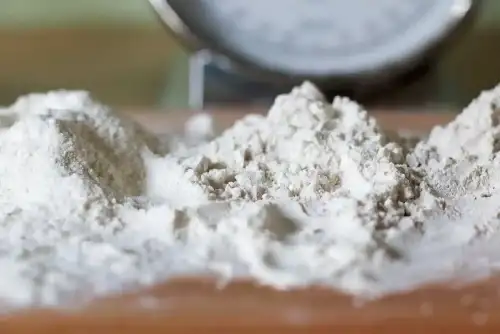
    Study Finds Gluten Contamination Common in "Naturally Gluten-Free" Flours - Flours by Mudd1 is licensed under CC BY-SA 3.0.
    Caption:
    Flours by Mudd1 is licensed under CC BY-SA 3.0.

    Celiac.com 01/20/2026 - Following a gluten-free diet is essential for people with celiac disease, but in many parts of the world, finding truly safe gluten-free ingredients can be difficult. The study published in Frontiers in Nutrition set out to understand how often “naturally gluten-free” flours are contaminated with gluten and whether products labeled as gluten-free are safer. This question matters because even small amounts of gluten can harm people with celiac disease by damaging their intestines and causing serious symptoms. The researchers wanted to compare different types of gluten-free flours from the market to see where risks were highest and what factors might contribute to contamination.

    Types of Flours Tested

    The study looked at 163 flour samples from a variety of grains that are often considered naturally gluten-free, such as oat, buckwheat, corn, and rice. These samples were collected from shops and markets and included three main categories: flours that were commercially produced and labeled gluten-free, naturally gluten-free flours that were packaged but not labeled gluten-free, and naturally gluten-free flours that were sold unpackaged and without any gluten-free label. By comparing these groups, the researchers could see whether labeling and packaging made a difference in the amount of gluten found in the flours. 

    How Gluten Was Measured

    Celiac.com Sponsor (A12):
    To determine whether the flours contained gluten, the researchers used a standard laboratory method that measures gliadin, a component of gluten that triggers celiac disease symptoms. In this approach, any flour with gluten levels above 20 parts per million was considered contaminated and potentially unsafe for people with celiac disease. This 20 parts per million threshold is a widely accepted limit used by international food safety standards. 

    What the Study Found

    The results showed that gluten contamination was quite common in flours that were not labeled gluten-free. Overall, more than half of all flour samples had gluten levels above the safe limit. Among the different categories:

    • About one in six commercially produced flours labeled gluten-free showed gluten contamination above the safe threshold.
    • Half of the naturally gluten-free flours that were packaged but unlabeled had unsafe levels of gluten.
    • Nearly nine out of ten flours that were sold unpackaged and without a gluten-free label were contaminated. 

    These findings suggest that flours marketed without gluten-free certification, especially when sold in bulk without packaging, are much more likely to contain gluten that could harm someone with celiac disease. 

    Differences Among Grain Types

    The risk of gluten contamination varied depending on the type of flour. Oat flours were the most frequently contaminated, with over 80 percent having unsafe gluten levels when they were not labeled gluten-free. Buckwheat flours were also commonly contaminated. In contrast, corn and rice flours had lower contamination rates, especially when they were commercially processed and labeled gluten-free. None of the rice flour samples labeled gluten-free showed unsafe gluten levels in this study. 

    Role of Storage, Packaging, and Handling

    Where and how flours were stored influenced contamination risk. Flours stored in areas with nearby gluten-containing products were more likely to be contaminated, especially when they were unpackaged and handled with shared utensils like spoons or scoops. Packaging alone helped reduce contamination, but even packaged products without gluten-free labeling could still be unsafe. The highest contamination rates occurred in flours sold unpackaged, where dust and contact with gluten-containing products could easily transfer gluten. 

    Why This Matters

    For people with celiac disease, maintaining a strict gluten-free diet is not optional; consuming gluten, even in very small amounts, can cause ongoing intestinal damage and lead to health complications. This study highlights that not all flours that might seem safe are actually free from gluten. Even products made from grains that are naturally gluten-free can become contaminated during harvesting, processing, storage, or sale, especially when they are not labeled and packaged carefully.

    What This Means for People With Celiac Disease

    This research underlines why gluten-free labeling and certification are so important for people with celiac disease. Certified gluten-free products have safeguards in place to minimize cross-contamination, but even some of these products can still contain gluten above safe levels. For consumers with medical needs, this means it is crucial to choose products that are both labeled and certified gluten-free whenever possible. 

    It also suggests that people with celiac disease should exercise caution when buying naturally gluten-free flours in unpackaged or unlabeled forms, as these are more likely to pose a risk. Being aware of how products are handled, stored, and labeled can help individuals make safer choices and protect their health. 

    Conclusion

    The study makes clear that gluten contamination in flour products is a serious concern for anyone who must avoid gluten for health reasons. While flours that are commercially produced and properly labeled are generally safer, contamination can still occur, and naturally gluten-free flours without clear labeling are especially risky. This research reinforces the importance of strict standards for gluten-free certification and careful purchasing choices for people with celiac disease. By understanding where risks are highest and how gluten can enter the food supply, individuals and regulators can work toward safer gluten-free food options that better support health and well-being.

    Read more at: frontiersin.org


    User Feedback

    Recommended Comments

    There are no comments to display.


    Create an account or sign in to comment

    You need to be a member in order to leave a comment

    Create an account

    Sign up for a new account in our community. It's easy!

    Register a new account

    Sign in

    Already have an account? Sign in here.

    Sign In Now

  • Get Celiac.com Updates:
    Support Celiac.com:
    Join eNewsletter
    Donate
  • About Me

    Scott Adams
    scott_adams_dotcomer.webp

    Scott Adams was diagnosed with celiac disease in 1994. Faced with a critical lack of resources, he dedicated himself to becoming an expert on the condition to achieve his own recovery.

    In 1995, he founded Celiac.com with a clear mission: to ensure no one would have to navigate celiac disease alone. The site has since grown into one of the oldest and most trusted patient-focused resources for celiac disease and the gluten-free lifestyle.

    His work to advance awareness and support includes:

    Today, Celiac.com remains his primary focus. To ensure unbiased information, the site does not sell products and is 100% advertiser supported.


  • Celiac.com Sponsor (A17):
    Celiac.com Sponsor (A17):


    Celiac.com Sponsors (A17-M):


  • Related Articles

    Tina Turbin
    Celiac.com 08/31/2010 - In my work as an author, researcher, and gluten-free advocate, I know how challenging the gluten-free diet can be. One of the most vital and tricky parts of the diet is learning what foods have gluten and which are "naturally" gluten-free as well as learning how to read labels. Unfortunately, these aren't always enough. Just because a grain is supposed to be "naturally" gluten-free, doesn't mean that it is. In fact, a recent study tested 22 so-called "inherently" gluten-free grains and found that over thirty percent of them had gluten.
    Gluten is a protein found in the grains wheat, barley, and rye, and is inherently lacking in grains such as oats, buckwheat, quinoa, millet, soy, sorghum, flaxseed, rice, and amaranth seed. A study tested 22 of these "naturally"...


    Jefferson Adams
    Can New Checklist Help Prevent Gluten Contamination in Food Industry?
    Celiac.com 02/02/2017 - Scientists have devised a universal gluten cross-contamination checklist they hope will help to reduce gluten contamination in the food services industries.
    The newly created food services checklist was compiled after an extensive literature review, input from 11 different experts with PhDs and experience with food services and/or gluten and celiac issues, along with documents from various organizations such as the Gluten-Free Certification Program from the Canadian Celiac Association.
    The final checklist consists of 88 items divided into 12 sections, which cover everything from building and facilities maintenance, cleaning and ventilation, to employee clothing and hygiene, to food production and transport.
    The checklist also includes a robust section on...


    Jefferson Adams
    The Gluten Contamination Study We've Been Waiting For
    Celiac.com 10/14/2019 - One of the big debates among people with celiac disease concerns how vigilant celiacs need to be to make sure they avoid gluten. What does science say about gluten contamination in three common scenarios? How careful do you need to be about gluten contamination?
    For example, how likely are you to get gluten over 20ppm if you share a toaster, pasta water, or slice a cupcake with the same knife used to cut a non-gluten-free cupcake?
    A team of researchers recently set out to assess three common scenarios where people with celiac disease might reasonably fear gluten contamination. How did the actual risk for each situation measure up?
    Scenario 1: Water used to cook regular pasta is reused to cook gluten-free penne and fusilli. The gluten-free p...


    Dr. Albert Zickmann
    Are Enzymes Effective Against Gluten Contamination?
    Celiac.com 03/06/2020 - Celiac disease has an incidence of about 1% in the general population. It is an automimmune disease triggered by a proline-rich protein, gliadin, when it enters the small intestine and leaks into the wall of the small intestine (therefore the name leaky gut). Humans cannot break down proline-rich proteins. In healthy persons, gliadin passes through the gastrointestinal tract and is excreted in stool and urine without consequences. Celiac patients, build antibodies in the small intestine and these antibodies travel through the blood stream in all areas of the body. In some patients, there are no apparent symptoms or they can be very mild, while in others the symptoms are quite severe and are even associated with an increased risk of a certain type of intestinal cancer....


  • Recent Activity

    1. - Jmartes71 replied to Jmartes71's topic in Related Issues & Disorders
      4

      New issue

    2. - Jmartes71 replied to chrish42's topic in Doctors
      3

      Doctors and Celiac.com

    3. - RMJ replied to Xravith's topic in Introduce Yourself / Share Stuff
      1

      Do Gluten Enzymes actually work?

    4. - Scott Adams replied to FannyRD's topic in Gluten-Free Foods, Products, Shopping & Medications
      2

      Gluten free phosphate binders for dialysis patients

  • Celiac.com Sponsor (A19):
  • Member Statistics

    • Total Members
      133,182
    • Most Online (within 30 mins)
      7,748

    Bigred404
    Newest Member
    Bigred404
    Joined
  • Celiac.com Sponsor (A20):
  • Celiac.com Sponsor (A22):
  • Forum Statistics

    • Total Topics
      121.6k
    • Total Posts
      1m
  • Celiac.com Sponsor (A21):
  • Popular Now

    • Mark Conway
      6
    • JudyLou
      12
  • Popular Articles

    • Scott Adams
    • Scott Adams
    • Scott Adams
    • Scott Adams
    • Scott Adams
  • Upcoming Events

×
×
  • Create New...

Important Information

NOTICE: This site places This site places cookies on your device (Cookie settings). on your device. Continued use is acceptance of our Terms of Use, and Privacy Policy.