


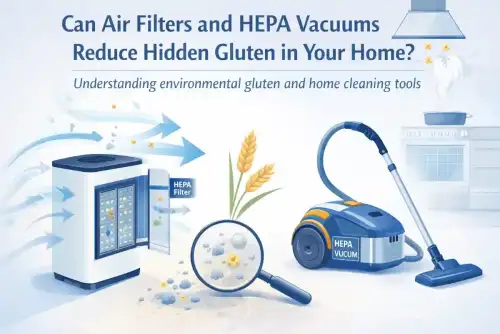
Celiac.com 03/05/2026 - For people with celiac disease or gluten sensitivity, avoiding gluten is not a preference but a medical necessity. Most conversations about gluten exposure focus on food labels, restaurant safety, and cross-contact during cooking. Far less attention is paid to the home environment itself. Yet gluten is a physical protein that can persist in dust, settle on surfaces, and circulate through air and ventilation systems. This raises an important question: can environmental controls such as air filters, kitchen vent hoods, and HEPA vacuums meaningfully reduce gluten exposure inside the home?
This article explores what science currently suggests about environmental gluten, how it behaves indoors, and whether common household tools can reduce accidental exposure. While research in this area is limited, existing data and practical testing offer insights that are especially relevant for households managing celiac disease.
Understanding Environmental Gluten in the Home
Celiac.com Sponsor (A12):
Gluten is a group of proteins found primarily in wheat, barley, and rye. When foods containing gluten are handled, cooked, or eaten, microscopic particles can be released into the environment. These particles can come from flour dust, bread crumbs, dried pasta fragments, and even steam carrying aerosolized food residue during cooking.
Once released, gluten particles can settle on countertops, floors, fabrics, and kitchen tools. They can also become part of household dust. Studies analyzing household dust have detected food proteins, including gluten-containing residues, particularly in kitchens and dining areas. While the concentration is usually low, repeated exposure over time can increase the chance of contact.
For individuals with celiac disease, even very small amounts of gluten can trigger an immune response. This makes environmental exposure more than a theoretical concern, especially in mixed households where gluten-containing foods are still present.
How Gluten Moves Through Indoor Air
Unlike gases or volatile chemicals, gluten does not remain airborne indefinitely. It tends to attach to larger particles such as flour dust or food debris. These particles can stay suspended briefly, especially during cooking, baking, sweeping, or vacuuming with non-filtered machines.
Activities most likely to increase airborne gluten include baking with wheat flour, shaking tablecloths, wiping dry crumbs, and using standard vacuums that exhaust fine particles back into the room. Once airborne, gluten-containing particles eventually settle, often on horizontal surfaces, inside ventilation ducts, or onto soft furnishings.
This pattern means that reducing airborne circulation and capturing fine particles at the source may help lower overall exposure.
Air Filters and Their Role in Reducing Gluten Particles
Air purifiers equipped with high-efficiency particulate air filters are designed to capture very small particles from indoor air. These filters are capable of trapping particles far smaller than most gluten-containing debris.
Testing in indoor air quality research has shown that air purifiers can reduce particulate matter related to dust, allergens, and food particles. While most studies do not measure gluten specifically, gluten-containing particles fall within the size range that these filters are designed to capture.
In practical terms, air filters are most effective when used continuously in high-risk areas such as kitchens and dining spaces. They are particularly helpful during and after cooking or baking. While air filters cannot eliminate gluten already settled on surfaces, they may reduce how much remains suspended and recirculated in the air.
For people with celiac disease, this can add an extra layer of protection, especially in shared households.
Kitchen Vent Hoods and Cooking-Related Gluten Exposure
Vent hoods are designed to remove heat, steam, grease, and airborne particles generated during cooking. When gluten-containing foods are prepared, especially those involving flour or high heat, vent hoods can help remove airborne residue before it spreads.
Effective vent hoods vent air outdoors rather than recirculating it. This distinction matters because recirculating systems may trap grease but allow fine particles to remain in the kitchen environment.
While vent hoods are not designed specifically to address gluten, their ability to remove cooking byproducts makes them useful in reducing airborne food particles. Using vent hoods consistently during cooking can limit how far gluten particles travel and where they eventually settle.
HEPA Vacuums and Household Dust Control
Standard vacuum cleaners can unintentionally worsen exposure by redistributing fine particles back into the air. HEPA vacuums, in contrast, trap particles within sealed filtration systems, preventing them from escaping during cleaning.
Household testing has shown that HEPA vacuums significantly reduce the amount of fine dust released during cleaning. Because gluten residues often attach to dust particles, HEPA vacuums can play a key role in reducing environmental contamination.
Using a HEPA vacuum regularly on kitchen floors, dining areas, rugs, and upholstery can lower the overall burden of gluten-containing dust. This is particularly important in homes where gluten-containing foods are still present.
What Environmental Controls Can and Cannot Do
It is important to be clear about limitations. Air filters, vent hoods, and HEPA vacuums do not replace safe food handling practices. They cannot make shared utensils safe, eliminate cross-contact on cutting boards, or neutralize gluten in food.
What they can do is reduce background exposure. This may be especially helpful for people who experience symptoms despite strict dietary adherence or who live in environments where gluten cannot be completely eliminated.
Environmental controls should be viewed as supportive tools rather than primary safeguards.
Practical Recommendations for Celiac-Safe Homes
Based on current evidence and environmental testing principles, several practical steps may help reduce exposure:
- Use air purifiers with true high-efficiency particulate air filters in kitchens and dining areas.
- Run kitchen vent hoods whenever cooking, especially when gluten-containing foods are prepared.
- Vacuum regularly with a sealed HEPA vacuum, focusing on floors and soft surfaces.
- Wet-wipe surfaces instead of dry dusting to avoid redistributing particles.
- Consider designated gluten-free zones to minimize contamination.
Why This Matters for People With Celiac Disease
Many people with celiac disease report symptoms even when they believe they are strictly gluten-free. Environmental exposure may be one contributing factor that is often overlooked. While not a replacement for dietary vigilance, reducing airborne and dust-based gluten may help lower overall exposure in sensitive individuals.
This topic also highlights a broader truth about celiac disease: gluten exposure is not limited to what we eat. It is influenced by how food is prepared, how homes are cleaned, and how particles move through indoor environments.
As awareness grows, future research may provide clearer guidelines and testing methods. Until then, using environmental controls thoughtfully may offer peace of mind and an additional margin of safety for those who need it most.
For people with celiac disease or gluten sensitivity, every layer of protection matters. Understanding and addressing environmental gluten is one more step toward truly safe living spaces.











Recommended Comments
There are no comments to display.
Create an account or sign in to comment
You need to be a member in order to leave a comment
Create an account
Sign up for a new account in our community. It's easy!
Register a new accountSign in
Already have an account? Sign in here.
Sign In Now