


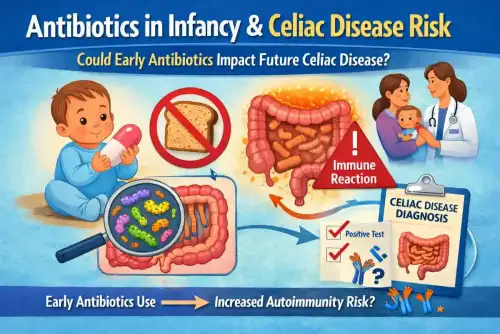
Celiac.com 02/02/2026 - Celiac disease is a lifelong immune condition in which eating gluten damages the small intestine. While genetics play an important role, genes alone do not explain why some people develop the disease while others with similar genetic backgrounds do not. Researchers have long suspected that early environmental factors, especially those affecting the developing immune system, may influence whether celiac disease emerges later in life.
One of the most important influences on the immune system during infancy is the community of bacteria living in the gut. These bacteria help train the immune system to recognize what is harmless and what is dangerous. Antibiotics, while often life-saving, can strongly disrupt these bacteria. This large population-based study explored whether antibiotic exposure during the first year of life is linked to a higher risk of developing celiac disease autoimmunity in childhood.
What the Researchers Studied
Celiac.com Sponsor (A12):
The researchers examined health records from a nationwide health care system that serves millions of people. They focused on children born over a long time span, from the mid-1990s through the early 2020s. By using this large and detailed database, the researchers were able to follow children from birth through childhood and observe both medication use and later immune-related outcomes.
The main question was simple but important: were children who received antibiotics during their first year of life more likely to develop celiac disease autoimmunity than children who did not? To answer this, the researchers looked not only at whether antibiotics were used, but also at how early they were given, how many times they were prescribed, and whether certain groups of children appeared more vulnerable.
How Antibiotic Exposure and Celiac Autoimmunity Were Defined
Antibiotic exposure was measured carefully. The researchers tracked the type of antibiotics prescribed, the age at which the first antibiotic was given, and the total number of prescriptions during the first year of life. This allowed them to look for patterns, such as whether repeated courses carried more risk than a single short treatment.
Celiac disease autoimmunity was defined using blood tests that detect immune reactions against the body’s own tissues related to gluten sensitivity. Children were considered to have celiac disease autoimmunity only if they had two separate positive test results. This strict definition reduced the chance that temporary or false-positive results would influence the findings.
The analysis also took into account factors that could affect health outcomes, including sex, ethnic background, and socioeconomic position. This helped ensure that the observed associations were not simply due to differences in access to care or social conditions.
Who Was Included in the Study
The study analyzed records from more than one million children, making it one of the largest investigations of this topic to date. Slightly more than half of the children received at least one antibiotic prescription during their first year of life, showing how common antibiotic use is in infancy.
Celiac disease autoimmunity was diagnosed in a relatively small percentage of the total group, but the large sample size made it possible to detect meaningful differences between exposed and unexposed children. On average, children were diagnosed with celiac disease autoimmunity in early school age, several years after their antibiotic exposure in infancy.
Main Findings: Antibiotics and Increased Risk
The study found a clear association between antibiotic use during the first year of life and an increased risk of developing celiac disease autoimmunity later in childhood. Children who received antibiotics in infancy were more likely to show signs of immune activity related to celiac disease than those who did not.
Timing also appeared to matter. Children who were exposed to antibiotics at a younger age had a higher risk than those whose first exposure occurred later in infancy. This suggests that the earliest months of life may be a particularly sensitive period for immune system development.
Perhaps most striking was the dose-related pattern. The risk of celiac disease autoimmunity increased as the number of antibiotic prescriptions increased. Children who received only a few courses had a modest increase in risk, while those who received many prescriptions during their first year of life had a much higher likelihood of developing immune markers associated with celiac disease.
Differences Between Groups
The researchers also found that the association between antibiotics and celiac disease autoimmunity was not the same for all children. The link appeared stronger in girls than in boys. Children from lower socioeconomic backgrounds also showed a stronger association between antibiotic exposure and later immune changes.
These differences suggest that biological factors, social conditions, or differences in early-life exposures may interact with antibiotics to influence immune development. While the study did not determine why these differences exist, it highlights the need for more personalized approaches to understanding risk.
Possible Explanations for the Findings
One likely explanation involves the gut microbiome. Antibiotics can reduce beneficial bacteria and alter the balance of microbes in the intestine. In infancy, when the immune system is still learning tolerance, this disruption may interfere with normal immune training.
Another possibility is that frequent infections, which often lead to antibiotic prescriptions, may themselves play a role in immune activation. However, the dose-related pattern and the timing of exposure suggest that antibiotics themselves may contribute independently to risk, beyond the infections they are used to treat.
What the Study Does Not Prove
It is important to understand that this study shows an association, not direct cause and effect. Antibiotics do not automatically lead to celiac disease, and many children who receive antibiotics in infancy never develop immune problems. Antibiotics remain essential and life-saving medications when used appropriately.
The study also did not examine specific types of infections or detailed dietary factors that might influence celiac disease development. These areas require further research.
Why This Study Matters for People with Celiac Disease
For individuals and families affected by celiac disease, this study adds important insight into how early-life factors may shape disease risk long before symptoms appear. It supports the growing idea that the roots of celiac disease may begin in infancy, during critical windows of immune development.
The findings do not suggest avoiding antibiotics when they are medically necessary. Instead, they emphasize the importance of thoughtful and appropriate use, especially in very young children. Reducing unnecessary antibiotic prescriptions may help protect the developing immune system while still allowing effective treatment of serious infections.
For families with a known genetic risk for celiac disease, this research may encourage discussions with health care providers about balancing the benefits and risks of antibiotic use. In the long term, studies like this may guide strategies aimed at prevention, earlier monitoring, or microbiome-supporting interventions.
Conclusion
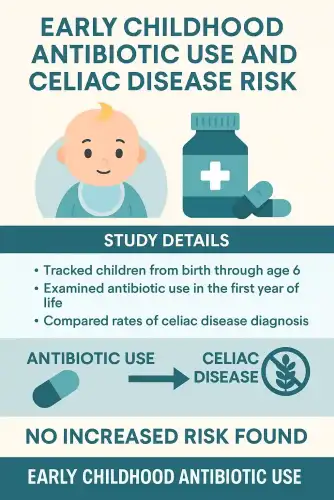
This large population-based study found that antibiotic exposure during the first year of life is linked to a higher risk of developing celiac disease autoimmunity, particularly with earlier exposure and repeated prescriptions. The results highlight infancy as a critical period for immune development and reinforce the idea that environmental factors can influence lifelong health.
For people with celiac disease and those at risk, the study underscores the importance of early-life health decisions and opens the door to future research on prevention and immune resilience. While antibiotics remain a vital medical tool, using them wisely may help reduce unintended long-term immune consequences.
Read more at: journals.lww.com








Recommended Comments
There are no comments to display.
Create an account or sign in to comment
You need to be a member in order to leave a comment
Create an account
Sign up for a new account in our community. It's easy!
Register a new accountSign in
Already have an account? Sign in here.
Sign In Now