


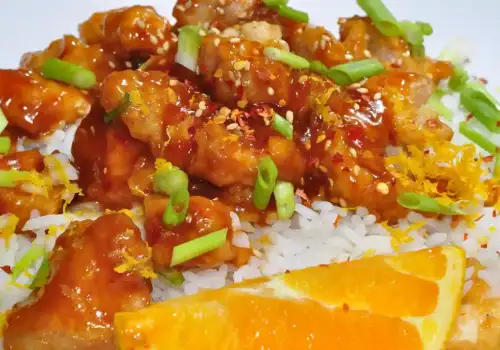
Celiac.com 12/24/2025 - Orange chicken is often associated with Chinese-American takeout restaurants that became popular in the late twentieth century, especially in North America. While it is not a traditional dish from China, it was inspired by classic sweet and tangy citrus sauces used in Chinese cooking and adapted to suit Western tastes. Over time it evolved into a crunchy, saucy favorite with a bright orange glaze that many people now recognize as comfort food.
For people with celiac disease or gluten sensitivity, however, the usual restaurant version is risky. Wheat flour breading, regular soy sauce, and shared fryers can all introduce gluten. This gluten-free orange chicken recipe re-creates the familiar flavor and texture at home using gluten-free tamari, a light rice flour coating, and a fresh orange sauce made with real juice and zest. The result is a dish that feels like takeout but is safe, vibrant, and simple enough to prepare on a weeknight.
Ingredients
For the Chicken
- 1 ½ pounds boneless, skinless chicken thighs or breasts, cut into bite-sized pieces
- ½ teaspoon fine sea salt
- ¼ teaspoon ground black pepper
- 1 large egg
- ½ cup gluten-free rice flour
- ¼ cup gluten-free cornstarch
- 3 tablespoons neutral oil for pan-frying (such as avocado or sunflower oil)
For the Orange Sauce
- ¾ cup freshly squeezed orange juice (from about 2 to 3 oranges)
- 1 tablespoon finely grated orange zest (from untreated oranges if possible)
- 3 tablespoons gluten-free tamari
- 3 tablespoons honey (or maple syrup for a deeper flavor)
- 2 tablespoons rice vinegar
- 2 cloves garlic, finely minced
- 1 tablespoon fresh ginger, finely grated
- ½ teaspoon toasted sesame oil
- ¼ teaspoon red pepper flakes (optional, for gentle heat)
- 2 tablespoons gluten-free cornstarch
- 3 tablespoons cool water
For Serving
- Steamed white or brown rice (ensure it is plain and gluten-free)
- 2 green onions, thinly sliced
- 1 teaspoon toasted sesame seeds (optional)
- Extra orange zest curls or thin strips for garnish (optional)
Instructions
1. Prepare the Chicken
- Pat the chicken pieces dry with paper towels to help the coating adhere. Place them in a medium bowl.
- Season the chicken with the sea salt and black pepper. Toss gently to distribute the seasoning.
- In a small bowl, beat the egg until smooth. Pour the beaten egg over the chicken and mix until all pieces are lightly coated.
- In a separate shallow dish, combine the rice flour and cornstarch. Mix well so the starch is evenly blended into the flour.
- Lift each piece of egg-coated chicken from the bowl, letting excess egg drip off, then dredge it in the flour and cornstarch mixture. Press lightly so a thin, even coating forms. Place coated pieces on a plate or tray in a single layer.
2. Make the Orange Sauce Base
- In a medium bowl or measuring jug, whisk together the orange juice, orange zest, gluten-free tamari, honey, and rice vinegar until the honey dissolves.
- Stir in the minced garlic, grated ginger, toasted sesame oil, and red pepper flakes if using. Taste the mixture. If you prefer a sweeter sauce, add another teaspoon of honey. For more tang, add a small splash of extra rice vinegar.
- In a small separate bowl, mix the cornstarch and cool water until there are no lumps. Set aside; this will be used later to thicken the sauce.
3. Pan-Fry the Chicken
- Heat 3 tablespoons of neutral oil in a large nonstick skillet or wide pan over medium-high heat. The oil should shimmer but not smoke.
- Add the coated chicken pieces in a single layer, working in batches if necessary to avoid crowding the pan. Crowding can cause steaming instead of crisping.
- Cook the chicken for about 3 to 4 minutes on the first side, then flip and cook another 3 to 4 minutes, or until the coating is lightly golden and the chicken is cooked through. The interior should no longer be pink and juices should run clear.
- Transfer the cooked chicken to a plate lined with paper towels while you prepare the sauce. If you cooked in batches, add a small amount of extra oil if the pan looks dry.
4. Cook and Thicken the Orange Sauce
- Pour off any excess oil from the pan, leaving about 1 teaspoon of flavorful residue. Place the pan back on medium heat.
- Whisk the prepared orange sauce base briefly, then pour it into the pan. Bring the mixture just to a gentle simmer, stirring to loosen any browned bits from the bottom of the pan. These add flavor.
- Once the sauce is simmering, stir the cornstarch and water slurry again to recombine, then drizzle it slowly into the pan while stirring constantly.
- Continue to simmer for 1 to 2 minutes, stirring, until the sauce thickens to a glossy, syrupy consistency that coats the back of a spoon. If it becomes too thick, add a tablespoon or two of water to loosen it.
5. Combine the Chicken and Sauce
- Reduce the heat to low. Return the cooked chicken pieces to the pan with the thickened orange sauce.
- Gently toss the chicken in the sauce until every piece is evenly coated and heated through, about 2 to 3 minutes. Be careful not to break the coating by stirring too roughly.
- Taste one piece of chicken with sauce. Adjust seasoning if needed by adding a splash of tamari for saltiness, a drizzle of honey for sweetness, or a pinch of red pepper flakes for more heat.
6. Serve
- Serve the gluten-free orange chicken over warm steamed rice.
- Sprinkle with sliced green onions and toasted sesame seeds. Add curls of orange zest on top for extra color and fragrance if desired.
- Enjoy immediately while the chicken is still crisp at the edges and the sauce is hot and glossy.
Tips for Gluten-Free Safety
- Always choose tamari labeled gluten-free, as some soy sauces contain wheat.
- Check that all starches and vinegars are certified gluten-free, especially if you are highly sensitive or have celiac disease.
- Use clean pans, utensils, and oil that have not been used to cook foods containing gluten to avoid cross-contact.
Conclusion
Celiac.com Sponsor (A12):
This gluten-free orange chicken brings together the bright, citrus-forward flavor that made the dish famous in Chinese-American restaurants with a safer, home-cooked approach. By using gluten-free tamari, a light rice flour and cornstarch coating, and fresh orange juice and zest, this recipe avoids the hidden gluten and heavy breading often found in takeout versions. For people with celiac disease or gluten sensitivity, it offers a way to enjoy a nostalgic favorite without sacrificing health or flavor. Paired with simple steamed rice and fresh garnishes, it turns an ordinary evening into a cheerful, satisfying meal that is both comforting and safe.








Recommended Comments
There are no comments to display.
Create an account or sign in to comment
You need to be a member in order to leave a comment
Create an account
Sign up for a new account in our community. It's easy!
Register a new accountSign in
Already have an account? Sign in here.
Sign In Now