


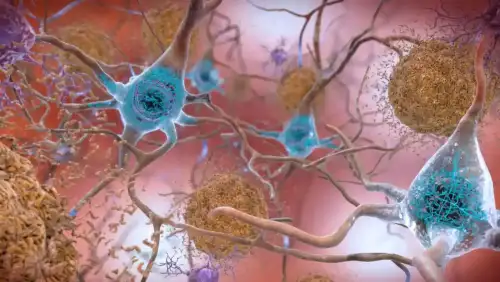
Celiac.com 12/15/2025 - This scientific review explores an unexpected connection between two very different kinds of proteins: those involved in Alzheimer’s disease and those found in wheat gluten. Both types of proteins can form tiny structures called nanostructures, which resist being broken down by normal body processes. These structures can influence how diseases develop, from brain degeneration to intestinal inflammation. The goal of the study is to help scientists from both fields learn from one another to better understand how these tiny assemblies of proteins—called peptides—might drive disease and offer new targets for therapy.
When Proteins Build Themselves Into Harmful Shapes
Proteins are made from chains of smaller molecules called peptides. Under certain conditions, these chains can fold and stick together, forming stable structures that the body cannot easily remove. This process, called self-assembly, can be both useful and dangerous. In healthy systems, self-assembly can create strong, functional materials like hair and collagen. But in disease, the same process can lead to toxic clumps that damage cells.
Celiac.com Sponsor (A12):
The study focuses on two examples of this harmful self-assembly: one that occurs naturally inside the brain and one that comes from the food we eat. The first involves amyloid-beta peptides, which are believed to play a key role in Alzheimer’s disease. The second involves gliadin peptides, fragments of the gluten protein that can cause celiac disease and other gluten-related conditions. Although these diseases affect different organs, they share a common theme—tiny, hard-to-destroy peptide structures that trigger inflammation and cell stress.
Amyloid-Beta in Alzheimer’s Disease
In Alzheimer’s disease, certain peptides in the brain—known as amyloid-beta 1–40 and amyloid-beta 1–42—aggregate into fibers and clusters that damage nerve cells. These clusters vary in shape and size, and those variations may explain why the disease progresses differently among patients. Recent research shows that amyloid structures formed in living brain tissue differ from those created in laboratory conditions. This means that researchers must refine their models to better mimic what happens inside the body.
The review emphasizes that understanding how individual amyloid-beta peptides join together is essential. By identifying which specific folding patterns lead to toxic forms, scientists can design drugs that stabilize safer forms or block harmful ones. This molecular-level understanding could pave the way for more effective Alzheimer’s treatments.
Gliadin Peptides in Gluten-Related Disorders
The second focus of the review is on gluten, a major component of wheat and related grains. Gluten is made up of several types of proteins, one of which is gliadin. In people with celiac disease or other gluten-related disorders, the body mistakenly reacts to gliadin as if it were a threat. The immune system’s response damages the small intestine, leading to nutrient deficiencies and digestive distress.
The problem begins with gliadin peptides that resist digestion. These fragments survive stomach acids and enzymes, then travel intact into the small intestine. There, they can form their own nanostructures—tiny but stable assemblies that are difficult for the body to break apart. Because they resemble the persistent structures seen in amyloid diseases, scientists are beginning to study them in similar ways. These gliadin nanostructures might act like nonliving “pathogens,” triggering immune responses and inflammation long after the original food has been digested.
Learning From Alzheimer’s Research to Study Gluten Toxicity
Alzheimer’s researchers have spent decades perfecting laboratory techniques to study how amyloid-beta peptides form toxic clusters. These methods include isolating pure monomers, analyzing their shapes under microscopes, and tracking how they assemble into larger fibers. The review suggests that gluten researchers could adopt similar methods to better understand gliadin’s harmful behavior.
By borrowing these protocols, scientists studying celiac disease can isolate gliadin peptide fragments, observe how they group together, and identify which structures interact most strongly with the immune system. This approach could help explain why some forms of gluten exposure cause mild reactions, while others lead to severe autoimmune damage. The more precisely researchers can characterize these nanostructures, the easier it becomes to develop therapies that disrupt their formation.
Bridging Two Fields Through Nanostructure Research
A key message of the paper is collaboration. Alzheimer’s researchers and gluten scientists rarely interact, yet both study peptides that self-assemble and resist degradation. By pooling knowledge, they can advance faster. Alzheimer’s experts can teach gluten researchers how to identify and stabilize specific peptide forms, while gluten researchers can offer insight into how these structures survive digestion and move through the body.
Understanding how different peptides assemble could also improve models of the “gut–brain axis,” the communication system between the digestive tract and the brain. This concept suggests that what happens in the gut can influence neurological health. If gliadin nanostructures can cross biological barriers or influence inflammation beyond the gut, they might help explain why some people with celiac disease experience neurological symptoms such as brain fog or anxiety.
From Structure to Therapy
One of the main obstacles in treating diseases linked to peptide aggregation is the remarkable stability of these nanostructures. They resist heat, enzymes, and other breakdown processes. By identifying exactly how the peptides arrange themselves—how tightly they bind, what shapes they take, and which parts of the molecule are exposed—scientists can design molecules that interfere with the process. For Alzheimer’s disease, this might mean drugs that prevent amyloid-beta from forming fibers. For celiac disease, it could mean treatments that block gliadin peptides from aggregating or reaching the immune system.
The authors also call for the development of new tools to visualize and measure peptide structures. These tools could include high-resolution imaging, spectroscopy, and computational simulations. With better data, researchers could predict which peptide sequences are most likely to form harmful assemblies and how to neutralize them before they cause damage.
Implications for People With Celiac Disease
For individuals living with celiac disease, this line of research is deeply meaningful. It offers a possible explanation for why even trace amounts of gluten can provoke strong and lasting immune reactions. If gliadin peptides form persistent nanostructures similar to those seen in neurodegenerative diseases, it would explain why the immune system continues attacking long after gluten has left the digestive tract. Understanding these structures could help researchers design enzymes, medications, or supplements that break down gliadin more effectively, reducing the risk of accidental exposure.
It also opens the door to studying potential links between gluten sensitivity and neurological symptoms. If the same types of resistant peptides that harm the intestine can influence brain inflammation or signaling, future therapies could target both gut and brain health at once. Ultimately, these insights could lead to safer food processing methods, better diagnostic tools, and more effective treatments for people who must avoid gluten for life.
Conclusion
This review connects two complex areas of science—Alzheimer’s disease and gluten intolerance—by focusing on a shared molecular phenomenon: peptide self-assembly. Whether inside the brain or the gut, these tiny protein fragments can form stubborn, disease-promoting nanostructures. By studying how they build, stabilize, and interact with cells, scientists can uncover the roots of chronic inflammation and tissue damage. For people with celiac disease, the promise is especially hopeful: a future where gluten reactions can be predicted, prevented, or even neutralized before they cause harm.
Read more at: pubs.acs.org







Recommended Comments
Create an account or sign in to comment
You need to be a member in order to leave a comment
Create an account
Sign up for a new account in our community. It's easy!
Register a new accountSign in
Already have an account? Sign in here.
Sign In Now