



Celiac.com 02/11/2026 - People often assume that celiac disease is easily managed through careful eating habits. However, a new national survey commissioned by NIMA Partners shows that the reality of living with celiac is much more complex.
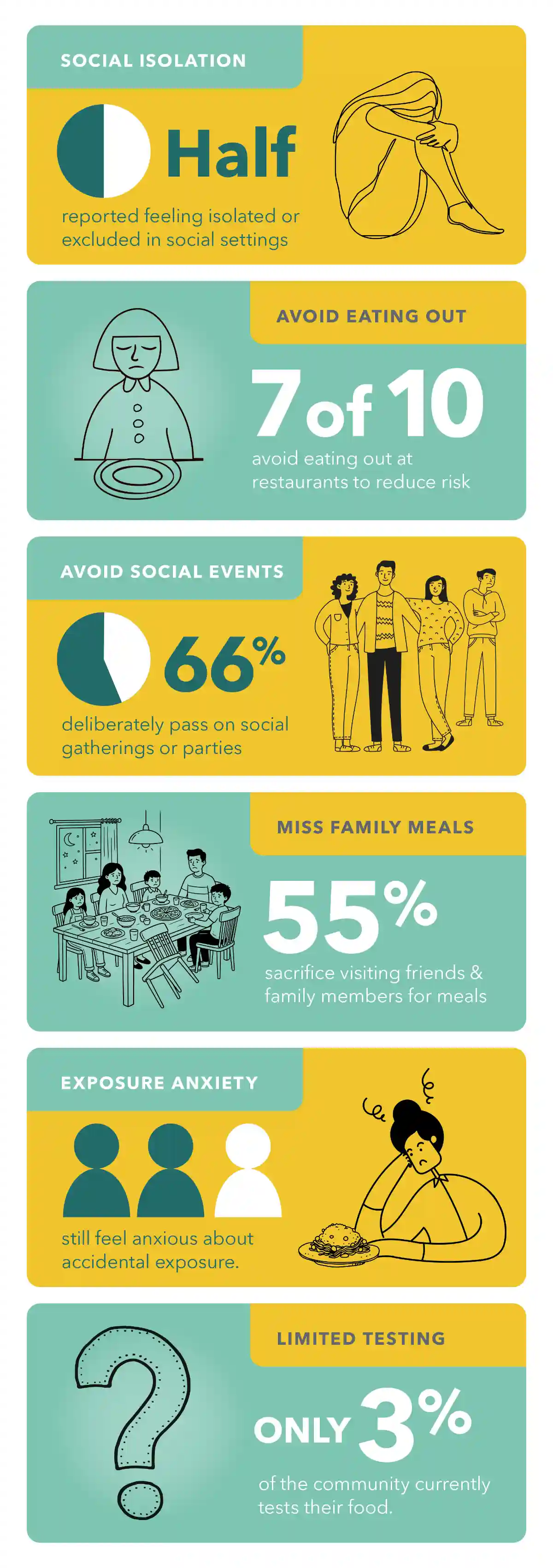
Results showed nearly all people with celiac disease rely on reading food labels to help manage their symptoms, but despite their best efforts, more than two-thirds (67%) of celiac sufferers still feel anxious about accidental exposure. And more than half (55%) report feeling “tired” from the constant load of thinking about gluten.
Celiac.com Sponsor (A12):
“People are doing everything they have been told to do in avoiding gluten, and they’re still suffering symptoms due to factors like cross-contamination and mislabeled menus,” says Mike Glick, CEO of NIMA Partners. “That causes people to stay home, which we now know is leading to significant social isolation. When people don’t have a convenient way to test their food, they don’t just risk exposure to gluten. They also often miss out on meals and gatherings with their friends, family, and coworkers.”
Celiac Takes Away Social Experiences
This new survey data, gathered from 718 members of the Beyond Celiac community in the U.S., paints perhaps the clearest picture to date of exactly how celiac disease robs people of their ability to enjoy their social lives without having to second-guess everything they eat:
- 71% say they have sacrificed eating out at restaurants to avoid gluten.
- 66% say they have skipped social gatherings and parties.
- 60% say they avoid buying pre-prepared or pre-packaged foods.
- 55% say they have sacrificed visiting friends or family for meals.
- 44% say they have missed out on travel experiences such as air travel or visiting other countries.
It’s important to note that people with celiac disease already largely organize their lives around what they eat, and they are still suffering these social impacts. Nearly all (99%) say that they read ingredient labels. And the vast majority buy certified gluten-free brands and products (96%), check menus online prior to eating out (93%), cook most of their own meals (89%), and take steps to educate friends and family about celiac (87%).
Most say they are confident they are doing all they can to manage a gluten-free diet (77%) and that they are proud of managing their diet successfully (69%). And yet, all of these steps are not enough to make most people with celiac disease confident that they will be able to participate in everyday experiences without becoming sick.
“People with celiac disease have worked hard to create routines and manage their symptoms,” Glick says. “But understandably, many still feel like they’re putting themselves at risk anytime they eat outside the home.”
Isolation ‘Takes a Toll’ on Emotional and Mental Health
The emotional impacts of living with celiac disease can rival the physical impacts, the survey data reveals. Eighty-eight percent of respondents say that finding safe food options provides them a “sense of relief,” and 81% say that eating out at restaurants is “frustrating.”
As mentioned previously, most people with celiac disease report feeling both anxious about accidental gluten exposure and tired from constantly thinking about how to manage their condition. Additionally, a majority (54%) say they feel “isolated” or “excluded” in social settings.
“For most people, we’re finding, this hum of anxiety never really goes away,” Glick says. “We’ve heard countless stories from people who have been extremely vigilant about their diet, and then they’ve still experienced exposures. When that happens over and over again, it takes a toll.”
Reclaiming a Seat at the Table
Although the vast majority of celiac sufferers scrutinize food labels and restaurant menus for the presence of gluten, very few do the one thing that would reduce their chance of exposure the most: test their food.
Only 3% of respondents use home gluten tests like those offered by NIMA Partners. The NIMA™ Gluten Sensor can detect gluten down to 10 parts per million with nearly perfect accuracy in just three minutes.
“Testing may reduce that uncertainty,” Glick notes. “Our tests are 99% accurate using just a small sample, and you can test your food anywhere.”
Although home gluten testing is currently rare, interest is high, according to the survey data. Sixty-two percent of respondents say they are “interested,” “very interested,” or “extremely interested” in gluten testing. Only a handful (4%) say they are “not at all interested.”
“This isn’t just about peace of mind,” Glick says. “It’s about being able to quickly and easily test for gluten, so you can focus on your friends and family at social events—instead of worrying about what’s in your food.”
The NIMA Gluten Sensor and test capsules are available now.













Recommended Comments
There are no comments to display.