


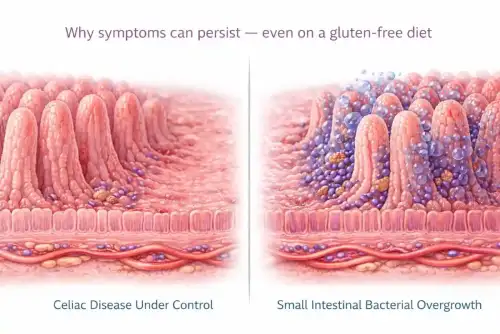
Celiac.com 02/11/2026 - Celiac disease is a condition in which the immune system reacts to gluten, a protein found in certain grains, causing damage to the lining of the small intestine. This damage can lead to a wide range of digestive symptoms, including bloating, diarrhea, abdominal pain, and poor nutrient absorption. However, many of these same symptoms are also seen in another condition called small intestinal bacterial overgrowth. Because the symptoms overlap so closely, it can be difficult for patients and doctors to understand what is truly causing ongoing discomfort.
To better understand this relationship, researchers conducted a detailed review and analysis of existing studies that examined how often small intestinal bacterial overgrowth occurs in people with celiac disease and whether treating the bacterial overgrowth improves symptoms. This summary explains their findings in clear, non-technical language and explores why the results matter for people living with celiac disease.
What Is Small Intestinal Bacterial Overgrowth?
Celiac.com Sponsor (A12):
Small intestinal bacterial overgrowth occurs when unusually large numbers of bacteria are present in the small intestine. Normally, most bacteria live in the large intestine, while the small intestine contains relatively few microbes. When this balance is disrupted, bacteria in the small intestine can interfere with digestion and nutrient absorption.
The symptoms of small intestinal bacterial overgrowth often include gas, bloating, abdominal discomfort, diarrhea, and sometimes constipation. These symptoms are strikingly similar to those experienced by people with untreated or poorly controlled celiac disease. This similarity has led researchers to question whether the two conditions are linked or whether one may contribute to the other.
Why Researchers Suspected a Link With Celiac Disease
Celiac disease causes damage to the intestinal lining, which may slow movement through the gut and alter normal digestive defenses. These changes can create an environment where bacteria are more likely to grow in the small intestine. At the same time, small intestinal bacterial overgrowth can worsen nutrient malabsorption and inflammation, potentially mimicking or intensifying celiac-related symptoms.
Because some people with celiac disease continue to have symptoms even after removing gluten from their diet, doctors have long suspected that small intestinal bacterial overgrowth could be part of the explanation. The researchers set out to examine how common this condition is in people with celiac disease and whether treating it leads to symptom relief.
How the Review and Analysis Were Conducted
The researchers reviewed medical studies published up to early 2022 that reported rates of small intestinal bacterial overgrowth in people diagnosed with celiac disease. They carefully selected studies that met specific quality standards and included clear methods for diagnosing both conditions.
In total, fourteen studies were included, involving hundreds of people with celiac disease and a smaller group of individuals without the condition who served as comparison subjects. The researchers combined the data from these studies to estimate how common bacterial overgrowth is in celiac disease and how much higher the risk is compared with people who do not have celiac disease.
How Small Intestinal Bacterial Overgrowth Was Diagnosed
Different studies used different methods to diagnose bacterial overgrowth. Some relied on breath tests, which measure gases produced by bacteria after a person consumes a specific sugar solution. Others used culture-based methods that analyze samples taken directly from the small intestine.
Each method has strengths and weaknesses. Breath tests are noninvasive and commonly used but may sometimes give false positive or false negative results. Culture-based methods are more direct but invasive and technically challenging. These differences played an important role in how the results varied between studies.
Main Findings: How Common Is Bacterial Overgrowth in Celiac Disease?
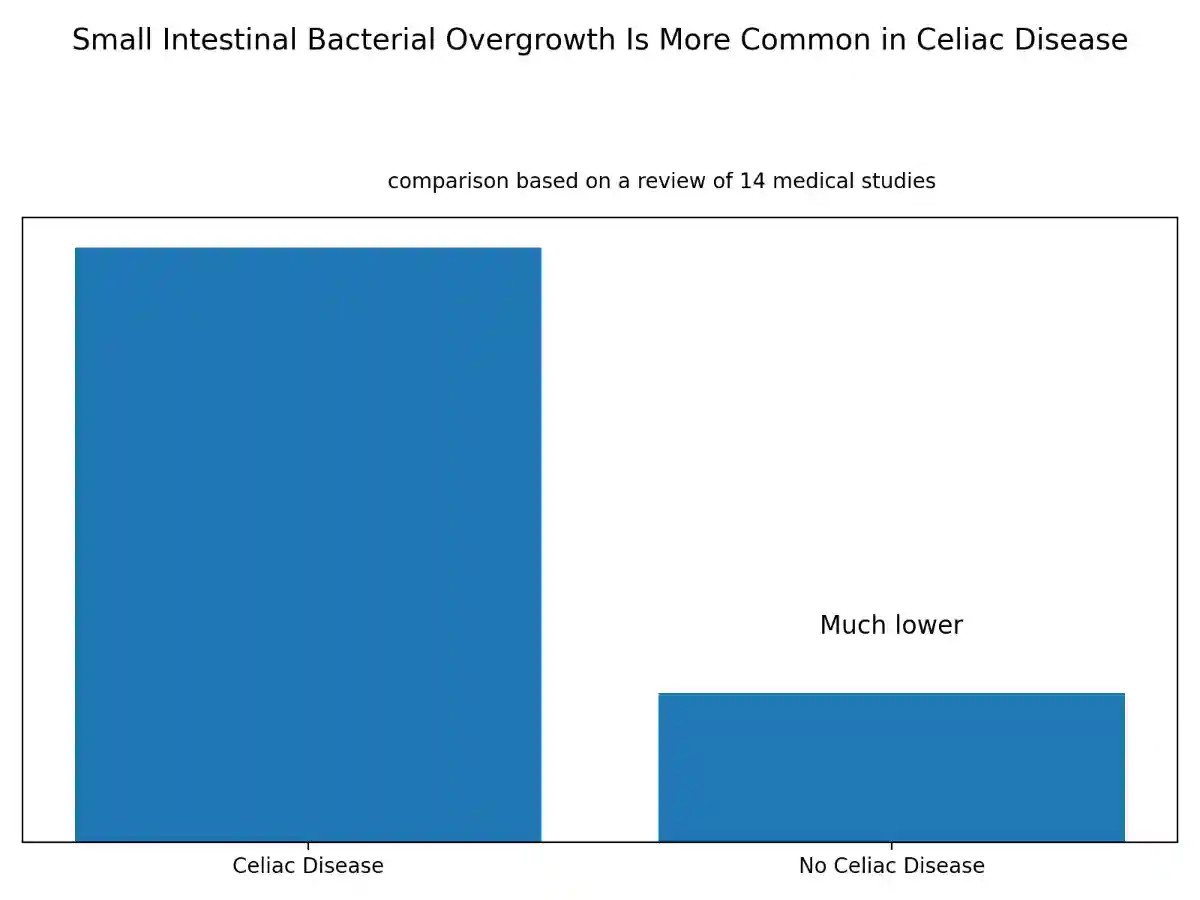
When all studies were combined, the researchers found that nearly one in five people with celiac disease had evidence of small intestinal bacterial overgrowth. This rate was much higher than what is typically seen in people without celiac disease.
When the analysis focused specifically on studies that included healthy comparison groups, people with celiac disease were several times more likely to have bacterial overgrowth than those without the condition. This finding strongly supports the idea that celiac disease and bacterial overgrowth are linked.
The Role of Diagnostic Methods
The way bacterial overgrowth was diagnosed influenced how often it was detected. Studies that used breath tests tended to report higher rates of bacterial overgrowth compared with those using culture-based techniques. This suggests that diagnostic differences may partly explain why results varied from one study to another.
Despite these differences, the overall pattern remained consistent: bacterial overgrowth appeared more common in people with celiac disease regardless of the testing method used.
Does Bacterial Overgrowth Explain Persistent Symptoms?
One of the most important questions was whether bacterial overgrowth helps explain why some people with celiac disease do not feel better even after following a gluten-free diet. Surprisingly, the analysis did not find a statistically meaningful difference in bacterial overgrowth rates between people who responded well to a gluten-free diet and those who did not.
This suggests that while bacterial overgrowth is common in celiac disease, it may not be the sole reason for ongoing symptoms in every case. Other factors, such as slow healing of the intestine or additional digestive disorders, may also play a role.
Effect of Antibiotic Treatment
The researchers also examined what happened when people with both celiac disease and bacterial overgrowth were treated with antibiotics. In the studies that reported treatment outcomes, most patients experienced significant improvement in digestive symptoms after therapy.
In addition to symptom relief, follow-up testing often showed that bacterial overgrowth was no longer present. This finding suggests that identifying and treating bacterial overgrowth can make a meaningful difference for some people with celiac disease who continue to struggle with digestive symptoms.
Limitations of the Evidence
Although the results are informative, the researchers noted several important limitations. The included studies varied widely in design, diagnostic methods, and patient populations. This made it difficult to draw firm conclusions about cause and effect.
In addition, current tests for bacterial overgrowth are imperfect. The lack of a single, highly accurate diagnostic tool means that some cases may be missed or misclassified. Because of these factors, the overall quality of the evidence was considered low.
Why This Study Matters for People With Celiac Disease
For people living with celiac disease, this research highlights an important but often overlooked contributor to digestive symptoms. It shows that small intestinal bacterial overgrowth is relatively common in celiac disease and occurs more often than in people without the condition.
The findings suggest that persistent bloating, pain, or diarrhea should not automatically be blamed on accidental gluten exposure. In some cases, bacterial overgrowth may be involved and could be treatable. This opens the door to more personalized care and targeted testing for those who do not feel well despite following a strict gluten-free diet.
Conclusion: A Broader View of Digestive Health in Celiac Disease
This large review and analysis support a meaningful link between celiac disease and small intestinal bacterial overgrowth. While bacterial overgrowth does not explain every case of persistent symptoms, it appears to be an important piece of the puzzle for many patients.
For individuals with celiac disease, the study reinforces the importance of comprehensive evaluation when symptoms persist. Looking beyond gluten alone and considering additional digestive conditions may lead to better symptom control, improved quality of life, and a clearer understanding of how celiac disease affects the body over time.
Read more at: pubmed.ncbi.nlm.nih.gov












Recommended Comments
There are no comments to display.
Create an account or sign in to comment
You need to be a member in order to leave a comment
Create an account
Sign up for a new account in our community. It's easy!
Register a new accountSign in
Already have an account? Sign in here.
Sign In Now