
Roy Jamron
-
Posts
48 -
Joined
-
Last visited
Roy Jamron's Achievements






About Me
Roy S. Jamron holds a B.S. in Physics from the University of Michigan and an M.S. in Engineering Applied Science from the University of California at Davis, and independently investigates the latest research on celiac disease and related disorders.
-
 mspat3 reacted to an article:
Putting the Pieces Back Together
mspat3 reacted to an article:
Putting the Pieces Back Together
-
 Bronwyn W reacted to an article:
Putting the Pieces Back Together
Bronwyn W reacted to an article:
Putting the Pieces Back Together
-
 View full article
 -
 Celiac.com 04/05/2022 - You have just been diagnosed with celiac disease. Wonderful! Now all your gastro problems, aches and pains and fatigue and food allergies will go away. All you need to do is maintain a gluten-free diet—NOT! Many—i...
- 1 comment
-
- 2
-

-
-
- allergies
- celiac disease
- (and 8 more)
-
View full article
-
 Celiac.com 12/07/2021 - Fibromyalgia frequently occurs among those with celiac disease, but no published study to date provides prevalence data. However, one survey found that in cases of celiac disease that were initially misdiagnosed...
 -
View full article
-
 Celiac.com 10/15/2021 - Two infants born with short bowel syndrome and being sustained intravenously with parenteral nutrition develop life-threatening liver disease. Cholestasis (blockage of bile secretion in the liver) places one infant...
 -
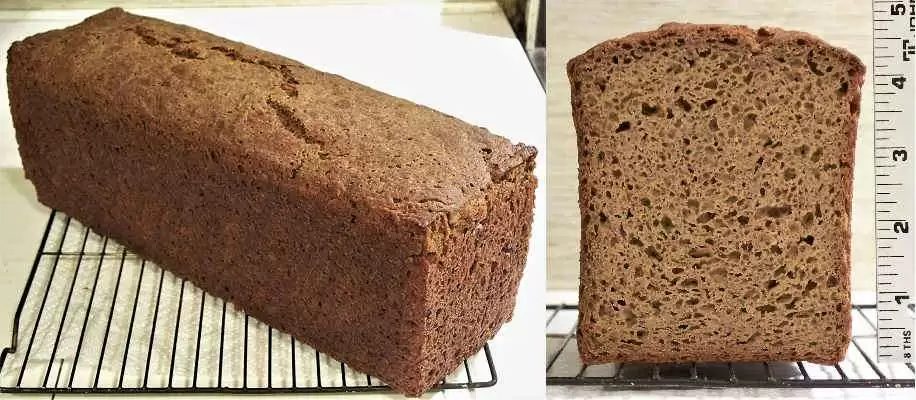
Omitting Banana From The Perfect Bread Recipe Recently I found myself running out of bread, had no bananas, and was unable to get to a grocery market. So I decided this was a perfect time to try the bread recipe WITHOUT bananas for the very first time. A 100 gram peeled banana contains roughly: Water: 75 grams Carbs: 23 grams ...

- 22 comments
-
- 1
-
-
- best ever gluten-free bread
- best gluten-free bread
- (and 2 more)
-
The banana is in the recipe because it increases the bread volume, acts as an additional binding agent, plus adds flavor compatible with the taste of bread. This recipe is for a large loaf, and the other ingredients dominate and more than offset the taste of banana which, by volume (mostly water), is less than 20% of the major dry ingredients. The taste...
- 22 comments
-
- 2
-
-
-
- best ever gluten-free bread
- best gluten-free bread
- (and 2 more)
-
Minimizing Starch Content to Improve Flavor and Nutrition, and Canna Edulis Starch for Potato Starch? How can one improve a "perfect" gluten-free bread? Reduce starch. While some starch is necessary to bind gluten-free flours and provide crumb structure, starch provides little nutrition and contributes undesirable off-tastes to the bread. Used to...
-
Persistent Chemical Exposure Means Higher Celiac Disease Rates
Roy Jamron commented on Scott Adams's article in Origins of Celiac Disease
Careful here... The research only establishes an "association" between high serum levels of persistent organic pollutants and celiac disease and does not establish that those pollutants are an actual "cause" of celiac disease. The high pollutant serum levels can also be explained by the high intestinal permeability of existing celiac disease patients... -
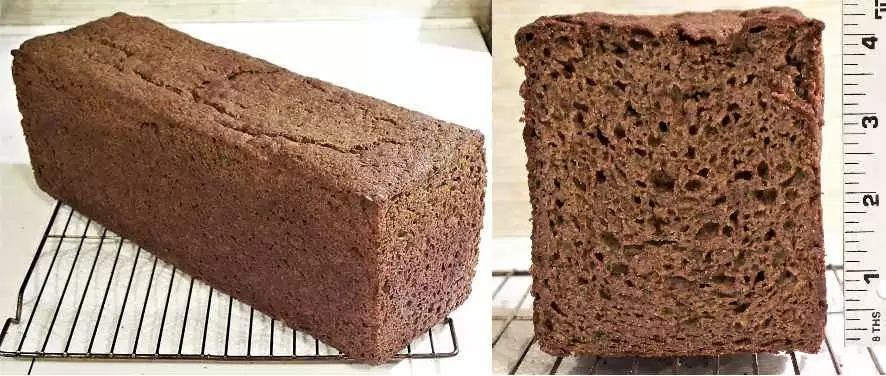
Gluten-Free Bread Without Potato Starch For the benefit of those intolerant to potato starch or nightshades, I decided to try a few variations of this gluten-free bread without potato starch. First, since my last posts, I found adding a bit more water increases loaf height and settled on this current standard flour blend which consistantly produces...
-
Can Fasting Help Regenerate a Damaged Celiac Disease Intestine?
Roy Jamron commented on Roy Jamron's article in Autumn 2018 Issue
The following March 2019 article provides exciting new findings on the benefits of fasting, fasting-mimicking diet, and cell regeneration resulting from such dieting. It is an "Open Access" article and can be freely read in html or pdf format: Fasting-Mimicking Diet Modulates Microbiota and Promotes Intestinal Regeneration to Reduce Inflammatory Bowel... -
Sustituting Popped and Raw Amaranth Flours for Oat Flour Raw amaranth flour and popped amaranth flour were both investigated as substitutes for oat flour in this gluten-free bread recipe. The resulting amaranth loaves proved to have less than desirable characteristics. A flour blend of 1 cup raw amaranth flour, 1 cup sorghum flour, 1-1/2 cups buckwheat...
-
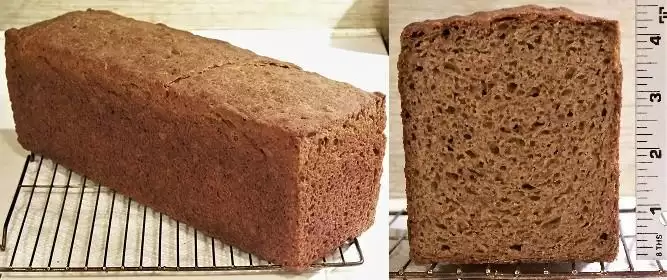
Brown or Ivory Teff Flour Substitution for Oat Flour? The answer: It makes no difference. The photo above shows a loaf made using Bob's Red Mill brown teff flour. Even cutting back the buckwheat flour to 1-1/4 cups and the steeping water to 2-1/4 cups, the bread height still rose to 4-3/8 inches. Tastewise, there was no noticeable difference...
- 22 comments
-
- 1
-
-
- best ever gluten-free bread
- best gluten-free bread
- (and 2 more)
-
Substituting Teff For Oat Flour Ivory Maskal Teff Flour is substituted for oat flour in the above shown photo. The flour blend used consists of 1 cup ivory teff flour, 1 cup sweet white sorghum flour, 1-1/2 cups raw, dehulled buckwheat flour, 2/3 cup potato starch, 2/3 cup arrowroot starch plus 2-3/4 cups water for steeping the milled flaxseed...
- 22 comments
-
- 1
-
-
- best ever gluten-free bread
- best gluten-free bread
- (and 2 more)